
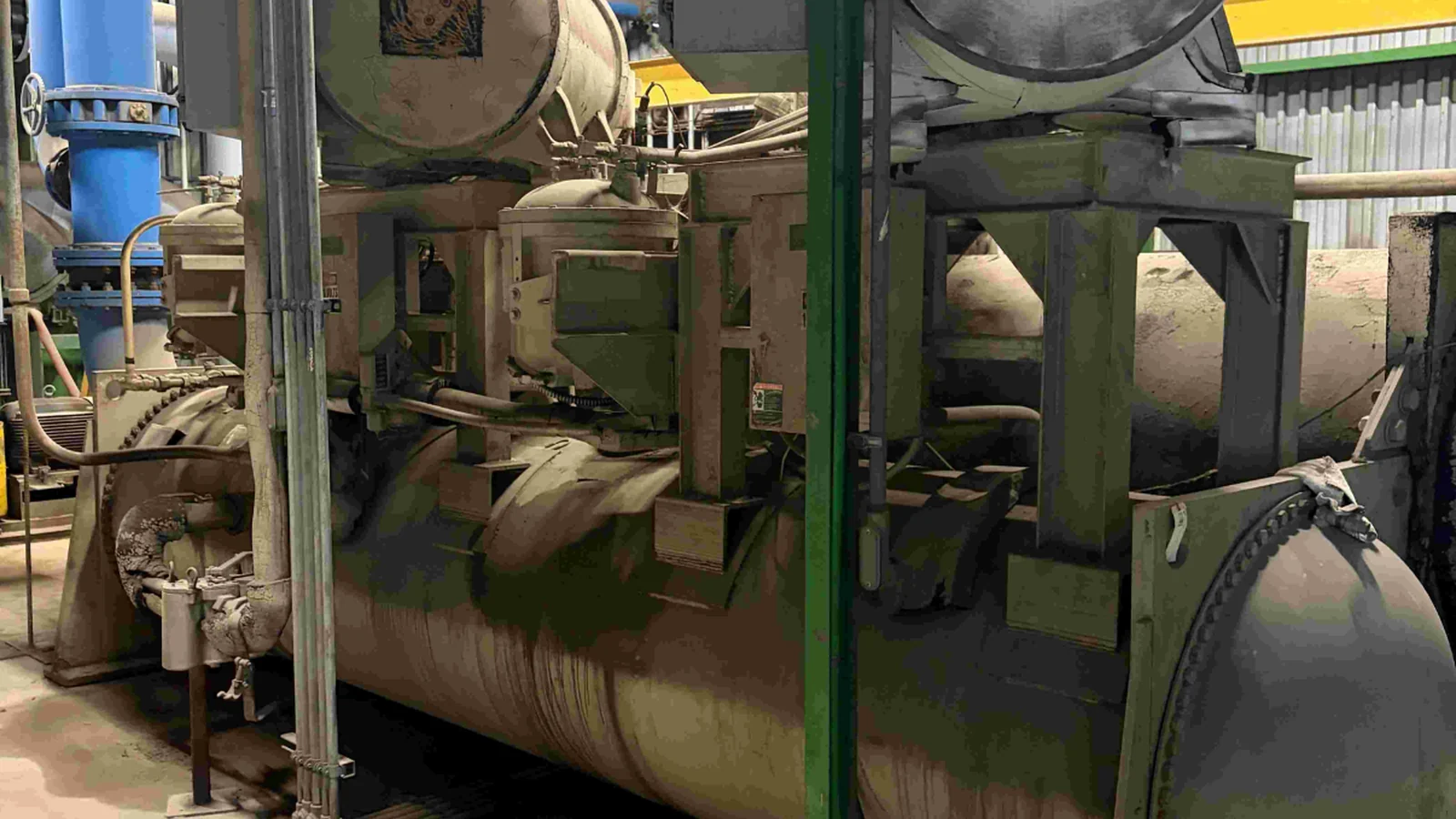
Independent Carrier equipment identification
Carrier Chiller Identification and Sale Preparation
Have a used or surplus Carrier chiller? Start with the exact machine—not a broad product-family label. Send the nameplate, configuration evidence, present condition, included components, site facts, and release details for independent prospective-buyer evaluation. Submission is not a purchase promise or a service commitment. Surplus Chiller Buyer is an independent prospective buyer of used and surplus industrial chillers. It is not affiliated with, authorized by, sponsored by, or a representative of Carrier or any Carrier-related brand.
Carrier configuration review
Send the exact Carrier machine record
Build the Carrier configuration reconciliation sheet first, then submit the available evidence. A full model and serial number, readable nameplate, photographs, documented configuration, honest condition note, and site facts give a direct prospective buyer a clearer basis to decide whether further evaluation is warranted. Surplus Chiller Buyer is an independent prospective buyer of used and surplus industrial chillers. It is not affiliated with, authorized by, sponsored by, or a representative of Carrier or any Carrier-related brand. This inquiry does not guarantee a purchase, offer, price, payment, inspection, pickup, removal, freight, rigging, dismantling, demolition, refrigerant handling, timing, or a local office or crew.
Useful facts to have ready
- A straight-on, readable Carrier nameplate photograph showing the complete model and serial number, plus quantity of units.
- Wide photographs of all accessible sides, the control enclosure, compressor area, heat exchangers or coils, visible damage, and loose or removed parts.
- The actual family label only if it appears on the equipment or matching documentation—for example, AquaSnap—with no assumption that it is a separate manufacturer.
- A configuration list covering air- or water-cooled arrangement, visible pumps, strainer, expansion tank, remote components, accessories, and what stays with the site.
- A present-condition note: operating, idle, disconnected, stored, incomplete, non-operational, or unknown; last known operation; alarms, leaks, repairs, and missing parts if known.
- The exact U.S. location, installed status, connection boundaries, access route, release window, site rules, and person authorized to discuss a potential sale.
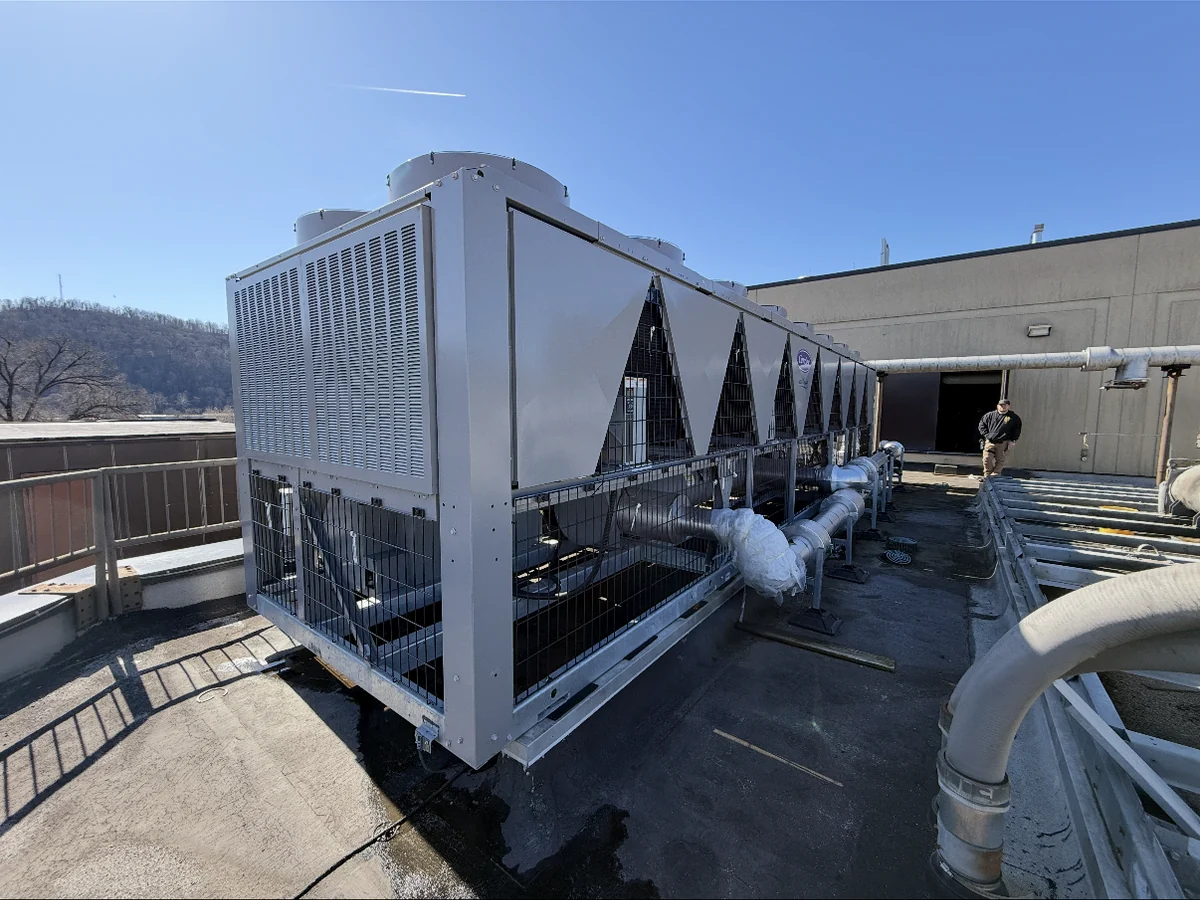
01 / Brand is a starting point
Establish the exact Carrier machine before naming its family.
Carrier’s current commercial catalog uses air-cooled and water-cooled categories. Its current air-cooled offerings include scroll and screw equipment, while its current water-cooled offerings include scroll, screw, and centrifugal equipment. Use those terms only when the actual nameplate, machine layout, or matching documentation supports them. They help a prospective buyer understand the machine; they do not prove capacity, condition, completeness, age, or purchase fit.
AquaSnap is a Carrier product-family name, not a separate manufacturer. Record it if it is shown on the unit or verified in matching literature, then keep the complete model and serial number as the controlling identity. Do not make a current-family match from a partial model, a faded decal, a broker description, or a similar-looking chiller. Do not place McQuay, Sterling, or Temptek in a Carrier lineage on this page; those names need separate identification.
- Photograph the full Carrier nameplate straight on, including all suffixes, voltage, and serial number where present.
- Photograph any AquaSnap, AquaForce, AquaEdge, or other family badge separately from the nameplate.
- State whether the machine rejects heat to outdoor air or to a condenser-water system; if unknown, say unknown.
- Identify the chiller as air-cooled, water-cooled, scroll, screw, or centrifugal only when the evidence supports the term.
- Keep each serial-numbered chiller separate in a multi-unit facility, even if the units look alike.
02 / Carrier-specific evidence task
Match visible configuration to the exact model record.
Use the reconciliation sheet to compare the offered machine with evidence that belongs to that exact unit. A current Carrier AquaSnap 30RC page identifies the family as an air-cooled scroll chiller and lists features such as a PIC6 control interface and optional factory hydronic equipment. The associated 30RC installation instructions distinguish equipment by size and configuration, including condenser construction and no-pump, single-pump, or dual-pump arrangements. This is a reason to record the actual build, not a reason to assume every Carrier or every AquaSnap has those features.
Photograph and list the components that affect what is being offered. On a unit that appears to have a hydronic package, show the pumps, strainer, expansion tank, valves, and related piping only if safely accessible. If a component is removed, disconnected, owned by another party, or expected to remain in the building, put that in the included/excluded list so a buyer can evaluate the equipment record rather than infer an unverified package from the brand or capacity.
03 / Document match
Pair the machine record with literature that matches the full model.
Carrier provides a Commercial Systems North America literature search by product type and model number. Use the complete model first, then save the matching product data, installation instructions, controls literature, or other available record with the equipment file. If a document does not match the exact model, design series, configuration, or apparent vintage, label it as reference material only. Do not use a current brochure to fill missing facts for an older machine.
Carrier’s current 19MV page illustrates why this check matters: it specifically identifies the AquaEdge 19MV as a water-cooled centrifugal chiller with magnetic bearings and SmartVu controls. That source may help confirm a clearly matching 19MV record, but it does not identify another Carrier centrifugal chiller. Preserve the original equipment schedule, startup sheet, service record, or drawing when available, and connect each document to the correct serial number.
04 / Observed facts, not assumptions
Separate the equipment’s condition record from refrigerant and repair work.
State the machine’s present status in plain terms: operating, idle, disconnected, stored, incomplete, non-operational, or unknown. Add the last known operating date, known alarms, leaks, repairs, damage, removed parts, storage exposure, and any condition that cannot be confirmed. Record the refrigerant shown on the machine nameplate or supported documentation, but do not infer it from the Carrier family.
If a potential handoff would involve opening a refrigerant circuit, recovery, service, repair, or disposal, identify that as open project work. EPA says Section 608 requires technician certification for people who maintain, service, repair, or dispose of equipment that could release refrigerant, and it sets standards for recovery and recycling equipment. Surplus Chiller Buyer does not automatically provide or accept refrigerant work; any needed responsibility, qualified party, timing, records, and cost allocation must be separately evaluated and confirmed in writing.
05 / Transaction boundaries
Define the machine, the site, and the open work separately.
A configuration record helps a prospective buyer understand the offered asset, but it does not assign project responsibility. If the Carrier chiller remains installed, distinguish the machine and included accessories from building piping, wiring, controls, pumps, starters, condenser-water equipment, cooling towers, structural supports, and components that must remain. State the connection status, who controls shut down and access, whether disconnection has occurred, and which approvals are still needed.
If later project discussion requires rigging review, verified dimensions and weight for the exact configured unit, the site route, permitted lifting points, site controls, and planning by qualified parties all need to be addressed. Carrier’s 30RC instructions direct users to the unit rigging label for configuration-specific shipping weight, center of gravity, lifting-hole, and lifting-ring information; generic web data is not a lift plan. This page does not promise inspection, disconnection, removal, rigging, loading, freight, demolition, cleanup, or a schedule; any accepted responsibilities must be written into the actual transaction terms.
Frequently asked questions
Before you send the chiller.
If your machine does not fit a standard category, submit the available details anyway. Clear photographs and a readable nameplate often establish whether more information is worthwhile.
Is Surplus Chiller Buyer affiliated with Carrier?
No. Surplus Chiller Buyer is an independent prospective buyer of used and surplus industrial chillers. It is not affiliated with, authorized by, sponsored by, or a representative of Carrier. Carrier is mentioned only to help identify equipment.
Is AquaSnap a separate chiller manufacturer?
No. Carrier’s current commercial material identifies AquaSnap as a Carrier product family. For a seller, the controlling facts are still the complete model, serial number, configuration, present condition, and included components. Do not identify a unit as AquaSnap from a partial description alone.
Can I submit an older or discontinued Carrier chiller?
Yes. Submit the best available nameplate photographs, full-unit photographs, records, condition details, included items, location, access facts, and release plan. State what is unknown. An older or discontinued model may require more evidence, and submission does not guarantee further review, an offer, a price, payment, purchase, or timing.
Does a Carrier model number tell the buyer exactly what is included?
No. The exact model helps start the identification, but configuration, options, visible accessories, removed parts, and site boundaries still need to be documented. Carrier’s current 30RC material, for example, includes configuration-dependent data; do not apply those details to another model or assume a pump package or other accessory without evidence.
Are refrigerant recovery, removal, rigging, freight, or demolition included when I submit a Carrier chiller?
No. Submission does not include those services or create a project commitment. If they affect a potential transaction, identify the need and the known site conditions. Refrigerant work should be addressed with appropriate qualified personnel and applicable EPA requirements; all work scope, timing, cost, risk, and responsibility remain open unless separately confirmed in writing.
Authoritative references
Source material behind this seller guide.
These external manufacturer and government sources support the equipment terminology and planning context used above. They do not establish the condition, configuration, safety, compliance, or transaction fit of a specific chiller.