
Legacy chiller identification for direct buyer evaluation
Identify Your McQuay Chiller Before You Offer It for Sale
A McQuay badge is the beginning of the record, not the whole record. Build a legacy-focused file with the exact nameplate, model code, MicroTech controller generation if present, configuration, condition evidence, and release facts so a direct prospective buyer can evaluate the actual chiller.
McQuay legacy equipment file
Send the exact facts behind the McQuay nameplate
Begin with the specific machine, not a presumed current equivalent. A submission lets a direct prospective buyer review whether the equipment and transaction facts fit current purchasing needs. It is not an offer or a promise to buy, price, pay for, inspect, pick up, remove, rig, dismantle, demolish, transport, handle refrigerant, meet a schedule, or provide local service.
Useful facts to have ready
- A straight-on, readable photo of every McQuay or McQuay International nameplate, plus serial number where visible.
- The complete model code, unit quantity, nominal capacity, voltage, refrigerant shown on the unit or records, and controller label such as MicroTech II or MicroTech III, if present.
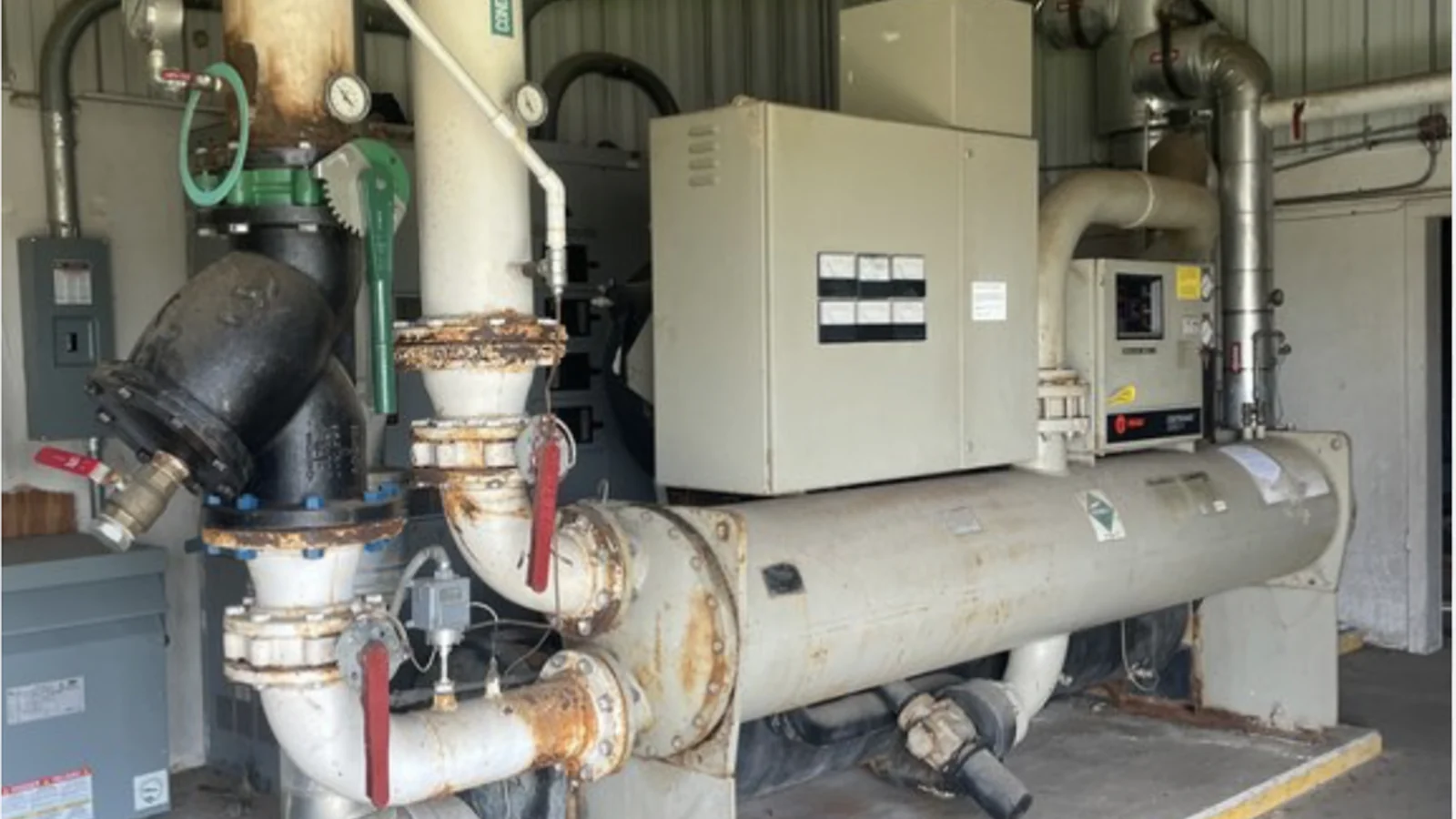
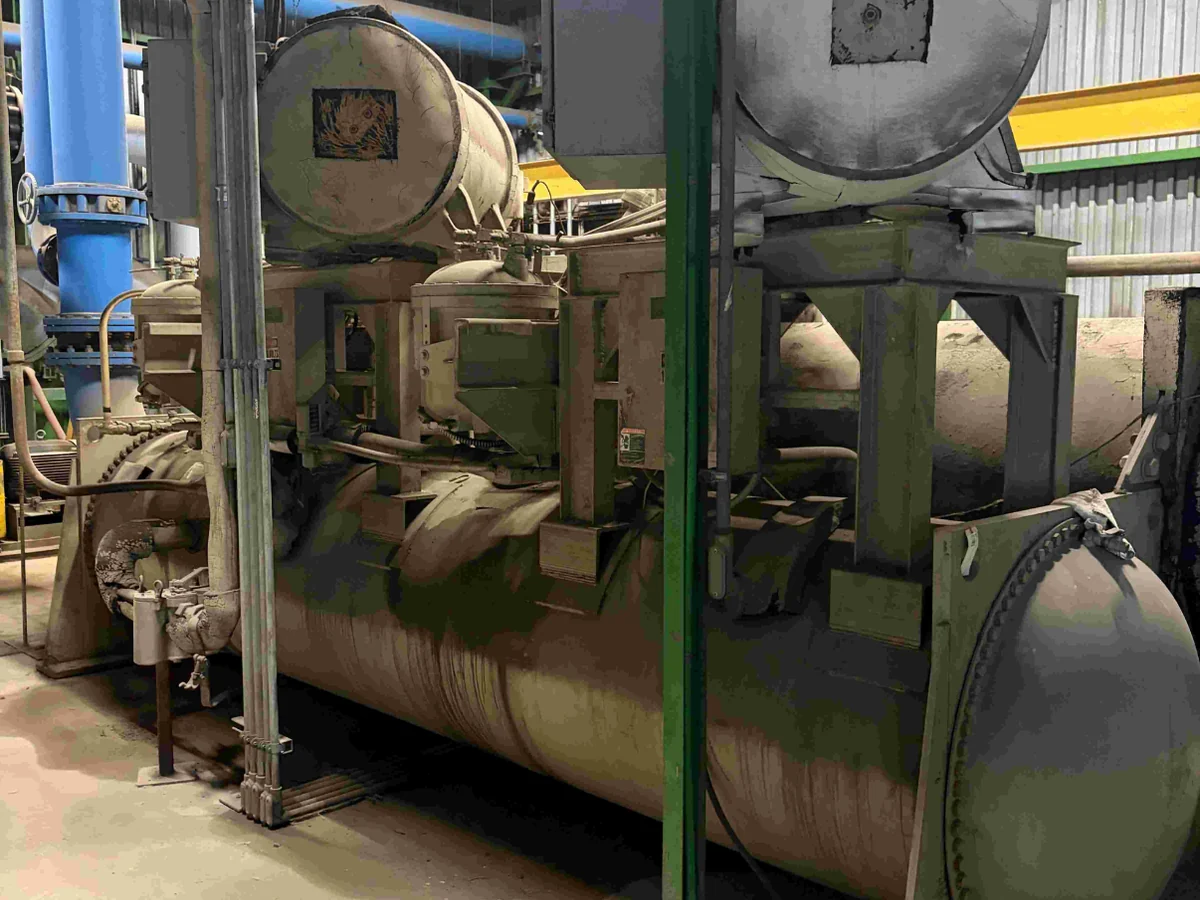
- Wide photos of the full chiller, compressor and heat-exchanger areas, controls, pump package, damage, removed parts, and loose accessories.
- The matched original catalog, installation/operation manual, submittal, service record, or equipment schedule, with the model and serial match identified.
- Present operating status, last known operating period, known alarms, leaks, modifications, missing components, and any unknowns.
- Exact U.S. location, installed/disconnected/stored status, plant connections, access facts, release authority, and earliest realistic release window.
01 / Legacy identity first
A McQuay nameplate should lead to a matched record, not a guess.
McQuay is a legacy identifier, not a promise that a machine has the same specifications as a current successor product. Daikin Applied states that it was formerly known as McQuay International, and its archived-literature resource is the right place to look for discontinued product documents. Start with an unobstructed nameplate photo, exact model code, serial number, and the original documentation that matches that unit.
Keep the brand chain factual. A McQuay-nameplate unit may have later controls, repairs, retrofits, or replacement components, but those changes do not turn it into a current model. Likewise, do not move an AquaSnap, Sterling, or Temptek inquiry into the McQuay record because a description is incomplete. The badge, model, serial, and matching literature decide the equipment identity.
- Photograph each manufacturer and serial-number plate squarely enough to read, including any separate compressor or panel tags.
- Transcribe the complete model code character for character; flag unreadable characters rather than filling them in.
- Attach the page of the matched catalog, manual, or submittal that identifies the exact model family.
- Photograph any controller faceplate and the software or revision label only when it is safely accessible.
- If the equipment is called AquaSnap, Sterling, or Temptek, capture its actual OEM badge and submit it under the correct manufacturer identity instead of assuming a McQuay relationship.
02 / Model code is a starting point
Separate the original model-family facts from the machine that is actually on site.
Official McQuay-era literature can provide useful verification once the model matches. For example, Daikin Applied’s archived WGS catalog identifies WGS 130A–190A as water-cooled screw-compressor chiller configurations, documents water-cooled and remote-condenser variants, and shows model-code, physical-data, electrical-data, and dimensional sections. That example is useful only for a matched WGS unit; it is not a specification shortcut for another McQuay model.
Record the original model family and then separately record the real configuration. A chiller may be air-cooled or water-cooled, use scroll, screw, centrifugal, or magnetic-bearing compressor technology, and have pumps, remote condensers, BAS interfaces, heat-recovery components, or accessories that are not included in a potential sale. Current Daikin Applied materials use these technology terms, but a current product page must not be used to rewrite a legacy unit’s rating or features.
03 / Controls reveal history, not guaranteed condition
Document MicroTech and BAS evidence without calling an untested chiller operational.
McQuay-era literature and current Daikin Applied product materials use named control families, including MicroTech. A controller photograph, BAS point list, alarm history, operating log, or service record can help distinguish a legacy configuration and focus follow-up questions. It does not prove that a chiller currently runs, holds charge, achieves capacity, communicates correctly, or is complete.
Build a dated, present-tense condition record. State whether the unit is operating, idle, disconnected, stored, incomplete, non-operational, or unknown. Then distinguish first-hand observations from service-history statements and unverified reports. This gives a prospective buyer evidence to evaluate without converting maintenance information into a warranty or a performance claim.
04 / Machine versus plant
A McQuay chiller can be identifiable while its sale scope is still open.
A water-cooled chiller can depend on chilled-water and condenser-water loops, pumps, a cooling tower, controls, electrical gear, valves, and building systems. An air-cooled machine may still depend on field power, hydronic piping, controls, and a roof or mechanical-room route. Define the chiller and accessories separately from the operating plant so a buyer can understand what is being offered without assuming a complete system or a service project.
The installed location matters as much as the nameplate. Identify floor, roof, basement, yard, storage location, elevation, connection status, exit route, staging area, opening sizes, truck approach, facility restrictions, release authority, and timing. These facts describe the opportunity. They do not commit Surplus Chiller Buyer to inspection, disconnection, refrigerant work, rigging, removal, freight, restoration, or any local service.
05 / Transaction boundary
A complete legacy file supports evaluation; written terms define any agreement.
Submit the best available machine and site evidence for direct buyer evaluation, then keep every requested task visible. A form submission does not guarantee review, interest, offer, purchase, amount, payment, inspection, pickup, removal, freight, timing, or project service. If a transaction progresses, the exact serial-numbered equipment, condition assumptions, included items, release date, title and risk, and any allocated responsibilities must be confirmed in writing.
Do not treat refrigerant recovery or dismantling as automatic because a chiller is obsolete or being replaced. EPA states that chillers and other equipment typically dismantled on site before disposal must have refrigerant recovered in accordance with servicing requirements, and Section 608 prohibits intentional venting of regulated refrigerants and substitutes during maintenance, service, repair, or disposal. Use qualified, responsible parties and current EPA requirements for the actual activity. Surplus Chiller Buyer does not automatically provide or accept refrigerant recovery, disconnection, rigging, dismantling, demolition, removal, freight, permits, or restoration.
Frequently asked questions
Before you send the chiller.
If your machine does not fit a standard category, submit the available details anyway. Clear photographs and a readable nameplate often establish whether more information is worthwhile.
Is Surplus Chiller Buyer affiliated with McQuay or Daikin Applied?
No. Surplus Chiller Buyer is independent and is not affiliated with, endorsed by, or authorized by McQuay, McQuay International, or Daikin Applied. McQuay is used only to identify equipment that a seller may submit. Daikin Applied describes itself as formerly known as McQuay International.
Is a McQuay chiller the same as a current Daikin Applied chiller?
Do not assume so. Daikin Applied is the successor identity for McQuay International and maintains archived literature for discontinued products, but a current product page does not establish the specifications, condition, support status, or value of a legacy McQuay unit. Match the exact model and serial number to the appropriate documentation.
What if the equipment is called AquaSnap, Sterling, or Temptek?
Do not relabel it McQuay. AquaSnap is used by Carrier on its own official chiller products. For any of these names, send a readable OEM nameplate, model, serial number, and full-unit photos so the equipment can be identified correctly.
Can I submit a McQuay chiller if I only know that it is water-cooled or a screw chiller?
Yes. State what you know, show the nameplate and machine, and mark uncertain details as unknown. A matched WGS document, for example, may help identify a WGS water-cooled screw model, but it must not be used to guess the configuration of another model.
Does an installed McQuay chiller include removal, refrigerant recovery, rigging, or freight?
No. Submission does not include any service or logistics scope. Chillers commonly dismantled on site before disposal are subject to EPA refrigerant-recovery requirements. Describe the installed condition and requested work, then rely only on written terms for any responsibility a party actually accepts.
Authoritative references
Source material behind this seller guide.
These external manufacturer and government sources support the equipment terminology and planning context used above. They do not establish the condition, configuration, safety, compliance, or transaction fit of a specific chiller.