
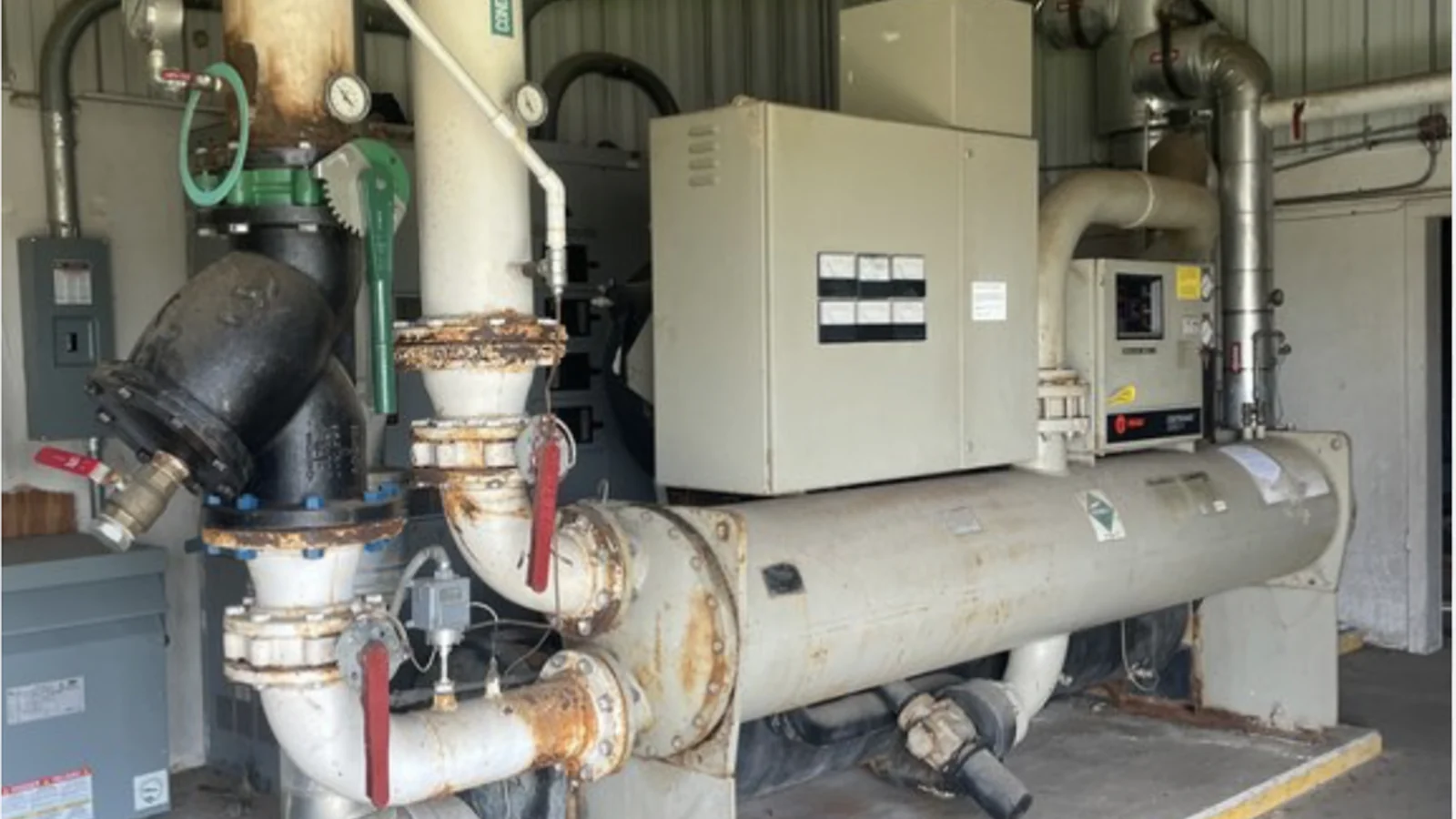
Seller planning for a controlled chiller handoff
Chiller Rigging Planning for Equipment Sellers
If an intact used or surplus chiller may need to be lifted or moved, start by documenting the real machine and the real site. Build a rigging evidence gate with verified unit data, lifting-point evidence, the exit route, site controls, and open responsibilities before requesting buyer evaluation. An inquiry does not include rigging or guarantee a purchase.
Rigging evidence gate
Send the machine and site facts before assuming a lift scope
Submit the available rigging evidence gate so a prospective buyer can evaluate the asset and the planning questions around a possible handoff. The file should identify the exact chiller, source-verified weight and dimensions where available, marked lifting points, route facts, site controls, and connection boundaries. This is not a request that Surplus Chiller Buyer must inspect, purchase, pay for, disconnect, recover refrigerant from, remove, rig, load, ship, dismantle, demolish, or complete work on a particular date.
Useful facts to have ready
- A readable nameplate for each chiller, plus full-machine photographs and the complete model and serial number where available.
- The source for the unit’s weight, dimensions, center of gravity, and lifting-point information; label every figure as verified, estimated, or unknown.
- Photographs of manufacturer-marked lifting points and the current unit condition, including removed parts, attached piping, panels, accessories, or visible damage.
- A simple, measured route record from the chiller to the proposed loading point: elevation, exits, openings, turns, overhead limits, staging, and truck approach.
- Installed or disconnected status, every remaining electrical, water, refrigerant, controls, structural, or building connection, and what must remain with the site.
- Site rules, access authority, release window, work-hour limits, approvals, and a list of every requested or unresolved project responsibility.
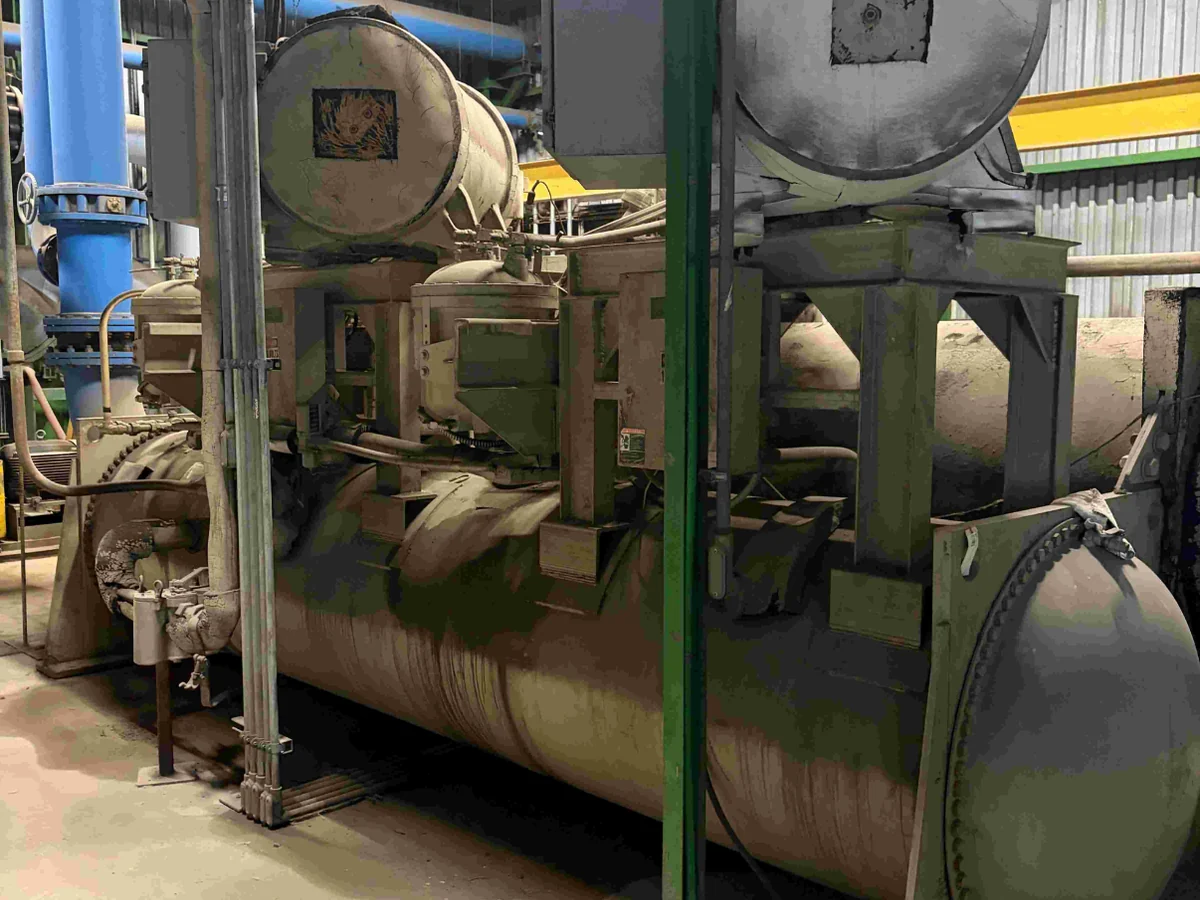
01 / Keep intact movement separate from other work
Rigging is one potential task inside a larger chiller handoff.
For seller planning, rigging means the controlled lifting or movement of an intact chiller. It is not a shorthand for everything needed to make a machine leave a facility. Chiller removal has a broader machine-and-site scope: the equipment included, connection status, access, loading point, release authority, and work that may remain. A potential buyer needs those distinctions because an installed chiller can be ready for evaluation while still having unresolved disconnection, access, loading, or site-control questions.
Demolition is different again. It describes dismantling or cutting up equipment rather than preserving an intact machine for a potential transaction. If an owner decides to dismantle a chiller on site for disposal, EPA identifies chillers as equipment that must have refrigerant recovered under servicing requirements before disposal. Keep refrigerant recovery, hazardous-material evaluation, permits, waste handling, and site restoration conditional and assigned only when a responsible qualified party and written scope exist.
- State whether the proposed handoff is intact movement, broader removal planning, partial dismantling, cut-up for disposal, or still undecided.
- List the chiller and every accessory as included, excluded, remaining in place, removed, or unknown.
- Identify every connection that remains: electrical, water, condenser water, chilled water, controls, refrigerant, drains, supports, or other building interfaces.
- State whether refrigerant circuit status is documented as intact, recovered, leaking, unknown, or otherwise; do not infer status from an idle machine.
- Put permits, hazardous-material surveys, waste handling, and restoration in the open-scope register unless the applicable responsible party and written scope are established.
02 / Data before assumptions
Record the current chiller’s weight, dimensions, and center of gravity from a traceable source.
Begin with the actual unit, not nominal tonnage, a sales listing, or a similar model. For a matching Trane Optimus RTHD configuration, the manufacturer manual provides overall weights, lifting-point weights, and center-of-gravity data, and directs users to designated lift points. Carrier’s 30XB instructions also point users to certified drawings and marked lifting points. These sources demonstrate what useful documentation looks like; they do not certify data for a different model, serial number, design series, or modified used machine.
A seller’s evidence gate should identify the source and status of every physical fact. Separate shipping weight from operating weight, original configuration from current configuration, and measured dimensions from an unverified drawing. Attached piping, water, batteries of accessories, removed components, structural modifications, and damage can all make an old document incomplete for present planning. Leave the determination of lift weight, load distribution, center of gravity, equipment selection, and safe method to appropriately qualified parties.
03 / The path is part of the transaction file
Show how the intact chiller could reach a loading point without choosing the lift method.
A proposed route starts at the exact chiller location and ends at a realistic loading point. Record whether the unit is at grade, on a roof, in a basement, on a mezzanine, or inside a live mechanical room. Show openings, corridors, turns, changes in elevation, overhead obstructions, staging limits, truck approach, and other physical constraints. OSHA states that routes for suspended loads are to be preplanned in the cited hoisting-and-rigging context; the seller’s role here is to supply facts, not to design the route or determine compliance.
Site controls matter as much as geometry. Document facility hours, shutdown or production limits, escort rules, access credentials, nearby operations, property restrictions, required approvals, insurance requirements if known, and the people who control access and release. Do not claim that the floor, roof, structure, ground, doorway, or staging area is adequate for a particular load unless the appropriate responsible parties have established that fact. A clear record lets a prospective buyer understand what may need review without promising a site visit or work.
04 / Marked points and qualified planning
Photograph approved lifting features; do not invent a connection or a capacity.
Manufacturer instructions are model-specific. Trane directs lifting of the cited RTHD model only from designated lift points and says each cable, chain or sling, hook, and shackle used to lift the unit must support the entire unit weight. Carrier’s 30XB instructions say to use only designated marked lifting points, use correctly rated slings, follow certified drawings, and use struts or a spreader bar to protect coils when that model is hoisted. Do not transfer these details to a different machine or treat a photograph of a lifting lug as approval of a proposed configuration.
A potential chiller transaction should not turn the seller, buyer, or page into a rigger. OSHA requires rigging equipment to be inspected before each shift and requires safe-working-load identification to be legible; it also requires damaged or defective rigging to be removed from service. OSHA’s cited rule calls for a qualified rigger to inspect rigging before each shift in its stated setting. A qualified-party planning process should determine equipment, rated capacities, connections, angles, controls, exclusions, and the actual lift plan for the site.
05 / Facts first, written scope later
Make the handoff discussion specific without promising project services.
The rigging evidence gate gives a direct prospective buyer a cleaner basis to evaluate the offered machine and the questions around release. It does not establish purchase interest, a price, payment, inspection, removal method, crew, schedule, or responsibility for any work. A buyer may seek clarification, request more evidence, decline, or discuss terms. The seller should keep condition, access, and scope changes visible because a change to the unit or the route can change the entire discussion.
If an opportunity proceeds, written terms should identify the exact serial-numbered equipment, included and excluded items, purchase amount if any, payment conditions, title and risk, release window, and every accepted project responsibility. Rigging, disconnection, refrigerant handling, removal, loading, freight, dismantling, demolition, permits, hazardous-material work, cleanup, and restoration should each be stated as included, excluded, assigned to a third party, or unresolved. No responsibility exists because it appears in a web inquiry or because the buyer has asked to review the evidence.
Frequently asked questions
Before you send the chiller.
If your machine does not fit a standard category, submit the available details anyway. Clear photographs and a readable nameplate often establish whether more information is worthwhile.
Is chiller rigging the same as chiller removal?
No. Rigging concerns the controlled lifting or movement of the intact chiller. Removal is broader: it can include the machine, connection boundaries, access, loading, release authority, and tasks around the site. Describe each task separately. Submitting the project does not mean Surplus Chiller Buyer will provide either service.
Is the nameplate weight enough to plan a chiller lift?
No. A nameplate or old schedule may help identify the unit, but qualified parties need the exact machine’s current handling condition, applicable weight basis, dimensions, center of gravity when available, manufacturer-designated lifting points, route facts, and site constraints. A generic capacity rating or similar model is not a lift plan.
What should I photograph for a potential rigging discussion?
Photograph the readable nameplate, all accessible sides, current attachments and removed components, marked lifting points, relevant lifting labels, and the complete path to the proposed loading point. Include measurements where practical, but label every value as verified, measured, estimated, or unknown. Do not remove panels or enter restricted areas just to create the file.
Will Surplus Chiller Buyer arrange the rigging, removal, freight, or refrigerant work?
Not automatically. Surplus Chiller Buyer is a direct prospective buyer, not a guaranteed project-service provider. An inquiry does not guarantee a purchase, price, payment, pickup, removal, freight, rigging, dismantling, demolition, refrigerant handling, timing, local office, or crew. Any responsibility considered for a specific transaction must be defined and confirmed in writing.
What changes if the chiller will be cut up or disposed of instead of moved intact?
That is demolition or disposal planning, not intact chiller rigging. Keep the scope separate and evaluate applicable site conditions, permits, hazardous materials, waste handling, and restoration only as needed. EPA says chillers dismantled on site before disposal must have refrigerant recovered in accordance with servicing requirements, and it does not permit an assumed refrigerant-work scope.
Authoritative references
Source material behind this seller guide.
These external manufacturer and government sources support the equipment terminology and planning context used above. They do not establish the condition, configuration, safety, compliance, or transaction fit of a specific chiller.