
Seller planning guide
Chiller Removal: Define the Machine, the Site, and the Handoff
Before a used or surplus chiller can be evaluated as a potential purchase, separate the equipment itself from the work around it. Build a removal-readiness record that shows what may transfer intact, what remains at the site, which connections are still live, and what access or compliance questions are unresolved.
Removal-boundary inquiry
Send the facts that separate the chiller from the site work
Use this form to submit a potential chiller transaction, not to order removal. The information below lets an independent prospective buyer understand the offered machine, the current disconnection boundary, the access situation, and whether intact removal remains possible. Please share only information you are authorized to provide.
Useful facts to have ready
- Machine identity: a readable chiller nameplate, asset tag, manufacturer/model/serial details where available, and a separate list of every offered chiller.
- Included-equipment boundary: photographs and a written list that marks compressors, control panels, starters/VFDs, pumps, vessels, skids, valves, insulation, loose spares, and documentation as included, excluded, retained, missing, shared, or unknown.
- Current connection boundary: a plain-language status for electrical feeds and controls; chilled-water, condenser-water, glycol, refrigerant, drain, vent, and any structural or roof attachments. Identify which systems must stay in service. Do not treat this field as authorization to disconnect anything.
- Move-profile evidence: the official equipment manual, submittal, nameplate, or other reliable record supporting weight, overall dimensions, center of gravity if provided, and designated lifting points; plus recent whole-unit photos from all accessible sides.
- Route and site controls: the exact U.S. location; grade, roof, basement, floor, or mechanical-room position; exit openings and dimensions; route photos; staging/truck limits; hours; escorts; shutdown windows; and known facility, landlord, or safety rules.
- Release and outcome evidence: whether the seller is seeking intact release, has already authorized a dismantling/cut-up decision, or is still deciding; known refrigerant status and recovery documentation if completed; sale authority; permits or approvals known to be required; and the requested release window.
01 / Start with a removal boundary
Define what “the chiller” means before discussing removal.
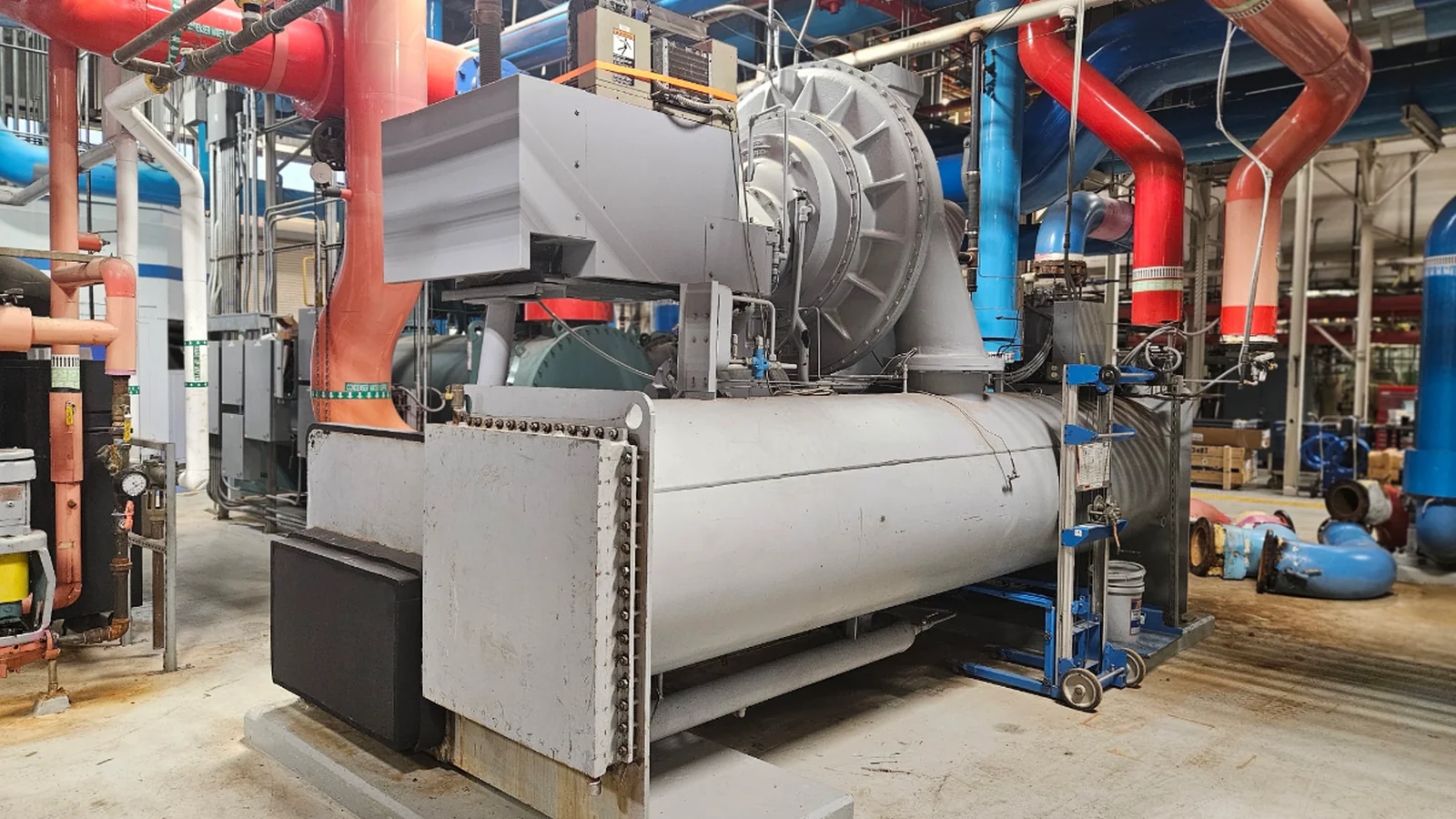
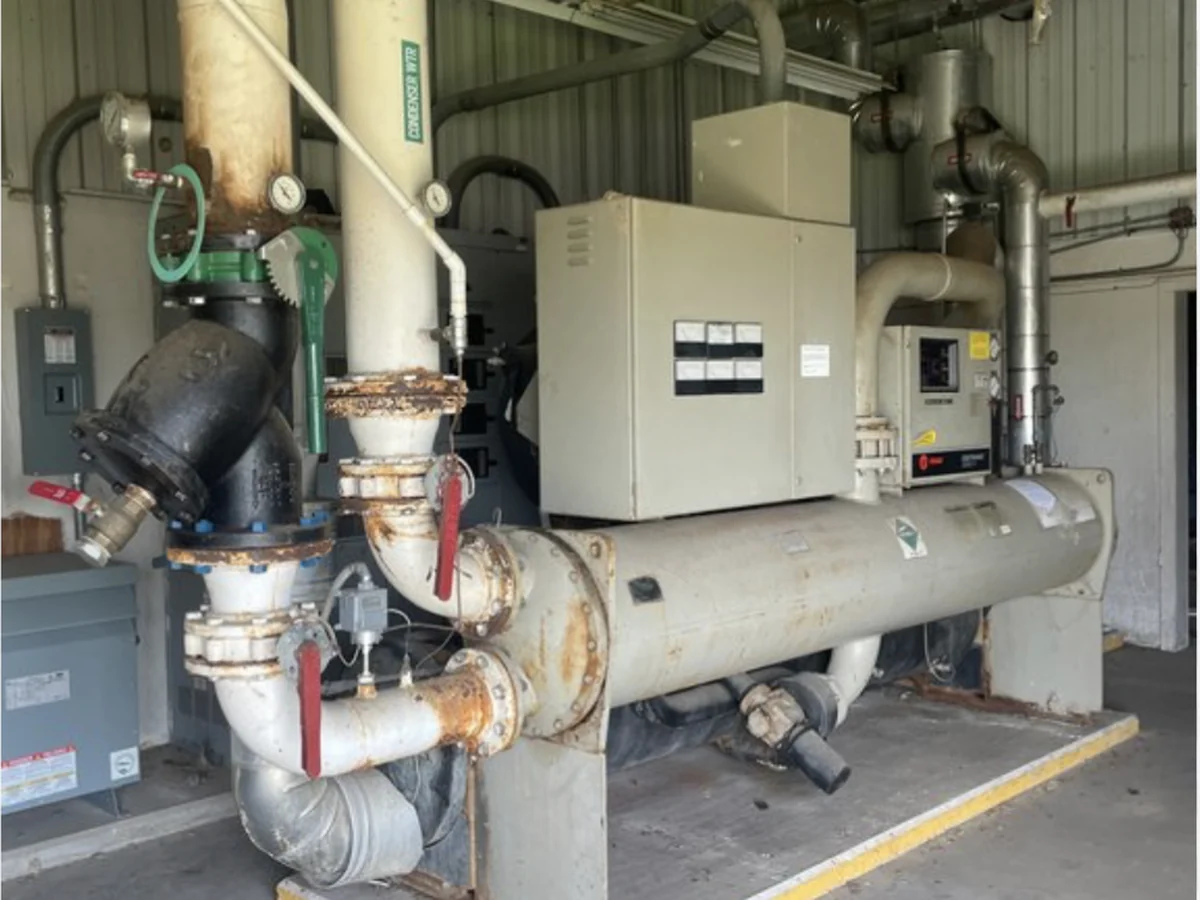
An installed chiller commonly connects to multiple electrical feeds, control wiring, chilled-water and condenser-water piping, glycol circuits, refrigerant components, drains, vents, pumps, starters, panels, structural steel, curbs, or a building-management system. A prospective buyer cannot infer which of those items are part of the offered machine from a single photo or a general plant-room description; the seller must define the equipment boundary for each unit offered.
For seller planning create one record per unit that pairs current photos with a written included/excluded list and identifies any facility assets that must remain in place or operating. That separation protects seller planning and lets a buyer evaluate an intact asset without treating the surrounding systems, utility work, or site changes as part of the possible transaction.
- Photograph the nameplate, asset tag, all accessible sides, controls, and every attached accessory; label each image with the unit or asset tag.
- Mark pumps, panels, starters/VFDs, tanks, skid frames, valves, loose parts, and records as included, excluded, retained, leased/shared, missing, or unknown.
- Identify each visible or known interface: power/control, process or building-water piping, condenser water, glycol, refrigerant, drains/vents, and structural attachments.
- State which connected systems or neighboring equipment must remain in service and who can authorize an operational change.
- Do not describe a component as included merely because it sits near the chiller; identify the seller’s authority to offer it.
02 / Record disconnection facts without assigning the work
Show the present isolation boundary and the remaining work boundary.
A useful listing distinguishes what has already been done from what may still be required. Describe the chiller as operating, shut down, electrically isolated, mechanically disconnected, refrigerant recovered, drained, partially disconnected, stored, or unknown only when supported by current site information; an observed off switch is not a substitute for formal isolation.
Name the facility representative who controls shutdowns and explain which disconnections remain open. OSHA’s energy-control standard addresses employer programs for isolating equipment and verifying isolation before covered servicing; this page must not instruct sellers to perform isolation or imply that Surplus Chiller Buyer will do so.
03 / Build a verified move profile for a possible rigging review
Rigging questions begin with the actual machine and the actual route.
Rigging and lift planning require reliable weight, overall dimensions, and lifting information for the machine configuration actually present. Submit manufacturer manuals, submittals, nameplates, or certified drawings that describe weight, center of gravity if provided, and designated lifting points; flag any field modifications or removed components rather than substituting a similar model’s data.
Document the travel path from the installed position to a possible loading area: roof or floor elevation, door and hatch dimensions, turns, floor transitions, overhead clearance, staging, and truck approach. OSHA guidance addresses inspection and rated-load identification for covered rigging and requires crane operators to verify load weight by an accepted method; qualified parties must develop any lift plan for the actual project.
04 / Keep intact removal separate from chiller demolition
An intact chiller transaction and cut-up disposal are different seller decisions.
Intact removal preserves the chiller as a transferable machine, subject to condition, access, and written transaction terms. Dismantling or cut-up reduces the unit into components or materials and can eliminate its value as a complete chiller and create site-specific material, safety, and regulatory questions.
For chillers typically dismantled on site before disposal, EPA guidance says refrigerant must be recovered under servicing requirements and that technicians performing disposal must hold the applicable Section 608 certification; recovery/recycling equipment must meet EPA testing requirements. Do not treat a sticker as proof of recovery; request the actual recovery documentation when available and leave hazardous-material surveys, permits, waste handling, and site restoration as project-specific responsibilities.
05 / Use the record to plan a conditional buyer evaluation
Submit an honest removal-readiness file—not a request for automatic project services.
This page is a seller planning guide, not an offer to perform removal, rigging, demolition, refrigerant, freight, or site work. Surplus Chiller Buyer is an independent prospective buyer of used and surplus industrial chillers in the United States and is not a removal, rigging, demolition, refrigerant, freight, or site-services provider. Sending information does not guarantee review, purchase, an offer, price, payment, pickup, removal, freight, rigging, dismantling, demolition, refrigerant handling, timing, a site visit, or a local office.
If buyer interest develops, require written terms that identify the specific equipment and included accessories, the condition basis, release prerequisites, transfer point, any price or payment conditions if applicable, timing, title and risk, and who is responsible for every removal-related task. Keep a change log and notify the prospective buyer if the machine, its components, access, or release window changes because the equipment and transaction may no longer be the same.
Frequently asked questions
Before you send the chiller.
If your machine does not fit a standard category, submit the available details anyway. Clear photographs and a readable nameplate often establish whether more information is worthwhile.
Does Surplus Chiller Buyer remove my chiller after I submit this form?
No. This page helps a seller present a potential equipment transaction with a defined machine and site boundary. Surplus Chiller Buyer does not automatically provide or guarantee removal, disconnection, rigging, pickup, freight, dismantling, demolition, refrigerant handling, timing, or a local crew. Any responsibility considered for a specific project must be agreed in writing.
Can I submit a chiller that is still connected and in service?
Yes. Identify it accurately as installed or operating and show which systems are connected or must remain live. Include the facility contact, shutdown constraints, access facts, and release window. Do not disconnect or isolate equipment because of a web inquiry, and do not assume that buyer evaluation includes site work.
What is the difference between chiller removal and chiller demolition?
Removal can preserve the machine for a possible intact transfer. Demolition, dismantling, or cut-up reduces the machine into components or materials and may end its value as a complete chiller. The seller should state which outcome is authorized. Each path can have different access, safety, refrigerant, material-handling, permit, and restoration questions.
What refrigerant information should I provide before an on-site chiller is dismantled?
Provide the refrigerant identification and charge information from the nameplate or records if available, the current status, and any completed recovery documentation. For a chiller being dismantled on site before disposal, EPA guidance says refrigerant must be recovered under the servicing requirements. A properly certified technician and compliant recovery process are project requirements; Surplus Chiller Buyer does not promise to perform them.
Why are weight, dimensions, lifting points, and route photos needed for a possible removal?
They help distinguish a real chiller and access situation from an assumed one. The relevant weight and dimensions must match the machine’s actual configuration, and lifting information must come from reliable equipment records. Route evidence shows where the unit is and what obstacles or controls may affect planning. These records support questions for qualified parties; they do not amount to a lift plan or commitment to rig the chiller.
Authoritative references
Source material behind this seller guide.
These external manufacturer and government sources support the equipment terminology and planning context used above. They do not establish the condition, configuration, safety, compliance, or transaction fit of a specific chiller.