
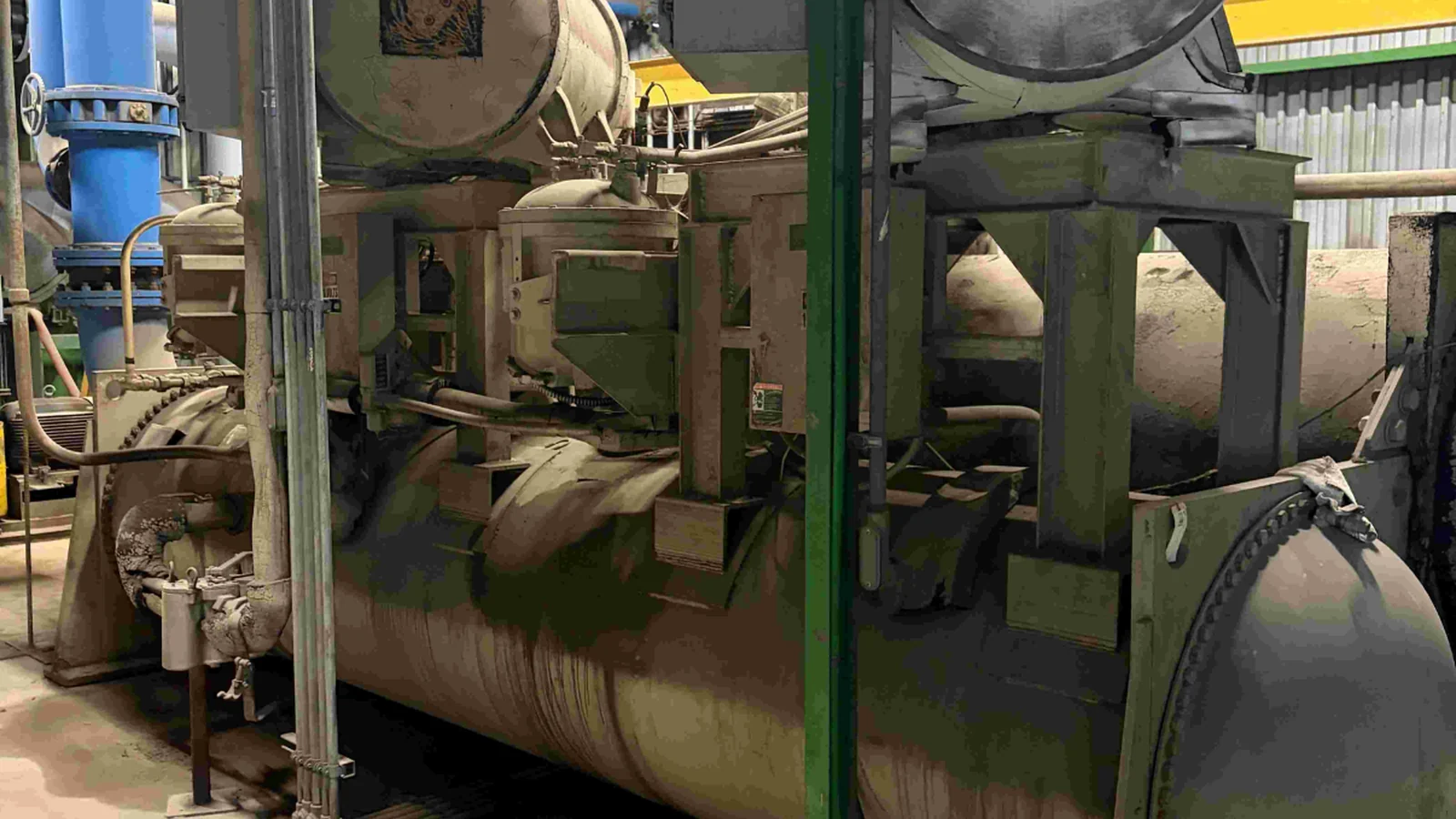
Seller planning for an intact chiller, partial dismantling, or cut-up
Chiller Demolition: Decide What Happens to the Machine Before Work Starts
A chiller marked for demolition may still need a disciplined decision before any panel is removed or metal is cut. Build an intact-or-cut-up record with the machine, refrigerant, disconnection, access, and site facts a direct prospective buyer needs to evaluate the opportunity.
Demolition decision record
Send the machine and site facts before the demolition decision becomes permanent
Submit the available record so a direct prospective buyer can assess whether the specific opportunity fits current purchasing needs. Clearly separate completed work from work being considered. Submission is an evaluation request only; it does not promise a purchase, offer, price, payment, response, inspection, pickup, removal, freight, rigging, dismantling, demolition, refrigerant handling, timing, local office, or project service.
Useful facts to have ready
- A readable nameplate and wide, current photographs of the complete chiller, controls, damage, missing parts, and attached equipment.
- The proposed outcome: intact removal, limited dismantling for access, cut-up, or not yet decided, plus the reason and decision deadline.
- Exact location, installed status, equipment elevation, exit route, staging or loading limits, and site-control requirements.
- Verified or source-identified machine weight and dimensions, the available lifting-point information, and any planned qualified-party review.
- The current utility and piping status, including what remains connected, what must stay operational, and the person authorized to confirm isolation.
- Refrigerant type and estimated charge if known, recovery status, recovery documentation if work is complete, and known hazardous-material, permit, or restoration questions.
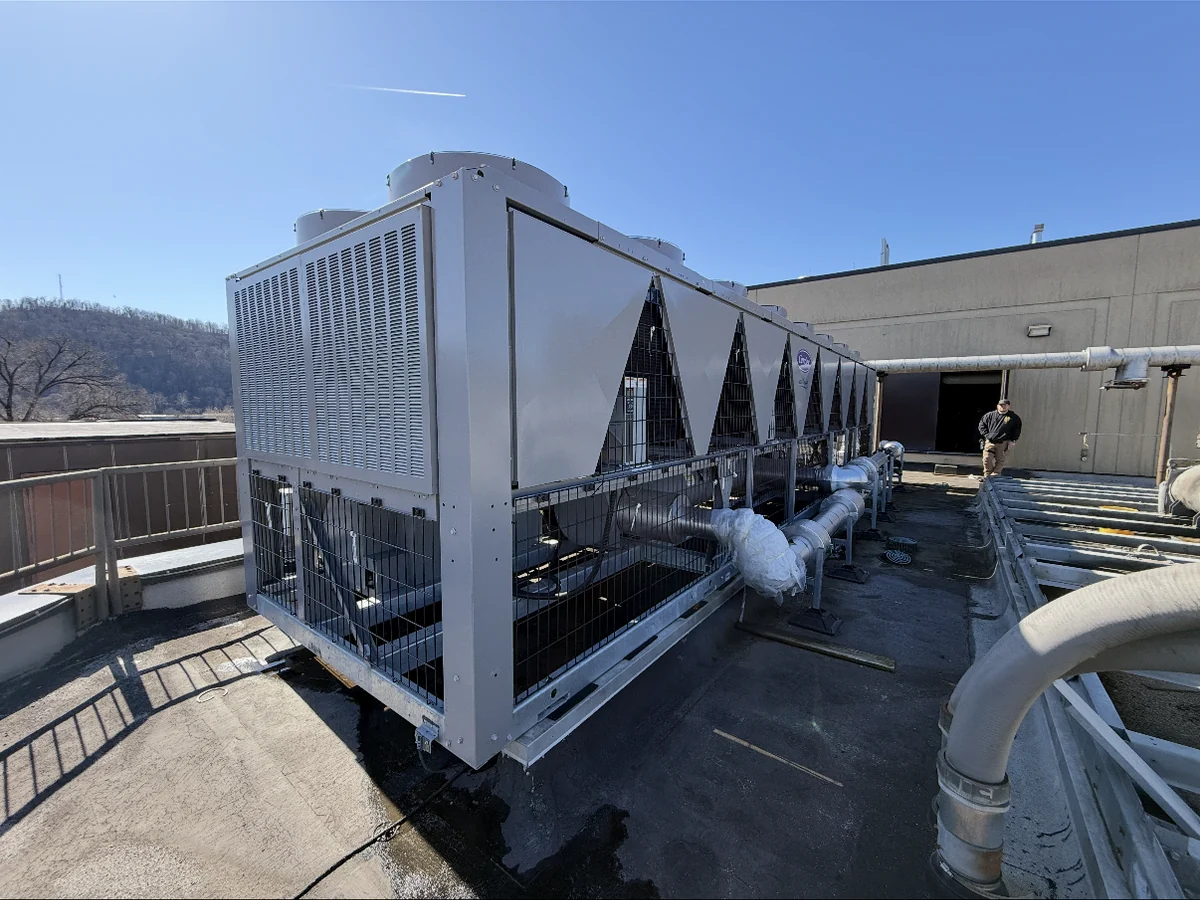
01 / The intact-or-cut-up decision
Treat demolition as a decision gate, not a default description.
A project can be called “chiller demolition” when the real choices are very different. Intact removal means the chiller remains a complete identifiable machine while it is disconnected, moved, and released. Dismantling means defined components are removed to address a documented constraint. Cut-up means the machine is no longer being preserved as a complete chiller. These paths can materially change the equipment record, condition evidence, handoff options, and the possibility of a used-equipment transaction.
Before a panel, compressor, heat exchanger, control, or structural component is removed, build one decision record for each unit. State who has authority to decide, why the work is proposed, what deadline applies, and whether the unit can remain intact while it is evaluated. A potential buyer may review those facts, ask follow-up questions, or decline. No website submission keeps a chiller off a demolition schedule or creates a purchase obligation.
- Photograph the full chiller from all accessible sides before any work, then photograph its nameplate, controller, compressor area, heat exchangers, starter or VFD if present, and all visible damage.
- Record the manufacturer, model, serial number, nominal capacity, voltage, refrigerant if known, controls, quantity, and every component already removed or missing.
- Select one current disposition: intact removal under consideration, limited dismantling under consideration, cut-up under consideration, or decision pending. Do not label a machine “scrap” if the scope is still unresolved.
- State the trigger for the decision, such as replacement startup, lease turnover, room access, building renovation, shutdown window, or a confirmed requirement to retain adjacent equipment.
- Identify the person who owns the machine or controls its release and every approval that remains pending.
02 / Disconnection and removal scope
Show exactly where the chiller ends and the building work begins.
A potential transaction concerns a defined machine, not an assumed package of building work. List the chiller and every included accessory separately: pumps, tanks, starters, panels, skids, isolation valves, controls, pipe sections, electrical feeders, supports, and loose parts. Also identify what must remain with the facility. For each electrical, refrigerant, chilled-water, condenser-water, glycol, steam, drain, control, or other connection, record its status as operating, isolated, disconnected, capped, drained, unknown, or subject to facility procedure.
Chiller removal is not the same as chiller demolition. Removal may preserve the machine but still requires an agreed handoff boundary between the equipment and the site. Do not assume that a buyer evaluation includes lockout or tagout, electrical disconnection, pipe cutting, draining, capping, refrigerant work, fire watch, removal of supports, opening or restoring walls or roofs, or cleanup. If actual building or structure demolition is planned, OSHA requires preparatory operations including an engineering survey by a competent person and control of service lines before employees start demolition; hazardous substances in pipes, tanks, or equipment must be determined and addressed before demolition begins.
03 / Intact-move feasibility record
Verify the load and the route; do not guess from the chiller’s size.
If intact removal is being considered, provide the best source for the machine’s verified weight and dimensions: an OEM document, equipment schedule, nameplate, drawing, or a qualified-party field verification. Identify the center-of-gravity information and manufacturer-designated lifting points when documentation exists. An estimate, a similar model, or an unlabeled lug is not a substitute for project-specific verification. Preserve the information so the appropriate qualified parties can determine whether an intact lift is feasible.
The record also needs the complete route from machine to release point: equipment room, roof, basement, grade, curb or pad, door and corridor dimensions, turns, overhead obstructions, exterior clearance, staging area, loading point, and truck approach. Identify access control, shutdown windows, escort rules, exclusion zones, insurance requirements, and ground or roof constraints. OSHA’s construction rigging rule requires inspections before use and legible safe-working-load markings; defective rigging is removed from service. OSHA guidance also calls for suspended-load routes to be planned and refers to qualified-rigger involvement in the relevant work. The qualified party—not this site—must plan and execute any actual lift.
04 / Section 608 record
A chiller cannot be cut up on an assumption that the refrigerant issue is finished.
Refrigerant status belongs at the front of a demolition decision. EPA identifies chillers and industrial process refrigeration as equipment typically dismantled on-site, and says refrigerant must be recovered under the servicing requirements before disposal. EPA also says Section 608 requires technicians who maintain, service, repair, or dispose of equipment that could release refrigerants to be certified; certification categories include high- or very-high-pressure appliances and low-pressure appliances. Do not call a chiller “empty,” “recovered,” or ready for cut-up without a project record that supports the statement.
Ask the responsible qualified refrigerant party to define the applicable equipment category and process, then retain the work record relevant to the unit. The record may include the date, technician or company, refrigerant identified, recovery method or equipment information, quantity recovered if recorded, and the next intended disposition. EPA prohibits intentional venting of ozone-depleting refrigerants and their substitutes during maintenance, service, repair, or disposal, subject only to limited exceptions. Surplus Chiller Buyer does not recover, transport, manage, certify, or verify refrigerant and does not accept responsibility for compliance.
05 / Closeout and transaction planning
Hazardous materials, permits, and restoration are site-specific responsibilities—not automatic buyer services.
If a project includes demolition around the chiller or cut-up at the site, the seller should identify conditions that require separate review. OSHA notes that demolition can expose hidden materials such as lead, asbestos, silica, chemicals, or heavy metals. The federal demolition standard also requires consideration of hazardous chemicals, gases, explosives, flammable materials, or similar substances used in pipes, tanks, and other equipment, with testing and purging when presence is apparent or suspected before demolition begins. State what surveys, sampling, abatement, testing, purging, waste characterization, permits, or authority-having-jurisdiction reviews are known, pending, or unknown.
Do not fold permits, disposal, cleanup, pad or curb removal, roof or wall repair, piping restoration, utility restoration, floor repair, or final site condition into the word “demolition.” These items can change scope, timing, risk, and cost. For buyer evaluation, list them as seller responsibility, third-party responsibility, buyer request for consideration, not included, or open for written agreement. If a potential transaction proceeds, only the written terms can allocate the exact equipment, payment, title, risk, access, schedule, and any accepted project responsibility.
Frequently asked questions
Before you send the chiller.
If your machine does not fit a standard category, submit the available details anyway. Clear photographs and a readable nameplate often establish whether more information is worthwhile.
Does “chiller demolition” mean the chiller must be cut up?
No. It may describe a proposed project, but the seller should distinguish intact removal, limited dismantling for a documented constraint, and cut-up. That choice can affect the chiller’s identity, completeness, access plan, refrigerant work, and whether a potential buyer can evaluate it as a complete machine.
Can I submit a chiller while demolition is being considered or scheduled?
Yes. Submit the actual deadline, proposed scope, and the condition of the machine now. Do not delay work on the assumption that Surplus Chiller Buyer will purchase the chiller, stop the schedule, inspect the site, or provide a service. Submission begins evaluation only, and any transaction requires written terms.
Does a buyer evaluation include disconnection, removal, rigging, or freight?
No. An evaluation does not include those tasks by default. Identify what is connected, what has already been completed, the route and site controls, and the work you want considered. Any accepted responsibility for disconnection, refrigerant recovery, removal, rigging, loading, freight, dismantling, demolition, permitting, or restoration must be specifically confirmed in writing.
What refrigerant record should I have before a chiller is dismantled or disposed of?
EPA states that chillers typically dismantled on-site must have refrigerant recovered under the servicing requirements before disposal. Retain records that clearly connect the refrigerant work to the specific chiller, and use the responsible appropriately certified technician or service provider to determine the applicable requirements. Do not represent refrigerant recovery as complete without supporting project documentation.
Why do weight, dimensions, lifting points, and route photos matter if I only want to sell the chiller?
They help distinguish an intact-machine opportunity from a project that may require partial dismantling or cut-up. The source and reliability of the information matters. A potential buyer may need to understand verified machine facts and site constraints, but providing that information does not make Surplus Chiller Buyer responsible for a lift or any other site work.
Authoritative references
Source material behind this seller guide.
These external manufacturer and government sources support the equipment terminology and planning context used above. They do not establish the condition, configuration, safety, compliance, or transaction fit of a specific chiller.