
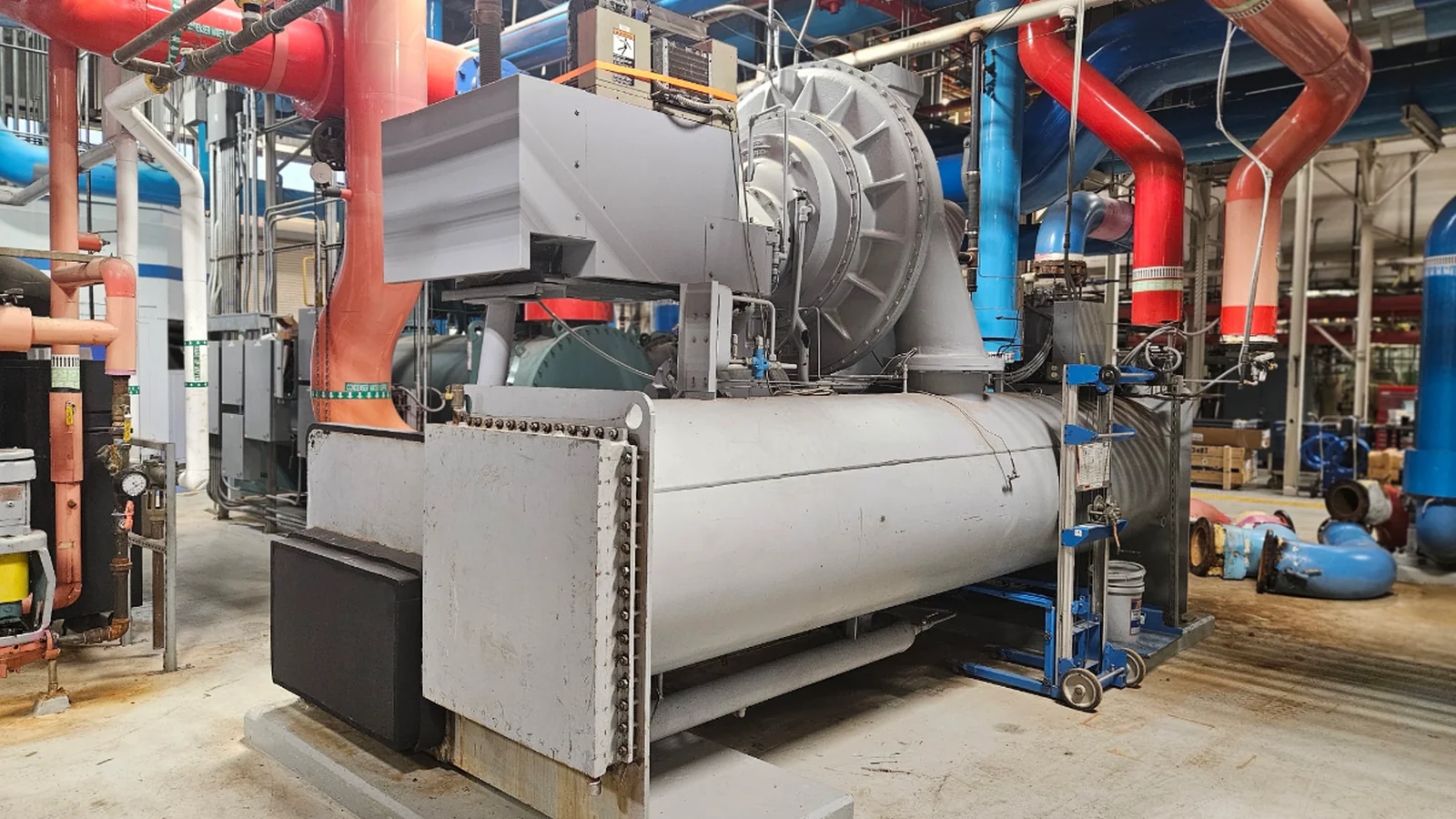
Independent Daikin and McQuay equipment review
Identify a Daikin or McQuay Chiller Before You Ask a Buyer to Review It
Daikin and legacy McQuay chillers can have similar lineage but very different configurations, controls, and handoff conditions. Build a unit-specific record from the actual nameplate, controller, photographs, and site facts so a direct prospective buyer can assess the actual equipment—not a brand assumption.
Daikin / McQuay equipment file
Send the labels, configuration map, and site facts for buyer evaluation
Submit the available evidence for the exact Daikin or McQuay chiller. Include what the labels and photographs show, not what a similar unit may have been. This begins an independent buyer evaluation only. It is not a purchase commitment or a promise that Surplus Chiller Buyer will inspect, buy, price, pay for, pick up, remove, rig, dismantle, demolish, transport, service, or recover refrigerant from the equipment.
Useful facts to have ready
- A straight-on, readable photograph of each Daikin, Daikin Applied, or McQuay nameplate, model label, and serial-number tag.
- Wide photographs of the complete chiller, compressor and condenser areas, electrical panels, controls, visible damage, missing components, and loose accessories.
- A lineage-and-configuration map showing the base chiller and any pumps, remote evaporator, free-cooling section, starter/VFD, controls, skids, or panels that are included or excluded.
- A photograph of the controller identification and available status or alarm information, taken safely without opening energized equipment or bypassing site procedures.
- The last known operating status, known repairs, faults, leaks, storage exposure, records, and any change since shutdown.
- The exact U.S. location, installed or disconnected status, machine elevation, access path, release window, authority to sell, and known site restrictions.
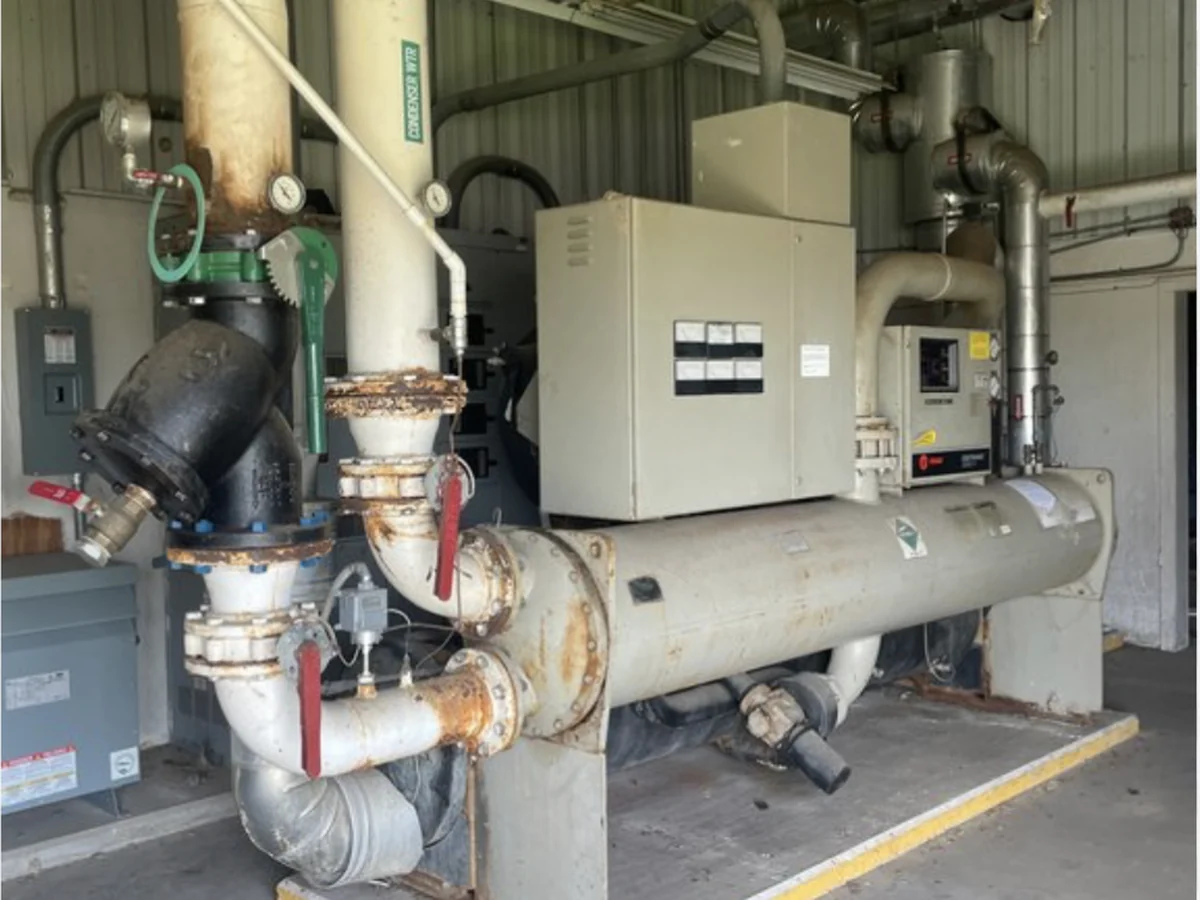
01 / Nameplate lineage
A McQuay label is evidence—not a reason to guess the model.
Start with what the equipment itself says. Photograph the manufacturer mark, model, serial number, electrical data, refrigerant label if present, and any controller or compressor labels. A Daikin-branded unit and a legacy McQuay unit belong in the same buyer conversation only after the seller preserves the exact wording and serial identity of each machine. Daikin’s official history says it acquired McQuay in 2006 and rebranded and merged the range in 2013.
Keep legacy lineage distinct from present identity. Do not repaint a McQuay chiller as a current Daikin model, assume current parts or support, or use a logo to fill a missing capacity, refrigerant, or control detail. This page should tell a prospective buyer whether the label says Daikin, Daikin Applied, McQuay, more than one of those names, or something else entirely.
- Photograph every manufacturer and serial label before cleaning, moving, or disconnecting the unit.
- Transcribe the model and serial number exactly, including suffixes, dashes, and revision characters.
- Photograph legacy McQuay, Daikin, and Daikin Applied marks separately when more than one appears.
- Match service records, drawings, and equipment schedules to the serial number; do not match them only to a building or a family name.
- Make a separate record for any Carrier AquaSnap, Sterling/Sterlco, Temptek, or other non-Daikin unit in the same room.
02 / Physical configuration
Show how this Daikin or McQuay chiller moves heat and fluid.
Daikin Applied divides its chiller offering into air-cooled and water-cooled equipment. Its current examples include air-cooled Pathfinder screw and Trailblazer scroll machines, water-cooled Navigator screw machines, and Magnitude magnetic-bearing centrifugal machines. Those categories give a seller useful vocabulary for photographs, but they do not establish the type of an older or modified unit. Identify the actual heat-rejection arrangement, compressor style when visible or documented, fluid connections, and installed accessories.
A family capacity range is not the capacity of the offered chiller. For example, the current Pathfinder AWV page lists 100–565 tons, while the Magnitude page lists 86–3,000 tons across its range. Record the nominal capacity and electrical details from the individual nameplate or matching certified document. If the information is unknown, say that rather than selecting a number from a product-family page.
03 / Options and controls
The base model may not tell the buyer what is physically offered.
Current Daikin literature shows how much configuration can matter. The Pathfinder AWV catalog describes options such as factory pump packages, a remote evaporator, and an integrated closed-loop free-cooling economizer; it also identifies VVR screw-compressor technology and certain refrigerant options. A current Navigator is a water-cooled VFD-driven screw platform, and current Magnitude models use oil-free magnetic-bearing centrifugal technology. These facts are useful prompts for a seller to document what is actually present, not proof that an older unit has the same options.
Photograph controls as part of the asset record. Daikin’s current product pages refer to MicroTech controls in multiple chiller families. A controller label, screen image, installed drive label, and associated wiring or panel tags can help distinguish a complete machine from a stripped or altered one. They do not prove that the chiller operates, that programming is transferable, or that a buyer will perform diagnostics, commissioning, service, or software work.
04 / Condition evidence
Separate an observed control status from a claim that the chiller works.
A powered controller can supply useful current evidence, such as a displayed alarm, operating mode, or communication status. It cannot by itself establish cooling capacity, compressor condition, refrigerant charge, water quality, leak condition, or future performance. Preserve the screen image with the unit serial number, the date, and a short note explaining whether the unit was operating, shut down, disconnected, locked out, stored, or of unknown status at that time.
Ask the seller for a timeline rather than a verdict. “Last ran in 2023,” “powered but not started,” “panel removed,” and “unknown after building shutdown” are more useful than “good” or “working.” This evidence-first record lets a prospective buyer decide whether follow-up makes sense. It does not make Surplus Chiller Buyer a Daikin service provider, condition inspector, appraiser, or guarantor.
05 / Release and compliance boundaries
The configuration map must end at a clear machine and site boundary.
A compact Daikin configuration can still be a complex site project. A factory remote evaporator, pump package, or factory knockdown construction does not mean that the offered equipment is already separated or that anyone has accepted disassembly. List the exact machine components being discussed, then separately identify electrical feeds, controls, piping, insulation, pumps, cooling-tower connections, structural supports, roof curbs, and building systems that must remain. For later qualified-party planning, verify current unit weight and dimensions from the exact nameplate, shipping data, or matched documentation; identify manufacturer-designated lifting points only from applicable documentation; and document the exit route, staging, lifting constraints, and site controls. Do not substitute family-level data or an old drawing for project verification.
Treat refrigerant and cut-up as a separate compliance question, not an assumed buyer service. EPA states that chillers and other equipment normally dismantled on-site before disposal must have refrigerant recovered under the servicing requirements before disposal. Current federal rules state that, before opening or disposing of most non-small appliances, a technician must evacuate refrigerant using certified recovery or recycling equipment and verify the applicable evacuation level, subject to the regulation’s exceptions. If dismantling, cut-up, demolition, refrigerant recovery, hazardous-material assessment, permits, utility isolation, or site restoration may be relevant, the seller should identify it for planning with appropriate qualified parties. Surplus Chiller Buyer does not automatically provide, arrange, or accept responsibility for any of those services.
Frequently asked questions
Before you send the chiller.
If your machine does not fit a standard category, submit the available details anyway. Clear photographs and a readable nameplate often establish whether more information is worthwhile.
Is a McQuay-nameplate chiller a Daikin chiller?
A McQuay nameplate establishes that the unit should be reviewed as a legacy McQuay asset. Daikin’s official history says it acquired McQuay in 2006 and rebranded and merged the range in 2013. Still, submit the actual McQuay model and serial number. Do not replace the original identity with a current Daikin model or assume current configuration, parts availability, service, condition, or purchase interest.
Are AquaSnap, Sterling/Sterlco, or Temptek units also Daikin units?
Do not assume so. Carrier identifies AquaSnap as a Carrier chiller family, while Sterling/Sterlco and Temptek publish their own process-cooling equipment. Give each unit its own nameplate record and use the correct manufacturer page. A shared mechanical room, similar color, or similar use is not a brand match.
Can I identify the chiller from “Magnitude,” “Pathfinder,” “Navigator,” or “MicroTech” alone?
No. Those names can be useful leads, but the prospective buyer needs the full model, serial number, configuration evidence, and photographs. A family name does not prove capacity, refrigerant, voltage, controls version, included options, present condition, or that a unit is current production.
Does a controller screen or a powered VFD prove the Daikin or McQuay chiller is operational?
No. It is dated evidence of what was observed on the screen or panel. Send the image, status, any alarms, and the last known operation history. Surplus Chiller Buyer does not guarantee that it will inspect, diagnose, repair, commission, or purchase the equipment.
Will Surplus Chiller Buyer disconnect, recover refrigerant from, rig, remove, or transport my Daikin or McQuay chiller?
None of those tasks is included automatically. Submit the actual site and scope facts so a prospective buyer can understand the opportunity. If any task is later considered, it must be evaluated for the particular machine and site, comply with applicable requirements, and be expressly confirmed in written terms. A submission alone does not promise purchase, price, payment, pickup, freight, timing, or project service.
Authoritative references
Source material behind this seller guide.
These external manufacturer and government sources support the equipment terminology and planning context used above. They do not establish the condition, configuration, safety, compliance, or transaction fit of a specific chiller.