
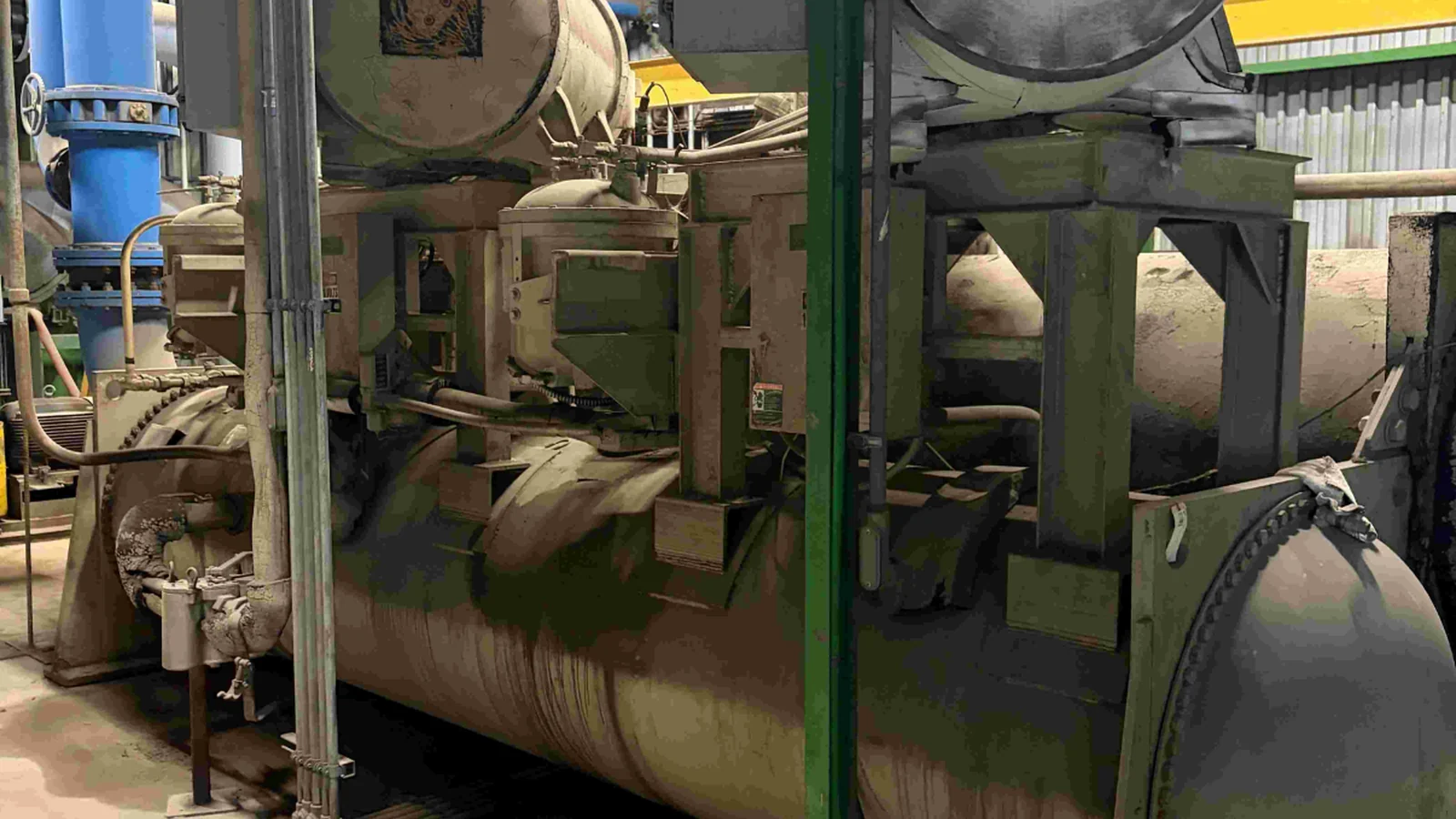
Independent equipment-identification guide
Thermal Care Chiller Identification and Sale Preparation
Have a used or surplus Thermal Care process chiller? Build a clear record of the exact machine, its cooling arrangement, the equipment included with it, its current condition, and the facts needed to plan a possible release. Surplus Chiller Buyer is a direct prospective buyer of used and surplus industrial chillers in the United States; submitting information starts a conditional review, not a sale or a service order.
Start with the machine and its package boundary
Send the Thermal Care facts a prospective buyer can verify
Use this form to start an equipment review. Give the model and serial number exactly as marked, show what is physically included, and describe the installed or stored condition. A submission does not guarantee purchase, an offer, price, payment, pickup, removal, freight, rigging, dismantling, demolition, refrigerant handling, timing, or a local office. Any transaction or work scope must be separately agreed in writing.
Useful facts to have ready
- A clear photograph of the Thermal Care nameplate, with model and serial number copied exactly; include control-panel or accessory tags when they identify a connected component.
- Wide and close photographs of the complete chiller, controls, process-fluid connections, condenser side, pump/reservoir area, visible damage, disconnected lines, and missing parts.
- A cooling-package boundary map that labels the chiller itself and states whether pumps, reservoir, remote condenser, cooling-tower-side components, piping, controls, loose spares, and electrical gear are included or excluded.
- The confirmed configuration: portable/packaged or central; air-cooled, water-cooled, or remote-condenser/split-system. State unknown rather than infer a category from a photo.
- Last known operating status, known alarms, repairs, refrigerant or fluid records if available, current storage or installation condition, and documents that support—not replace—the nameplate.
- Street address, grade/roof/basement/mechanical-room location, verified dimensions and weight if documented, access restrictions, authorized seller, proposed release date, and approvals still needed.
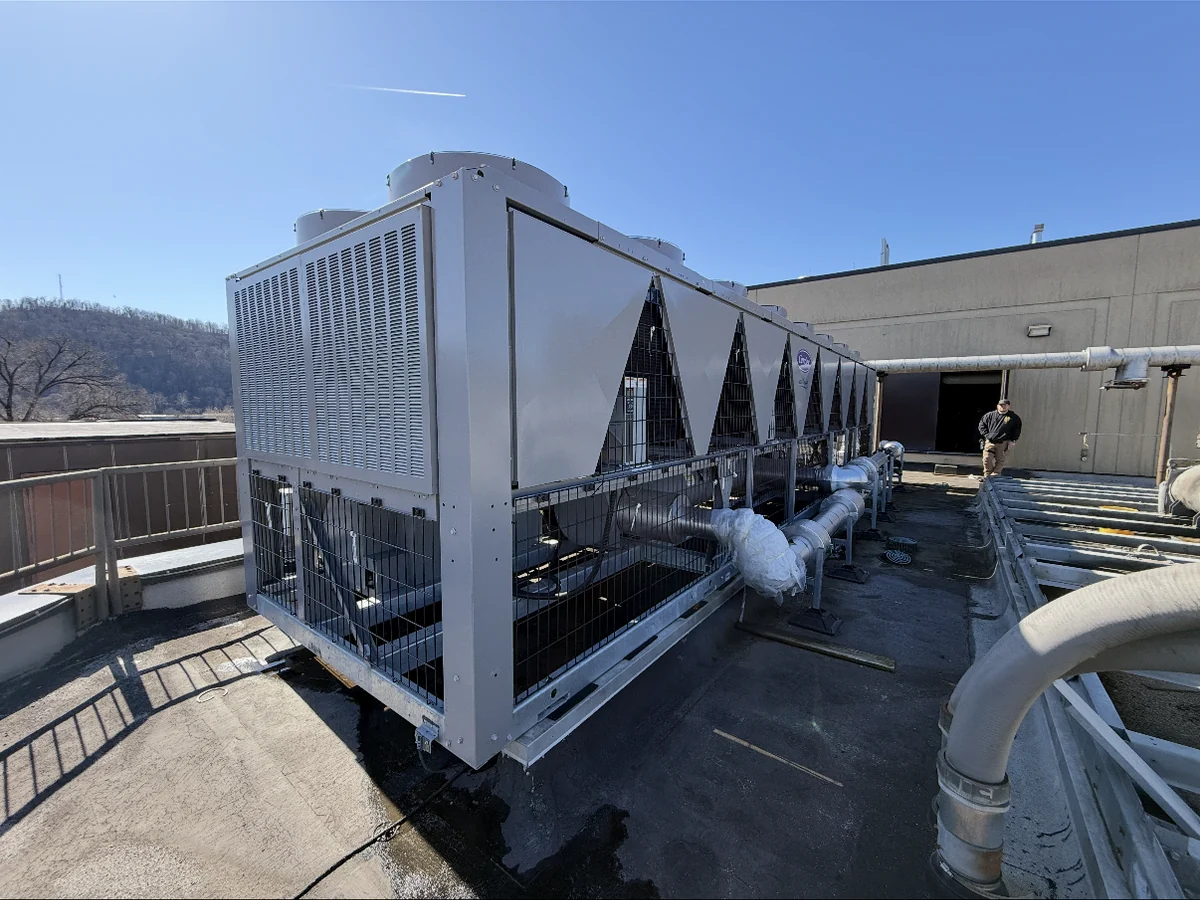
01 / Read the machine before naming the series
A Thermal Care brand mark is not enough to identify a used chiller.
Surplus Chiller Buyer is independent and is not affiliated with, endorsed by, sponsored by, or an authorized dealer, service provider, or representative of Thermal Care, Thermal Care Inc., PiovanGroup, or Aquatech. PiovanGroup announced in 2024 that it integrated its recently acquired Thermal Care business with Aquatech in an industrial/process-cooling division operating under the Thermal Care brand; do not assume an older Thermal Care or Aquatech unit has a current equivalent or successor without verifying the nameplate and records.
Create one machine record per chiller beginning with the readable manufacturer name, model, and serial number on the nameplate. Record electrical data, refrigerant marking, nominal capacity, manufacture or installation information, and any series designation only when the plate or records support it; photograph the plate in place and avoid filling unreadable fields with guesses.
- Photograph the full nameplate and transcribe model, serial number, voltage, phase, refrigerant, and capacity fields separately.
- Photograph the controller face, major compressor or drive tags, and any pump, reservoir, or remote-condenser tag with distinct identifiers.
- State whether the equipment is a portable/packaged unit, an outdoor packaged unit, a central chiller, or unknown and identify the basis for that classification.
- If using EQ, NQ, NQV, TSE, TC, TCF, or KSE names, mark them as plate-confirmed, record-confirmed, or unconfirmed visual match.
- Keep records for multiple chillers separate even when units share a common header, electrical room, or control system.
02 / Separate the chiller from the rest of the cooling train
Show exactly what travels with the Thermal Care machine—and what does not.
Make a cooling-package boundary map before asking for a buyer review. Thermal Care portable/packaged descriptions show self-contained equipment that may include the refrigeration circuit, controls, electrical equipment, a process pump, and a reservoir, while central chillers may have pumping systems that are integral or separate. The buyer needs the actual unit boundary, not a generic statement that the machine is a “complete system.”
Produce a simple annotated photo or sketch placing the chiller in the center and drawing lines to each connected or nearby component. Label every item as included, excluded, shared, leased/owned by another party, or unknown so shared plant components and remote condensers are not misrepresented.
03 / Confirm the cooling architecture
Air-cooled, water-cooled, and remote-condensing equipment need different evidence.
Thermal Care groups portable/packaged chillers by air-cooled, water-cooled, and remote-condenser (split) configurations and distinguishes central water-cooled and remote-air-cooled arrangements. These labels describe the condenser and heat-rejection arrangement, not merely where the machine happens to sit.
Describe only what can be observed or documented and avoid performance claims. Photograph fan-and-coil sections, condenser-water connections, or both parts of a split system as appropriate; do not state capacities, efficiencies, or operating results unless they are supported by the exact model, verified records, and test data.
04 / Capture the machine as it is now
A condition record is more useful than an unsupported statement that the chiller “runs.”
State the present status plainly: operating, idled, powered down, disconnected, stored, incomplete, damaged, or unknown. Add the last known operating date only when records support it and report known alarms, leaks, repairs, missing components, freeze events, or shutdown reasons without trying to diagnose the unit.
Preserve evidence that links the refrigeration machine and its fluid side: photograph pump and reservoir areas, visible piping changes, fluid condition records if available, and control displays where safely accessible. Do not claim the equipment was tested or that documentation proves future performance.
05 / Make site facts and open work visible
A buyer review is not a promise to disconnect, remove, rig, or dispose of a Thermal Care chiller.
Provide the street address and machine position: grade, pad, roof, mezzanine, basement, warehouse, live mechanical room, or off-site storage. State whether it remains connected to power, process-fluid lines, condenser-water lines, refrigeration lines, controls, or shared systems and identify who has authority to approve release and the planned release date or shutdown window.
Use verified manufacturer documents or qualified-party records to supply machine weight, dimensions, lifting information, and connection facts when those details affect planning. If removal, dismantling, refrigerant recovery, or disposal could be required, treat those items as open planning topics and rely on qualified parties and applicable official guidance rather than assuming they will be provided.
Frequently asked questions
Before you send the chiller.
If your machine does not fit a standard category, submit the available details anyway. Clear photographs and a readable nameplate often establish whether more information is worthwhile.
What Thermal Care equipment can I submit for buyer review?
You may submit a used or surplus Thermal Care industrial chiller, including portable/packaged, central, air-cooled, water-cooled, remote-condenser, or outdoor equipment, if you provide the best available identity, condition, package-boundary, location, and release facts. Submission does not mean every unit will be purchased or that a current product-family name applies to the older machine.
Is a Thermal Care portable chiller automatically a complete package?
No. Current Thermal Care portable/packaged descriptions indicate that a package may include refrigeration components, controls, electrical equipment, a process pump, and a reservoir. The proposed transaction still depends on what is physically present and specifically included. Photograph and list the actual pump, reservoir, remote condenser, accessories, and loose parts; mark shared or excluded items clearly.
How should I document a Thermal Care central chiller tied to a plant loop?
Create one record for each chiller, then add a boundary map for common pumps, tanks, headers, cooling-tower-side equipment, controls, and other shared assets. Thermal Care says central systems may have an integral or separate pumping system. Do not represent a shared plant component as part of a single chiller without clear authorization and an included/excluded statement.
Does the buyer provide removal, rigging, refrigerant recovery, or freight for a Thermal Care chiller?
No. A form submission or buyer review does not guarantee pickup, removal, rigging, dismantling, demolition, refrigerant handling, freight, or timing. Describe the known site and scope facts so they can be evaluated. Any responsibility for a project task must be stated in a separate written agreement. If equipment will be dismantled on site before disposal, plan refrigerant recovery in line with current EPA Section 608 requirements and the responsible qualified parties.
Is Surplus Chiller Buyer connected to Thermal Care or PiovanGroup?
No. Surplus Chiller Buyer is an independent prospective buyer and does not represent Thermal Care, Thermal Care Inc., PiovanGroup, Aquatech, or their affiliates. The brand is used only to identify equipment. PiovanGroup’s 2024 announcement says its Thermal Care and Aquatech businesses were integrated into a division operating under the Thermal Care brand; that corporate context does not establish a transaction, service, warranty, or successor relationship for an individual used machine.
Authoritative references
Source material behind this seller guide.
These external manufacturer and government sources support the equipment terminology and planning context used above. They do not establish the condition, configuration, safety, compliance, or transaction fit of a specific chiller.