
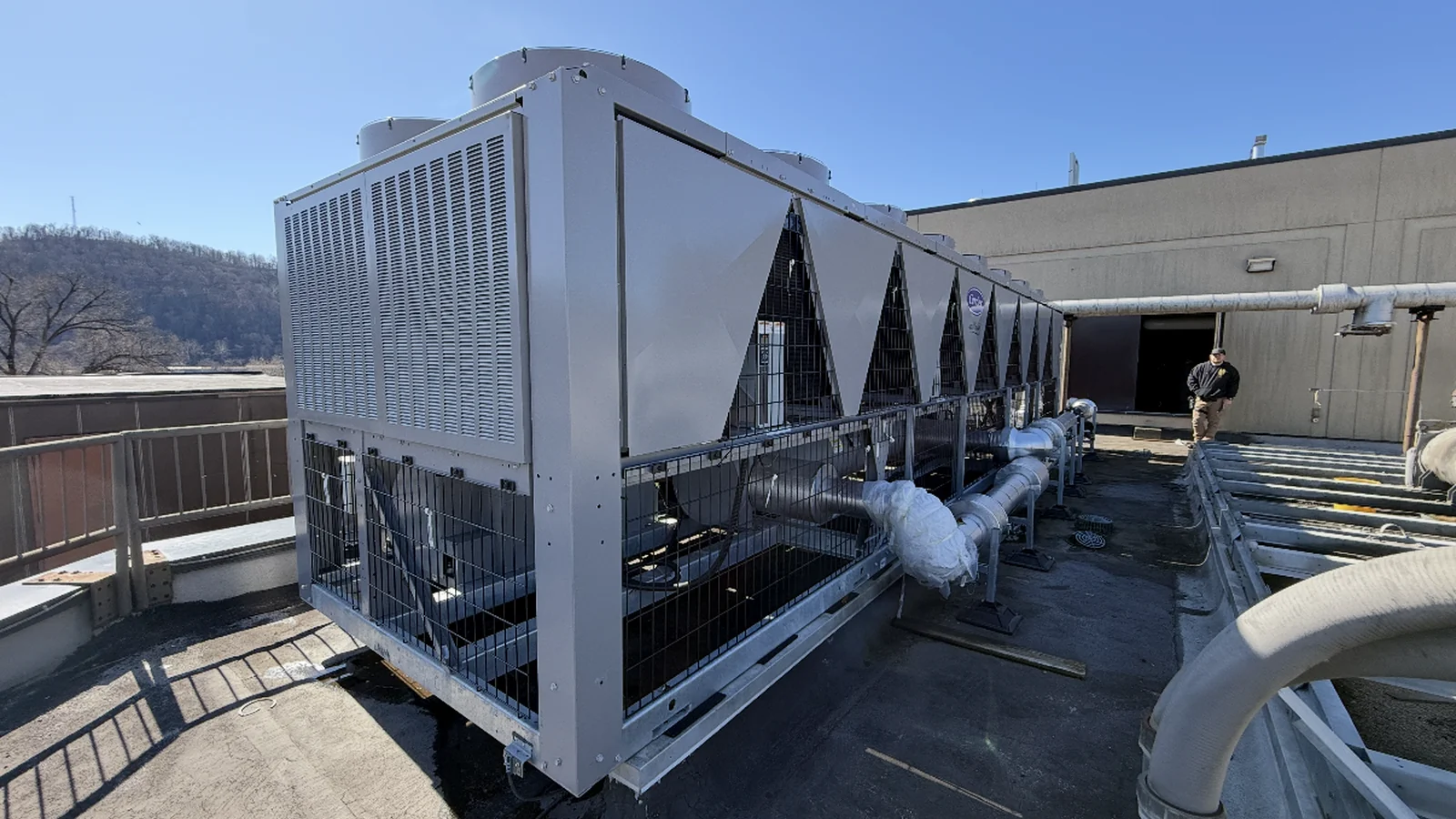
Sterling process-chiller identification
Sell a Used Sterling Chiller With the Right Configuration Record
Have a used or surplus Sterling process chiller in the United States? Surplus Chiller Buyer may review the specific equipment as a direct prospective buyer. Start with the complete model and serial information, then document whether the chiller is air-cooled, water-cooled, or paired with separate remote equipment.
Start with the full Sterling configuration
Show the model suffix, the chiller, and the equipment that completes its cooling path.
Submit the facts that identify the actual Sterling machine and separate it from surrounding plant equipment. A submission asks Surplus Chiller Buyer to evaluate an opportunity. It is not a purchase guarantee, offer, price, payment commitment, or agreement to inspect, pick up, remove, rig, freight, dismantle, demolish, disconnect, recover refrigerant, or provide project services.
Useful facts to have ready
- A sharp photo of each Sterling nameplate, model suffix, serial number, electrical data, and refrigerant label, if readable.
- Wide and close photos of the whole chiller, control/HMI, compressor area, condenser or water connections, pump/tank area, base, and any damage, missing parts, or open panels.
- Whether the unit is air-cooled, water-cooled, or remote-cooled; show the physical evidence rather than relying on an estimate or a current catalog match.
- A labeled list of every separate remote condenser, cooling-tower interface, pump tank, reservoir, control panel, skid, and accessory marked included, excluded, or unknown.
- Current condition and status: operating, idle, energized, isolated, drained, disconnected, stored, partially dismantled, faulted, or unknown; include available manuals, alarm history, and service records.
- Exact U.S. location, release authority, site access facts, and realistic release window, including restrictions that could affect inspection or a later transfer.
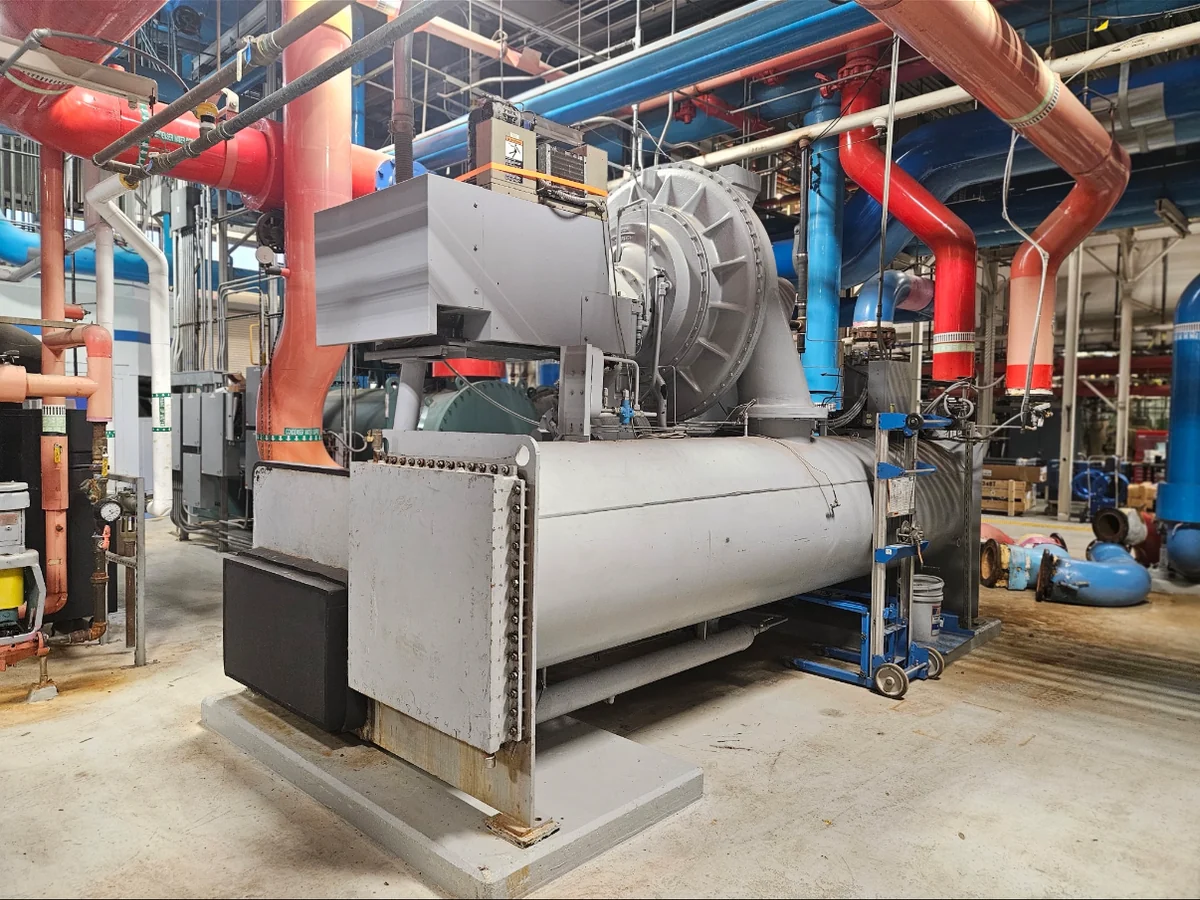
01 / Model-code first
Use the actual Sterling model suffix to frame the heat-rejection questions.
Sterling’s current GPL literature uses distinct model suffixes to identify air-cooled, water-cooled, and remote-cooled configurations. The full model identifier — including every prefix and suffix shown on the nameplate — is more informative than a general tonnage or an incomplete listing when a seller describes heat rejection or attached equipment.
Current product material is an identification aid, not proof of an older unit’s features or condition. A used chiller may have been modified, retrofitted, or paired with different supporting equipment; always confirm the suffix on the nameplate before assigning a condenser type or declaring what transfers with the cabinet.
- Photograph the full model, serial, electrical, and refrigerant labels straight on; do not transcribe a suffix from memory.
- If the tag is missing, upload clear photos of the cabinet, controls, refrigeration section, and line connections, then state that model identity is unconfirmed.
- For a purported GPL unit, show whether there are integral air-side coils and fans, condenser-water connections, or refrigerant lines leaving for remote equipment.
- Attach any manual, submittal, bill of materials, or service record that explicitly matches the serial number.
- Treat a present-day GPL catalog match as a research lead only; do not use it as proof for an unverified older machine.
02 / Complete the cooling path
Map the chiller cabinet, remote equipment, and plant interfaces as separate assets.
Sterling’s product lines include air-cooled, water-cooled, and remote-cooled designs and central systems that may use remote-air or water condensers or modular LHE units in parallel. A packaged cabinet can therefore be only one element of a larger cooling arrangement and should be documented as such.
The seller’s record must show what is attached to the offered machine and which connected components actually transfer with it. Do not imply that connected plant equipment is included with the chiller; instead supply an equipment map that clarifies inclusion, exclusion, or unknown status for each interface.
03 / Preserve the machine-specific condition and refrigerant record
Show what this Sterling chiller has now, not what a current brochure says it should have.
Current GPL documentation references scroll compressors, an advanced controller, and refrigerant options noted in the current specification. Those documents illustrate what present models may include, but they do not substitute for machine-specific labels, controller screens, service records, or physical inspection evidence.
Describe the actual refrigeration and control status of the offered unit and support those statements with dated photographs or records tied to the serial number. Surplus Chiller Buyer will not test, certify, charge, evacuate, repair, or handle refrigerant as part of a submission review.
04 / Separate intact transfer from removal, dismantling, or disposal
Define machine and site boundaries before anyone assumes a work scope.
An intact equipment transfer is distinct from dismantling or disposal and requires a clear machine boundary and site boundary. Identify electrical feed and disconnects, control wiring, process-water or condenser-water connections, refrigerant lines to remote condensers, structural supports, drains, and building penetrations before discussing any transfer.
OSHA, EPA, and other authorities provide general guidance on hazardous-energy control and refrigerant handling; the owner and appropriately qualified parties must determine and perform isolation, recovery, permitting, and safety work for the specific site and equipment. This page does not assign that work to Surplus Chiller Buyer.
05 / Build a release and rigging evidence package from verified facts
Plan the possible handoff around actual weight, dimensions, route, lifting points, and site controls.
Published dimensions and shipping weights for current models are identification references but are not an adequate lift plan for an existing chiller. Verified, machine-specific weight and dimensions, measured or documented, are required before any proposed transfer depends on size or weight.
If an intact removal is later considered, rigging and site parties need verified lifting points, center-of-gravity information if available, the path to loading, floor or roof conditions, clearances, and site controls. Sharing these facts helps a prospective buyer evaluate an opportunity without implying Surplus Chiller Buyer will plan or perform any rigging or local project work.
Frequently asked questions
Before you send the chiller.
If your machine does not fit a standard category, submit the available details anyway. Clear photographs and a readable nameplate often establish whether more information is worthwhile.
Do you buy every Sterling chiller that is submitted?
No. Surplus Chiller Buyer is a direct prospective buyer that may review the particular equipment and transaction facts. Submission does not guarantee interest, purchase, an offer, price, payment, pickup, removal, freight, rigging, dismantling, demolition, refrigerant work, timing, inspection, local office, or project service.
Why do you need the full Sterling model suffix?
Current GPL specifications use model suffixes to distinguish air-cooled, water-cooled, and remote-cooled arrangements. The suffix helps frame the right questions about attached and separate equipment, but it must be confirmed from the actual unit. Do not apply a current code to an older or unreadable nameplate without supporting evidence.
Are Sterling and Sterlco the same brand for this page?
Use the actual nameplate and equipment type. Sterling’s official history says the Sterlco name has a long temperature-control history, while ACS Group currently presents Sterling and Sterlco as separate brands. A Sterlco-marked unit should not be treated as a current Sterling chiller or a complete model match without unit-specific evidence.
Can you use the current GPL brochure to determine my older chiller’s refrigerant, capacity, or weight?
No. Current GPL literature is useful for identifying current model families and the kinds of evidence to collect. It does not prove the configuration, charge, capacity, dimensions, shipping weight, modifications, or condition of a different or older unit. Photograph the actual labels and share records tied to the offered serial number.
Does submission include refrigerant recovery, disconnection, rigging, removal, freight, or demolition?
No. Describe the work you think may be required, but do not assume it is included. Intact transfer, disconnection, rigging, freight, dismantling/cut-up, disposal, refrigerant work, permits, hazardous-material handling, and restoration are separate project questions. Any accepted responsibility must be evaluated for the actual equipment and confirmed in writing.
Authoritative references
Source material behind this seller guide.
These external manufacturer and government sources support the equipment terminology and planning context used above. They do not establish the condition, configuration, safety, compliance, or transaction fit of a specific chiller.