
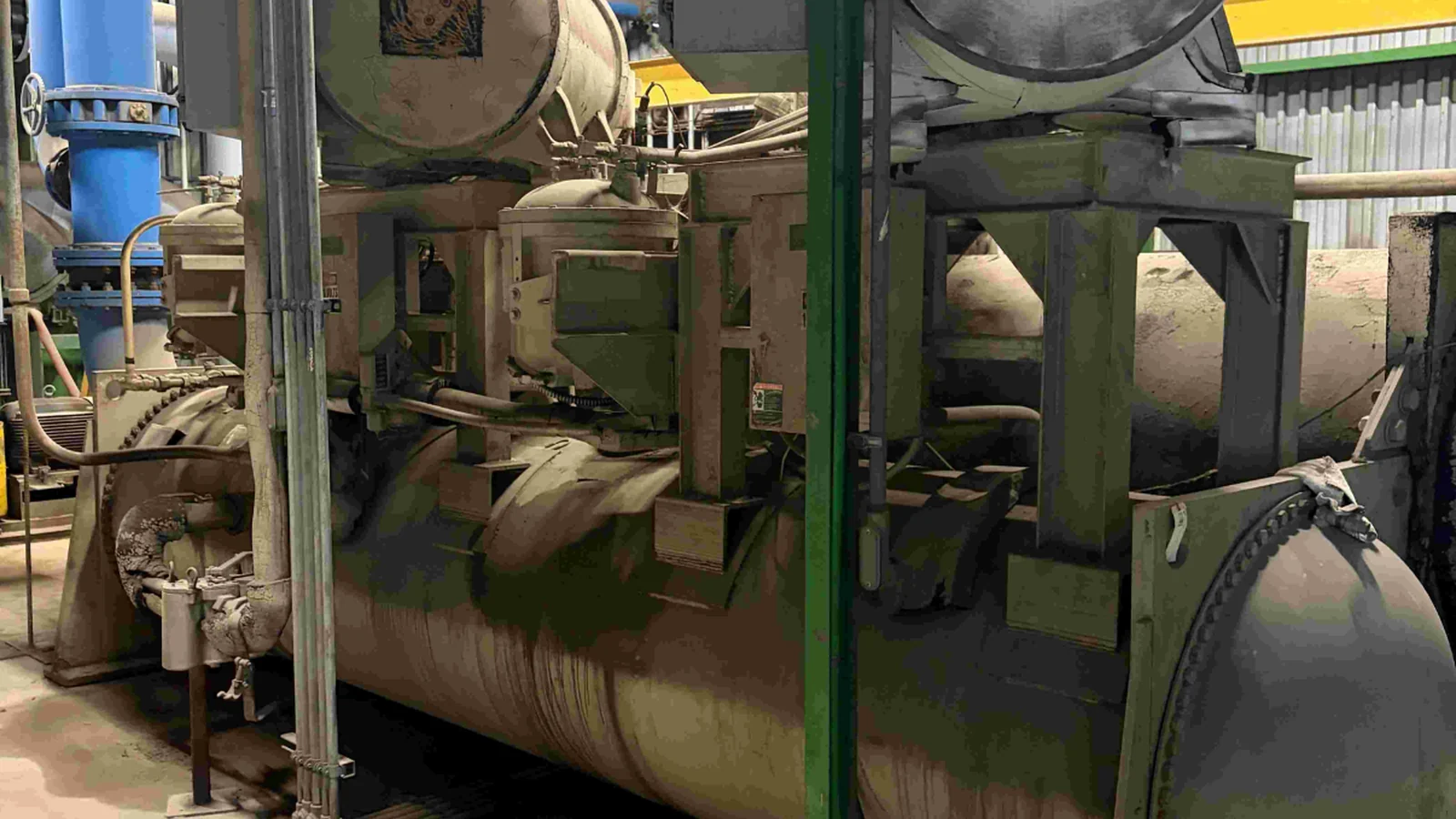
Independent Smardt equipment identification
Smardt Chiller Buyers: Document the Oil-Free Chiller That Is Actually on Site
A Smardt label is a useful starting point, but a prospective buyer needs the exact chiller, compressor arrangement, controls, installed accessories, present condition, and release facts. Build a unit-specific evidence file before asking for a direct buyer evaluation.
Smardt compressor-to-module file
Send the exact Smardt machine record for buyer evaluation
Start with the actual Smardt nameplate, then show the compressor-to-module configuration, present condition, included equipment, and site facts. This begins an independent buyer evaluation only. It is not an offer or a promise that Surplus Chiller Buyer will buy, price, pay for, inspect, pick up, remove, disconnect, rig, dismantle, demolish, transport, service, commission, or recover refrigerant from the equipment.
Useful facts to have ready
- A straight-on, readable photograph of every Smardt manufacturer plate, model label, serial-number tag, and any separate compressor, controller, or electrical-panel tag.
- A compressor-to-module evidence map that identifies visible compressor sections, heat exchangers, fan or condenser sections, pumps, controls, free-cooling equipment, and loose accessories as included, excluded, missing, or unknown.
- Full-unit photographs from accessible sides, plus close views of controls, power panels, refrigerant labels, damage, corrosion, disconnected points, and removed-component locations.
- The actual cooling arrangement—air-cooled, water-cooled, evaporatively cooled, or unknown—and any supported series identifier such as AeroPure, AD/AE, Core, Ultra, or E-Class; do not guess a series or current production status.
- A dated present-condition note covering last known operation, alarms or fault history, repairs, leaks, modifications, storage exposure, and whether the machine was observed running, energized, shut down, disconnected, or not safely observable.
- The exact U.S. location, installed/disconnected/stored status, included-equipment boundary, route/access facts, release authority, realistic release window, and known site restrictions.
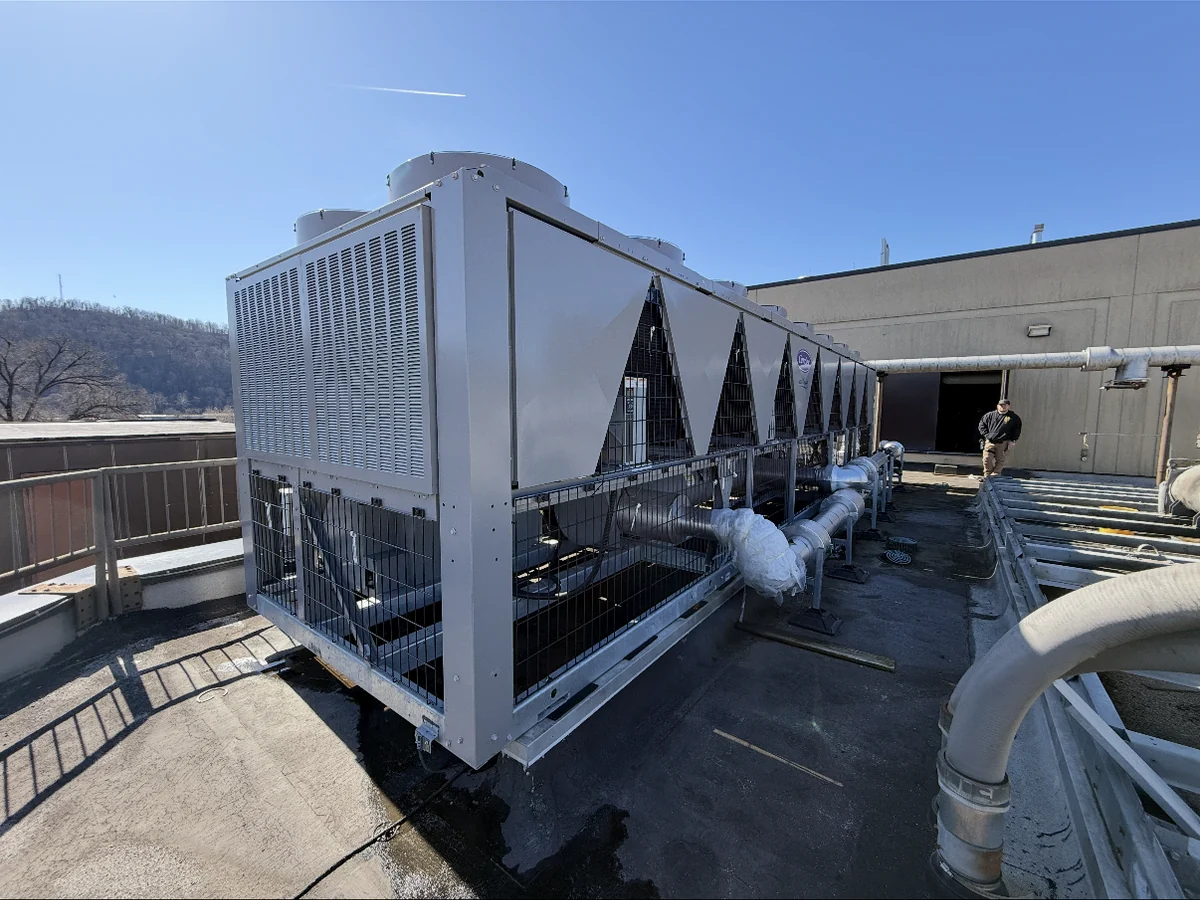
01 / Exact machine identity
An oil-free claim does not replace the model and serial record.
Smardt presents its current chiller portfolio as oil-free centrifugal equipment and lists air-cooled, water-cooled, and evaporatively cooled categories. That background can help a seller recognize useful details to photograph, but the buyer file must begin with the individual machine’s manufacturer mark, full model code, serial number, electrical data, refrigerant marking if present, and controller or panel labels. Transcribe every readable character exactly. If a field cannot be read, show it in a photograph and mark it unknown rather than completing it from a similar online unit.
Keep product family, equipment vintage, and installed configuration separate. A current official page may name AeroPure, AD/AE, Core, Ultra, or E-Class, but it is not evidence that an offered chiller is current, factory-complete, capable of a listed capacity, or supported under the same documentation. A legacy series designation, a repaired component, or a replacement panel may be important evidence, but it does not authorize a seller to substitute another model name or use a family range as the unit’s rating.
- Photograph the primary nameplate and every readable secondary tag before cleaning, moving, or disconnecting the chiller.
- Type the complete model and serial code exactly as shown, including suffixes, dashes, and revision characters.
- Photograph the controller face and power-panel identification from a safe, authorized location; do not open energized enclosures or bypass site controls.
- Separate a verified series marking from an unverified description such as “Ultra-type” or “AeroPure-style.”
- Match service records, submittals, installation literature, and equipment schedules to the serial number—not merely to the Smardt name or the building.
02 / Compressor-to-module evidence
Show the actual machine layout before calling it complete.
The current Smardt product range contains air-cooled oil-free chillers, water-cooled Core and Ultra Series equipment, and evaporatively cooled E-Class units. Ultra literature describes oil-free compressor configurations and says that multiple compressors can provide redundancy and turndown on that range. The AD/AE page also describes oil-free compressor options and built-in compressor redundancy. These are useful reasons to document each visible compressor section and heat-rejection component, not reasons to assume that every Smardt chiller has multiple compressors, magnetic bearings, the same refrigerant, or the same design features.
Create a compressor-to-module evidence map for each Smardt-labeled chiller. Start with the core chiller nameplate and record the complete model and serial number. Then photograph and list each identifiable compressor section, controller/power panel, heat-exchanger section, fan or condenser section, pump package, free-cooling hardware, and remote or loose accessory. Mark each item as attached and included, attached but excluded, separate and included, removed or missing, or unknown. Add one dated line that states whether the equipment was observed running, merely energized, shut down, disconnected, stored, or not safely observable.
03 / Controls and configuration
A controller screen is a snapshot, not a guarantee of chiller condition.
Smardt’s current materials describe configuration features that can materially change what is on site, including remote access on AD/AE equipment and options such as low-ambient features, harmonic filters, variable-speed fans, and the Smardt Global Controls Platform on the AeroPure AF Series. Those current examples should be used only to prompt the seller to photograph labels and actual hardware. They do not establish that an older machine includes any option, that a control program transfers, or that Surplus Chiller Buyer will diagnose, support, modify, commission, or service controls.
Preserve the evidence in a dated condition record. A safe, authorized photograph of a controller display can show an observed status, alarm, or lack of power at that moment. It cannot establish cooling capacity, compressor health, charge quantity, leak condition, water quality, or future performance. Record what was directly observed, when it was observed, and whether the equipment was running, energized but not started, shut down, locked out, disconnected, or unavailable for safe observation. Keep a refrigerant label or matched service record with the same serial-numbered equipment; never infer refrigerant from a current product family.
04 / Chiller versus site
The chiller can be identifiable even when the handoff plan is not.
Smardt’s official pages show a portfolio that can serve data centers, hospitals, industrial facilities, and comfort-cooling applications, but a buyer evaluation concerns the specific equipment at the specific U.S. site. State whether the chiller is installed, idle, disconnected, stored, incomplete, or unknown. Then draw the equipment boundary in plain language: chiller only; chiller plus listed attached accessories; or another exact list. Identify items that remain with the facility, including piping, tower equipment, pumps, panels, power gear, water-treatment systems, roof curbs, supports, or building controls.
Site facts shape a potential transaction without assigning a service scope. Provide the exact location, floor/roof/grade position, access route, exit openings, route turns, staging area, loading approach, site hours, escorts, shutdown constraints, insurance rules, permits, safety requirements, and release authority. An installed unit is not automatically a removal project. A prospective buyer’s evaluation does not mean Surplus Chiller Buyer will inspect, disconnect, isolate utilities, supply a crew, arrange a local office, or accept any site responsibility.
05 / Release and compliance planning
Intact removal, dismantling, and scrap cut-up are different project paths.
If the seller is considering intact chiller removal, the evidence map should clearly state the machine and site boundary. For qualified-party planning, verify the actual unit weight and dimensions from the exact nameplate, matched shipping data, or a qualified measurement; identify manufacturer-designated lifting points only from applicable unit documentation; and document route clearances, elevation changes, staging, loading access, site controls, and facility restrictions. Those facts help assess a possible transaction. They do not select a lift method or promise that Surplus Chiller Buyer will rig, remove, pick up, transport, or provide qualified personnel.
Dismantling or cut-up for disposal is not the same as intact removal. EPA states that chillers typically dismantled on site before disposal must have refrigerant recovered under the servicing requirements before disposal. If the scope may involve refrigerant recovery, opening the refrigerant circuit, dismantling, cut-up, demolition, hazardous-material assessment, permits, utility isolation, or site restoration, flag it for appropriate qualified parties and applicable project requirements. Do not represent a unit as “empty,” “safe to cut,” or ready for scrap based on a label or verbal report. Surplus Chiller Buyer does not automatically provide, arrange, or accept responsibility for refrigerant handling, demolition, permits, hazardous-material work, or restoration.
Frequently asked questions
Before you send the chiller.
If your machine does not fit a standard category, submit the available details anyway. Clear photographs and a readable nameplate often establish whether more information is worthwhile.
Is Surplus Chiller Buyer affiliated with Smardt?
No. Surplus Chiller Buyer is independent and is not affiliated with, authorized by, sponsored by, endorsed by, or acting for Smardt Chiller Group Inc. The Smardt name is used only to identify equipment a seller may submit for evaluation.
What should I send for a used Smardt chiller?
Send readable model and serial plates, complete-machine photographs, a compressor-to-module evidence map, the supported cooling arrangement, present condition, included/excluded equipment, exact location, access facts, release authority, and proposed release timing. Mark unknowns instead of guessing.
Does “oil-free” or a magnetic-bearing description prove the chiller is complete or operational?
No. Smardt’s current materials use oil-free and magnetic-bearing terminology for current product technology, but a label, model family, or controller screen does not prove compressor count, refrigerant, completeness, charge, operating condition, capacity, or future performance for a used unit.
Can I submit an installed Smardt water-cooled, air-cooled, or evaporatively cooled chiller?
Yes. Describe the actual machine, connected utilities, plant equipment that stays in place, location, access route, restrictions, and release plan. Submission does not include inspection, disconnection, refrigerant recovery, rigging, removal, freight, or demolition.
Will Surplus Chiller Buyer remove or scrap-cut my Smardt chiller?
No task is included automatically. Intact removal and dismantling/cut-up have different site, safety, and compliance considerations. EPA says chillers normally dismantled on site before disposal require refrigerant recovery under servicing requirements. Any responsibility a party accepts must be evaluated for the actual project and confirmed in writing.
Authoritative references
Source material behind this seller guide.
These external manufacturer and government sources support the equipment terminology and planning context used above. They do not establish the condition, configuration, safety, compliance, or transaction fit of a specific chiller.