
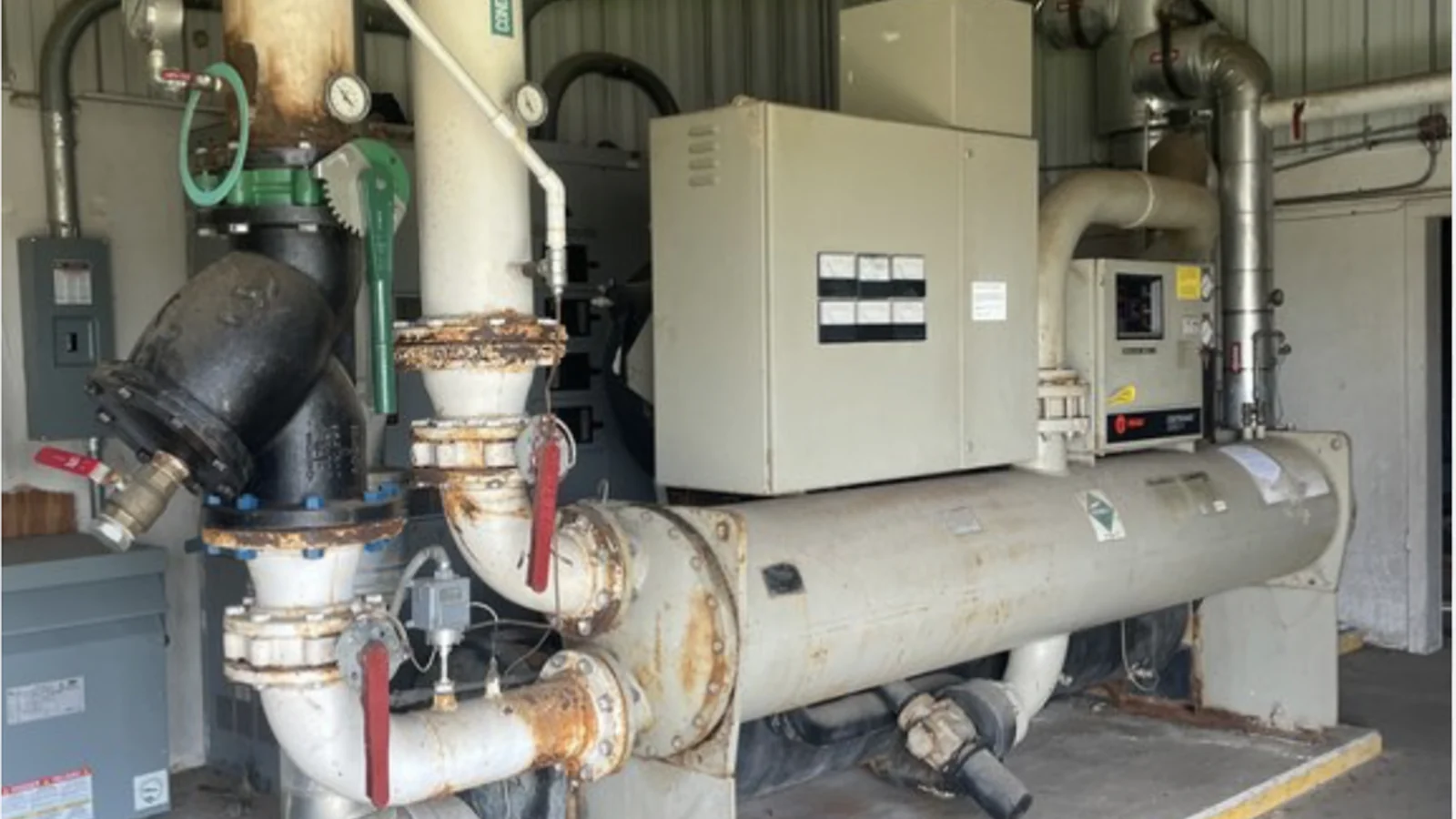
Independent Motivair equipment identification
Motivair Chiller Identification and Sale Preparation
Have a Motivair chiller or thermal-management package to evaluate? Start by separating the chiller from the connected liquid-cooling equipment, then submit the actual nameplate, configuration, condition, access, and release facts to a direct prospective buyer.
Motivair equipment inquiry
Send the chiller-to-loop boundary map for buyer evaluation
Send the available facts so a direct prospective buyer can evaluate the actual equipment and the proposed handoff. This inquiry does not promise a purchase, offer, price, payment, pickup, removal, freight, rigging, dismantling, demolition, refrigerant handling, timing, site visit, local office, or project service. Please identify unknowns rather than guessing. Any purchase or work responsibility must be separately agreed in writing.
Useful facts to have ready
- A readable equipment nameplate for each asset, including the exact manufacturer wording, model, serial number, voltage, refrigerant where shown, and date information where available.
- Wide photographs of the complete unit plus control panel, compressor or pump area, piping connections, heat exchangers, damage, missing items, and loose accessories.
- A chiller-to-loop boundary map showing the chiller, integrated or separate pumps/tank, facility-water side, process or IT-loop side, connected equipment, and what stays in service.
- The present status of every asset: operating, idle, disconnected, stored, incomplete, non-operational, or unknown; include the last known operating date and known faults.
- Exact U.S. location, placement (grade, roof, mechanical room, yard, etc.), verified or pending dimensions/weight, exit-route facts, loading area, and site restrictions.
- Sale authority, ownership or approval issues, earliest realistic release date, and any requested removal, refrigerant, rigging, freight, or other project responsibility stated as open—not assumed.
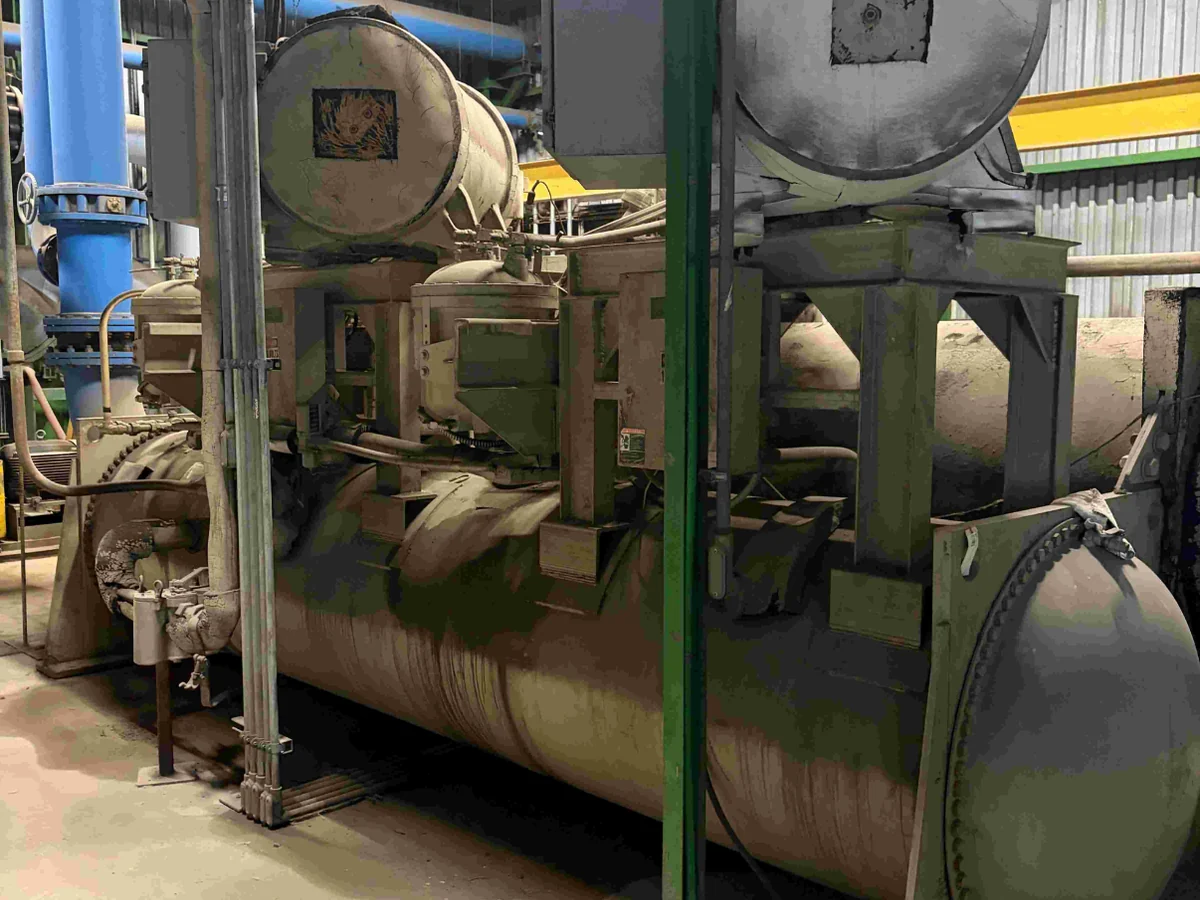
Asset boundary before model lookup
Is the offered equipment actually a chiller, or one part of a Motivair cooling chain?
Independent identification notice: Surplus Chiller Buyer is an independent prospective buyer of used and surplus industrial chillers. It is not affiliated with, endorsed by, authorized by, or acting for Motivair or Schneider Electric. “Motivair” is used on this page only to help identify equipment. A Motivair-branded data-center or process-cooling installation can contain equipment with different functions. A CDU manages the interface between facility water and IT cooling infrastructure, while an air-cooled or water-cooled chiller is a different asset category. Pump stations, tanks, rear-door heat exchangers, heat dissipation units, in-rack CDUs, cold plates, manifolds, or hose kits should be separately identified rather than absorbed into the word “chiller.”
Use a one-page chiller-to-loop boundary map before asking a buyer to evaluate the equipment. Show the serial-numbered chiller, each attached or nearby component, visible supply and return connections, and the point where building piping or the served load remains. The map documents the seller’s intent; it does not prescribe a disconnection method, transfer title, or assign anyone responsibility for a connected system.
- Evidence prompt: Photograph the unit nameplate and a wide view that shows whether the asset is a chiller, CDU, pump station, or another cooling component.
- Evidence prompt: Mark each separate serial-numbered item and each skid, tank, pump, panel, hose assembly, or rack-side component as included, excluded, unknown, or subject to approval.
- Trace the visible supply and return lines to a labeled boundary point; distinguish facility water from the process or IT loop when known.
- State whether the connected system still serves production, data-center racks, medical equipment, or another active load.
- Do not describe a CDU as a refrigerant chiller or assume a complete liquid-cooling chain is included because the equipment shares the Motivair brand.
Nameplate-led identification
Preserve the exact model, not a guessed product family.
The current public identity is Motivair by Schneider Electric, after Motivair joined Schneider Electric in 2025. That corporate relationship does not change the physical identity of equipment already installed or stored. A prior label may say Motivair Corporation, while a newer record may use Motivair by Schneider Electric. Keep the exact nameplate wording, model, serial number, electrical rating, refrigerant marking, and controller information together in the equipment file.
Official material identifies multiple chiller families and configurations, including air-cooled, free-cooling, low-temperature process, compact water-cooled, and scroll or Turbocor-compressor offerings. These family and brochure names are evidence prompts, not a complete fit list or an assertion that a particular unit is current, complete, operating, or purchasable. Photograph the nameplate and match the exact model only if the evidence supports it.
Present condition, not a performance promise
Document operating status and loop condition without overstating reliability.
Motivair presents equipment for critical thermal applications, including data-center, high-performance-computing, process, medical, and other thermal-management contexts. That context makes a plain “working” statement especially weak. State whether the offered asset is currently running, idle but intact, isolated, drained, disconnected, stored, incomplete, non-operational, or of unknown condition, and separately state the last date or period of observed operation.
A condition file should distinguish refrigerant-circuit evidence from water- or coolant-loop evidence. For a chiller, record visible leaks, alarms, controller status, compressor condition, coil or heat-exchanger damage, pump and tank status, freeze damage, corrosion, and removed components. For a CDU or pump station submitted alongside a chiller, record fluid type if known, evidence of leaks, filters, pumps, controls, and whether liquid has been drained. Do not represent a shutdown or untested asset as operational.
Installed asset planning
Define what must happen at the site without assuming Surplus Chiller Buyer performs it.
An installed Motivair chiller may be connected to electrical feeders, controls, refrigerant piping contained within the chiller, chilled-water or glycol piping, pumps, tanks, and a load that cannot be interrupted. The seller should specify what has been isolated, drained, disconnected, and removed—and what remains active or must remain in place. That information helps a potential chiller transaction and seller planning, but it does not mean Surplus Chiller Buyer automatically performs disconnection, removal, freight, rigging, dismantling, demolition, or refrigerant work.
If refrigerant must be recovered before an appliance is opened, serviced, or disposed of, plan the activity with a qualified party. EPA says technicians who maintain, service, repair, or dispose of equipment that could release refrigerant must be Section 608 certified, and it identifies removing refrigerant as a technician activity. EPA also requires recovery and recycling equipment to meet applicable testing requirements. The seller should preserve the unit-specific refrigerant type and recovery record when applicable, but must not assume a buyer will supply this service.
Direct prospective buyer review
Turn a specialized cooling package into an intelligible sale file.
A strong Motivair submission combines the identity evidence, chiller-to-loop boundary map, present-condition record, site facts, release authority, and dates. This is more useful than a generic “data-center cooling equipment” description because it allows a prospective buyer to understand whether the opportunity is a standalone refrigerant chiller, a chiller with an integrated pump/tank package, or a wider liquid-cooling system with assets that are not offered.
Surplus Chiller Buyer directly evaluates used and surplus industrial chillers in the United States when the equipment and project fit its current purchasing needs. A submission is not an offer or a guarantee that the company will purchase, provide a price, pay, inspect, visit, pick up, remove, freight, rig, dismantle, demolish, recover refrigerant, meet a date, maintain a local office, or deliver any project service. If the opportunity proceeds, the exact equipment and all responsibilities must be confirmed in writing.
Frequently asked questions
Before you send the chiller.
If your machine does not fit a standard category, submit the available details anyway. Clear photographs and a readable nameplate often establish whether more information is worthwhile.
Is a Motivair CDU the same thing as a chiller?
No. Motivair’s official materials describe a CDU as equipment that manages the interface between facility water and IT cooling infrastructure. Motivair also markets refrigerant chillers and other thermal-management equipment. Photograph the nameplate and identify the actual asset; do not use “chiller” as a catch-all for a CDU, pump station, rear-door heat exchanger, or liquid-cooling package.
My nameplate says Motivair Corporation, not Motivair by Schneider Electric. Is it still the right manufacturer name?
Use the exact wording on the nameplate. Motivair joined Schneider Electric in 2025, and its present identity is Motivair by Schneider Electric. An older unit or record may say Motivair Corporation. This page is independent and uses the name only to identify equipment; it does not establish factory support, warranty, authenticity, configuration, or value.
Can I submit an MLC, MLT, MPC, CTC, or free-cooling unit if I do not know the full configuration?
Yes. Submit the actual nameplate, wide photographs, electrical and refrigerant labels, controller images, and the records you have. The official brochure library identifies several model families, but a family name does not prove the installed options, compressor type, refrigerant, capacity, completeness, or present condition of a specific serial-numbered unit.
Can I assume a buyer will remove an installed Motivair chiller or disconnect the connected liquid-cooling equipment?
No. Describe the connections, equipment boundary, access route, project deadlines, and work you believe is needed. Surplus Chiller Buyer does not automatically provide removal, disconnection, pickup, freight, rigging, dismantling, demolition, refrigerant handling, or other project work. Any accepted responsibility must be specifically confirmed in writing.
What should I do about refrigerant before a chiller is opened, dismantled, or disposed of?
Plan the work with the appropriate qualified party. EPA requires Section 608 certification for technicians who perform specified work on equipment that could release refrigerant, including removing refrigerant, and EPA recovery-equipment requirements apply. Preserve unit-specific recovery documentation when applicable. This seller guide does not promise that Surplus Chiller Buyer will perform, arrange, or pay for refrigerant recovery.
Authoritative references
Source material behind this seller guide.
These external manufacturer and government sources support the equipment terminology and planning context used above. They do not establish the condition, configuration, safety, compliance, or transaction fit of a specific chiller.