
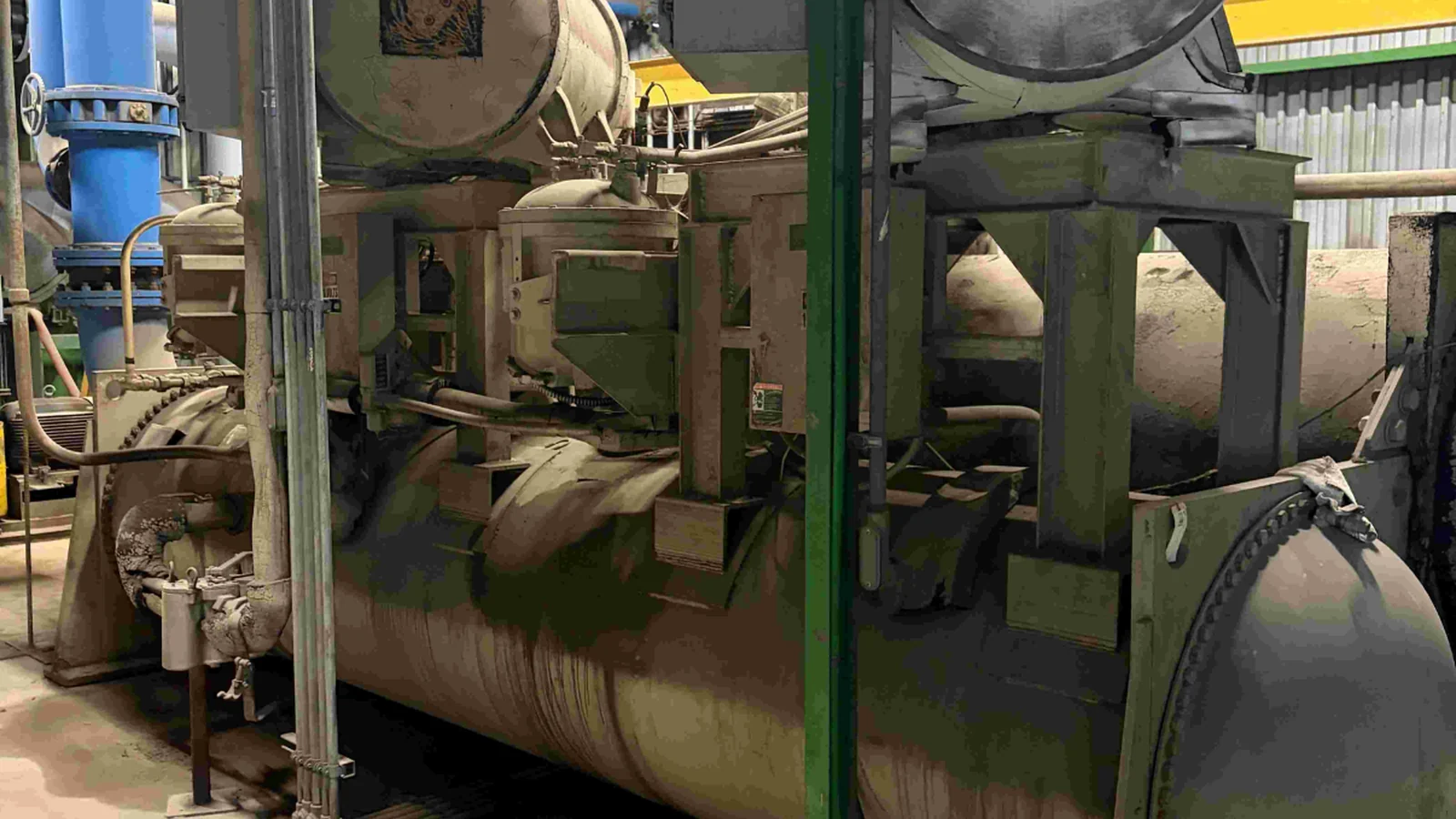
Independent Legacy process-chiller identification
Legacy Chiller Systems Chiller Identification for Seller Review
Have a Legacy Chiller Systems process chiller to evaluate? Build a configuration record that matches the actual unit—not a generic brand label. Photograph the nameplate, cabinet, heat-rejection arrangement, tank or pump package, controller, condition, and site facts so a direct prospective buyer can decide whether further review is warranted. Surplus Chiller Buyer is independent and is not affiliated with, authorized by, endorsed by, sponsored by, or acting for Legacy Chillers, Inc. or any related Legacy-branded entity.
Legacy configuration review
Send the cabinet and nameplate record for buyer evaluation
Start with the evidence that separates a Legacy process-chiller configuration from a broad equipment description. Share what is known and label uncertainty clearly. Submission asks an independent prospective buyer to evaluate the opportunity; it is not an offer or a promise to purchase, price, pay, inspect, pick up, remove, freight, rig, dismantle, demolish, handle refrigerant, meet a date, or provide local service. Surplus Chiller Buyer is an independent prospective buyer. It is not affiliated with, authorized by, endorsed by, sponsored by, or acting for Legacy Chillers, Inc., Legacy Chiller Systems, or any manufacturer, owner, or service provider.
Useful facts to have ready
- A readable photograph of each manufacturer nameplate, serial label, electrical label, and any label or manual that says “Legacy Chiller Systems (USA).”
- Wide photographs of every cabinet side, condenser coils or water connections, compressor compartment, controller/HMI, pumps, tank, accessories, damage, and missing parts.
- The observed configuration: air-cooled or water-cooled; one cabinet or a split condenser arrangement; tanked or tankless; model prefix if readable; and known compressor or VFD details.
- Present condition, last known operating date, known alarms, leaks, repairs, removed components, fluid/glycol history, and available Legacy startup or maintenance records.
- Exact U.S. equipment location, whether installed, disconnected, stored, or partly dismantled, plus connection status, access route, and realistic release window.
- Included and excluded equipment, the party authorized to discuss release, and any work or approvals that remain open.
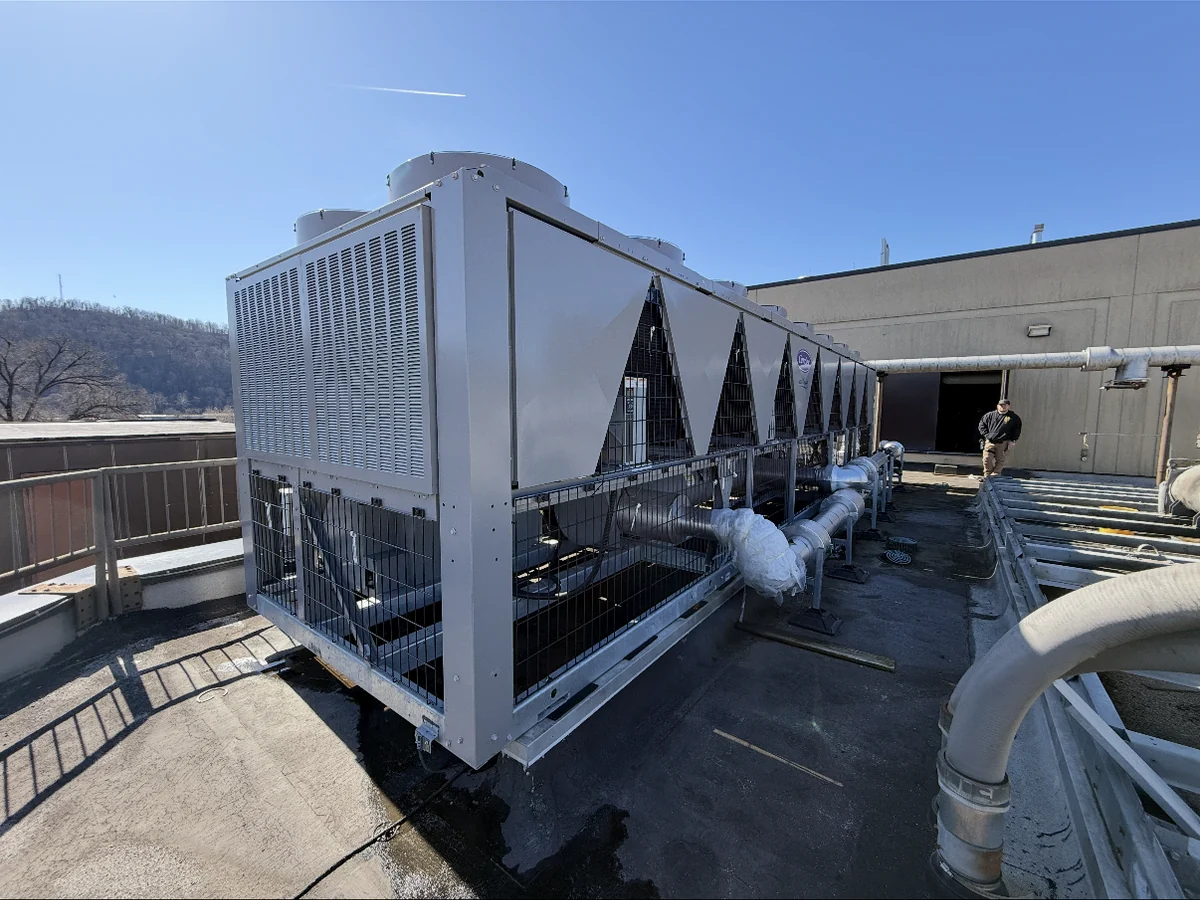
Identity first
Preserve Legacy wording, then identify the actual unit.
The seller’s first job is to preserve the evidence, not to normalize it from memory. Photograph the full nameplate, serial number, electrical label, cabinet decals, and the cover or relevant pages of any maintenance or startup document. A current official company page calls the manufacturer Legacy Chillers, Inc.; a hosted 2019 maintenance document uses “Legacy Chiller Systems (USA).” Record the exact wording, date, and document source beside the unit instead of asserting an unverified successor, acquisition, or discontinuation story.
Ask for one photo set per chiller. A model family may guide questions, but it does not override a tag. The official Legacy maintenance checklist itself provides fields for unit model, serial, main supply voltage and phase, site address, and location on a ground pad or roof. Those are useful evidence fields for a seller packet because they tie a specific machine to a specific installation; they are not proof of operating condition or purchase eligibility.
- Photograph the entire manufacturer plate straight on, plus a close image that keeps all characters readable.
- Transcribe the manufacturer wording exactly, including “Legacy Chillers,” “Legacy Chiller Systems,” or “Legacy Chiller Systems (USA)” where shown.
- Keep model, serial number, voltage, phase, frequency, and any revision or build-date field separate for each unit.
- Pair each manual, data sheet, work order, or controller backup with the serial number it actually covers; do not assume a site-wide document applies to every chiller.
- Label unidentified machines as “brand/model not verified” rather than assigning a Legacy family from appearance alone.
Configuration evidence
Determine whether the offered equipment is air-cooled, water-cooled, package, or split.
Legacy’s current product material separates air-cooled process chillers from water-cooled process chillers. Its air-cooled page describes package families PZA, PZAT, PZAPT, and PSA, plus split arrangements identified as IEZA, IEZAT, and IESA. In a split arrangement, the equipment that houses most refrigeration and fluid components is inside while a separate coil-and-fan condenser is outside, connected by field-installed refrigerant and electrical lines. That distinction changes what is attached to the offered unit and what must remain at the site.
The water-cooled page identifies PZW, PZWT, and PSW package families. It describes water-cooled units as rejecting heat to a water source, generally an outdoor cooling tower sold separately. A seller should therefore photograph and list process-fluid connections separately from condenser-water connections, the cooling tower, piping, and field components. Do not say a tower, remote condenser, lines, controls, or water system are included merely because they are visible in the installation.
Process-side evidence
Document the installed package instead of assuming a standard build.
Tank and pump details matter because Legacy families are not all arranged alike. The air-cooled PZAT product description identifies an integrated closed stainless-steel thermal storage tank and a dedicated recirculation pump, while the PZA page describes a tankless arrangement with external tank packages available. On the water-cooled side, the PZWT is presented as an integrated stainless-steel tank configuration and PZW as tankless with external tank packages available. These product-family descriptions are useful prompts; the offered chiller may have optional equipment, later modifications, or missing parts.
The PZWT22D data sheet is a concrete example, not a substitute for the offered unit’s documentation. It identifies a packaged, water-cooled 22-ton model with a stainless-steel tank, scroll compressor, Pentra MicroSmart PLC/HMI, recirculation pump, and different listed options, including VFD controls and a process pump. The maintenance checklist also calls for observations such as fluid/glycol condition, leaks, pump rotation, electrical information, refrigeration pressures, and setpoints. Sellers should submit available records or screen photographs without representing an untested chiller as operating.
Present condition
Use Legacy maintenance evidence as prompts, not as a condition guarantee.
Legacy’s published maintenance checklist directs attention to condenser debris, water or oil leaks, electrical connections, vibration or motor noise, glycol percentage, sight-glass bubbles, compressor oil where equipped, fan and pump rotation, and multiple annual observations. This gives a Legacy-specific structure for asking what the seller actually knows. It does not establish that a used unit has been maintained, is complete, is safe to energize, or will achieve a listed capacity.
Keep observation, record, and assumption apart. Say “service record dated March 2024 notes a low-flow alarm” rather than “unit is fully functional,” unless there is current, supportable evidence and the seller is authorized to make that statement. Include full-machine images after shutdown, visible damage, corrosion, open panels, disconnected conductors, pipe stubs, and missing components. A prospective buyer may request clarification, more records, or no further review; a complete file does not guarantee an offer or price.
Scope and release
Define what can be sold without assuming who will do the work around it.
A configuration reconciliation should end with a scope map. For a packaged PZWT-style water-cooled chiller, the cabinet may have both process-fluid and condenser-water connections; in a split air-cooled arrangement, the chiller and remote condenser may sit in different places. Identify every attachment, pipe, conductor, support, control link, roof curb, pad, or system component that remains connected or stays with the site. Include exact location, level, exit route, staging, doors, access restrictions, shutdown constraints, and release authority. These facts affect whether a potential transaction can be evaluated, not who accepts the work.
Do not assume Surplus Chiller Buyer will purchase, pay for, collect, disconnect, remove, rig, dismantle, demolish, freight, handle refrigerant, or meet a requested date. If a Legacy chiller is ever to be dismantled on site for disposal, EPA identifies chillers and industrial process refrigeration as equipment that must have refrigerant recovered under Section 608 servicing requirements before disposal. EPA also says technicians who maintain, service, repair, or dispose of refrigerant-containing equipment must be certified. Any physical scope, qualified-party selection, safety planning, approvals, permits, hazardous-materials assessment, and site restoration remain conditional and must be separately evaluated and confirmed in writing.
Frequently asked questions
Before you send the chiller.
If your machine does not fit a standard category, submit the available details anyway. Clear photographs and a readable nameplate often establish whether more information is worthwhile.
Does “Legacy Chiller Systems” mean the unit has a different manufacturer from Legacy Chillers, Inc.?
Not necessarily, and this page should not resolve that question by assumption. Current official company pages identify Legacy Chillers, Inc., while a 2019 maintenance/startup document on the official site uses “Legacy Chiller Systems (USA).” Preserve the exact tag and document wording. The sources reviewed for this brief do not establish a formal corporate successor, merger, acquisition, or discontinuation relationship, so do not claim one without a source specific to the machine.
How do I tell whether my Legacy unit is air-cooled, water-cooled, package, or split?
Start with the nameplate and photographs. Legacy’s current materials describe air-cooled package families and split arrangements with a separate outdoor condenser, while its water-cooled models use a water source generally associated with a cooling tower. Photograph the condenser area, all water connections, any remote section, and field lines. List the configuration as unknown if the evidence does not support a conclusion.
Can I call a chiller a PZAT, PZWT, or PSA based on the cabinet’s appearance?
No. Those model-family names are useful evidence prompts, not a substitute for the actual label. Match a readable nameplate or reliable unit-specific document to photographs of the tank, pumps, compressor area, controller, condenser arrangement, and connections. Identify any mismatch, modification, or missing component instead of forcing a family name.
Does a Legacy controller screen or old maintenance record prove that the chiller is operating?
No. A controller, maintenance checklist, or dated startup record can identify components and document a historical observation. It does not prove present operation, capacity, refrigerant charge, completeness, safety, value, or purchase eligibility. State the record date, serial number, and what the seller knows now.
Does submitting a Legacy chiller guarantee a purchase, price, or removal plan?
No. Submission begins an independent buyer evaluation of a specific opportunity. It does not guarantee purchase, offer, price, payment, inspection, pickup, removal, freight, rigging, dismantling, demolition, refrigerant handling, timing, local office, or project service. Any accepted equipment or work responsibility must be separately confirmed in written terms.
Authoritative references
Source material behind this seller guide.
These external manufacturer and government sources support the equipment terminology and planning context used above. They do not establish the condition, configuration, safety, compliance, or transaction fit of a specific chiller.