
Independent buyer guide for G&D glycol-chiller equipment
G&D Chillers: Document the Whole Glycol System Before You Submit It
Have a used or surplus G&D chiller? Send the exact unit identity and a clear map of the glycol equipment around it. We are an independent prospective buyer, not G&D Chillers. A complete equipment file helps us decide whether further buyer evaluation is warranted; it does not promise a purchase, price, payment, pickup, removal, freight, rigging, dismantling, demolition, refrigerant handling, timing, or local service.
Start with the G&D system map
Send the equipment record—not just the G&D name
A readable G&D nameplate and an honest system map let a prospective buyer evaluate the actual equipment and the handoff questions around it. Send only information you are authorized to share. Submission requests evaluation only. It does not create an offer or assign Surplus Chiller Buyer responsibility for disconnection, refrigerant work, removal, rigging, freight, demolition, permits, restoration, payment, or a schedule.
Useful facts to have ready
- A straight-on, readable photo of the G&D chiller nameplate on the control-panel door, plus compressor nameplates where accessible; include model, serial number, electrical data, refrigerant type and charge if shown.
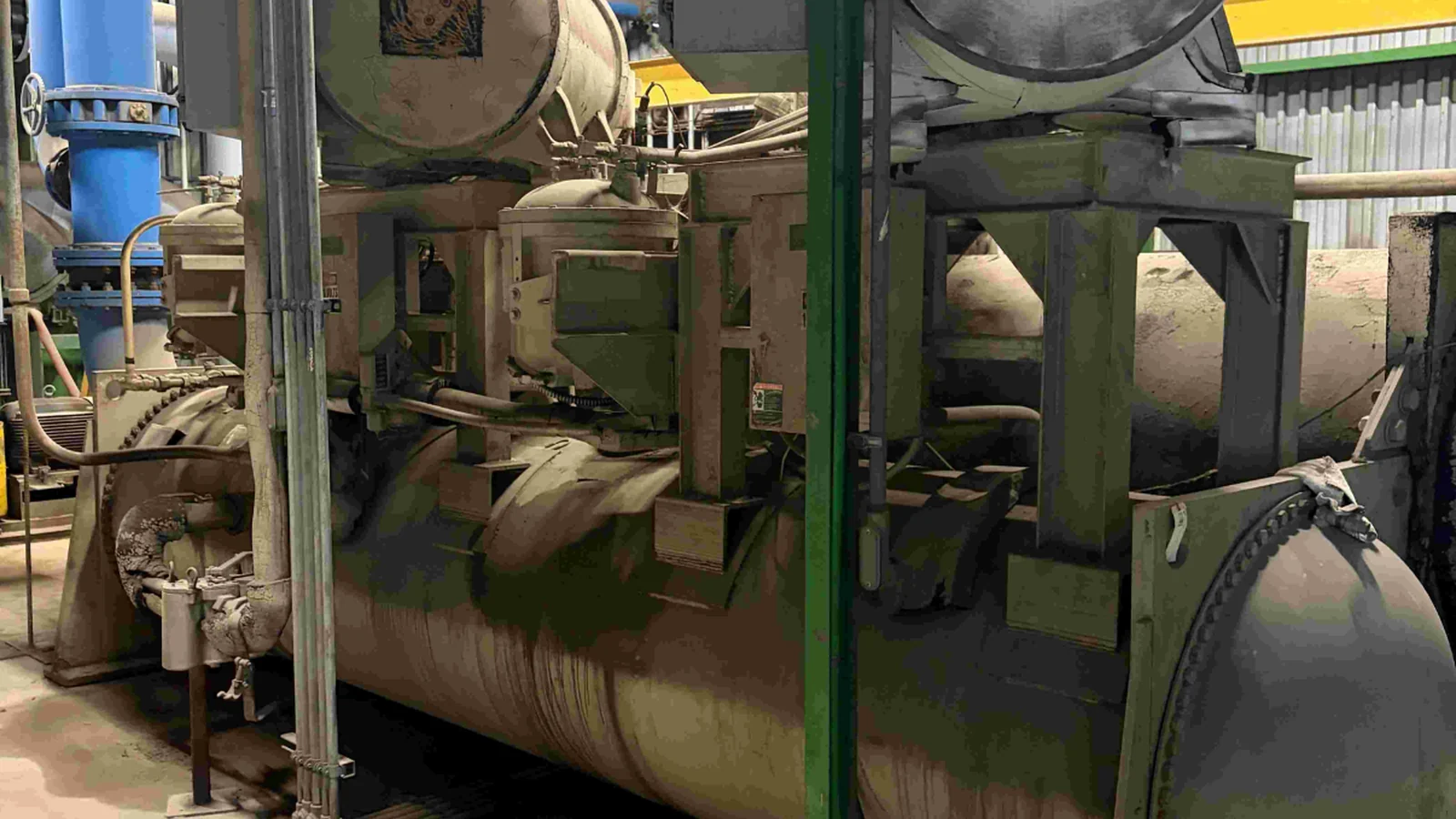
- Wide photos of the complete unit, controls, pumps, reservoir level indicator, heat-exchanger connections, visible damage, missing panels, and loose accessories.
- A one-page G&D glycol-system map that separately identifies the primary chiller, Modular/Expansion Module units, cold-water skids, pumps/reservoirs, heaters, fan coils, and equipment that stays with the facility.
- The actual present condition: operating, idle, disconnected, stored, partly dismantled, non-operational, or unknown; include the last known operating date, alarms, leaks, repairs, and available logs.
- Exact U.S. equipment location; installation level; verified or estimated dimensions and weight source; exit route; openings; staging; truck access; site rules; and requested release window.
- The authorized equipment contact, owner/release authority, pending approvals, and a list of any requested disconnection, refrigerant, lifting, removal, freight, dismantling, demolition, permit, or restoration work that has not been assigned in writing.
G&D equipment identity
A G&D name alone does not tell a buyer which machine is offered.
Begin with the unit nameplate, not a memory of the system. In G&D’s current low-temperature manual, the unit nameplate is located on the exterior of the control-panel door and identifies the model/size descriptor, serial number, electrical requirements, refrigerant charge, and design pressures; compressors carry their own nameplates. Photograph both when safely accessible. Transcribe what is readable and call anything obscured, missing, or uncertain “unknown.”
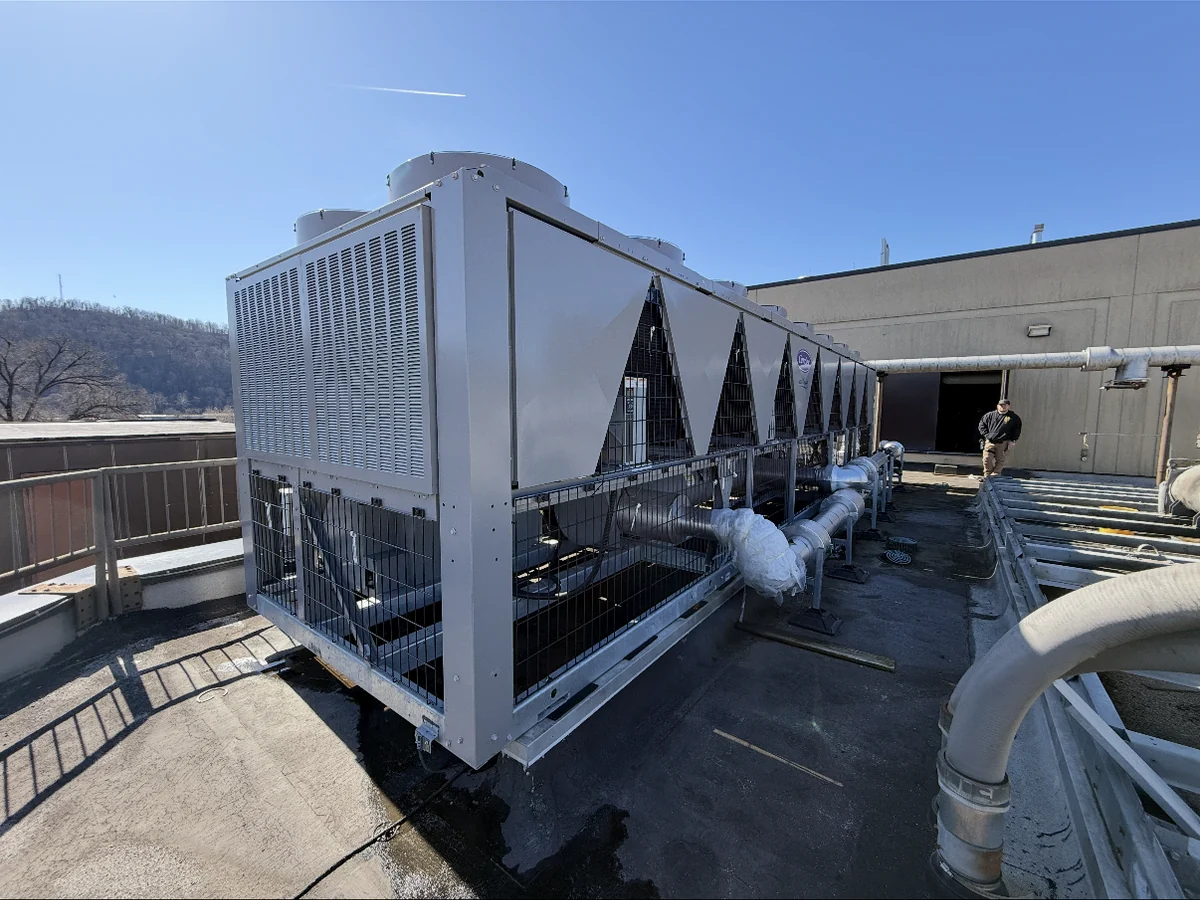
Use the model and actual construction to identify the family without guessing. G&D currently markets compact single-stage packages, multi-stage units with multiple compressor circuits, larger Vertical Air units, air-cooled HVAC and tandem-scroll equipment, Modular Series units and separate Expansion Modules, among other lines. The exact model, revision-specific drawing, nameplate, and photographs—not a generic “G&D glycol chiller” label—should control the equipment record.
- Photograph the control-panel nameplate and each accessible compressor nameplate at full resolution.
- Record the entire model string, serial number, voltage, phase, frequency, refrigerant type and charge, and manufacture date only if actually shown.
- State whether the offered equipment appears to be air-cooled, liquid-cooled, low-temperature, HVAC, portable, modular, or another configuration, and label any conclusion based on appearance as unverified.
- Attach the matching G&D spec drawing or manual only when its model and revision match the offered unit; do not use a current catalog page to fill gaps for an older machine.
- Show all sides of the machine, including control enclosure, condenser area, process connections, reservoir, pumps, and any removed access panels.
The companion-equipment test
Separate the packaged chiller from the parts that make the process loop work.
G&D’s portfolio includes more than the main chiller cabinet. Its current catalog separately identifies Expansion Modules intended to add capacity, Cold Water Skids that connect a glycol chiller to a chilled-water loop, Pump & Reservoir Series equipment, Glycol Heater Series equipment, and Glycol Fan Coils. A buyer needs to know whether any of those assets are part of the offered equipment, tied into another operating loop, excluded, missing, or still needed by the facility.
Draw the process boundary in plain language. Identify supply and return piping at the chiller, reservoir, process pump, heat exchanger, valves, remote controls, and downstream users only to the extent the seller can verify them. The map is not a piping design and does not authorize anyone to drain, isolate, disconnect, or remove anything. It keeps a possible transaction from confusing a standalone chiller with a larger glycol system.
Present condition
Show the control state, fluid side, and known history as they exist today.
A seller can provide useful operating evidence without promising capacity or reliability. G&D’s packaged low-temperature description lists controls, pumps, reservoir, evaporator, condenser, and related components, while its current small single-stage product page lists a process pump, insulated glycol reservoir, safety controls, and single-point electrical connection as part of that specific configuration. Photograph the offered machine’s actual components rather than assuming every G&D unit has the same equipment.
Separate observed facts from claims. A control display, last setpoint, flow indication, reservoir level, operating log, maintenance record, alarm history, and last known operating date can support a buyer review. They do not prove that the unit is operating now, holds its rated capacity, is leak-free, is complete, or will meet a new application. Keep remote-monitoring screenshots, service documents, and BMS records matched to the specific serial-numbered unit where possible.
Site and release facts
The chiller, the disconnection boundary, and the lift route are three separate questions.
For an installed G&D chiller, describe where the machine ends and site work begins. Identify electrical feeders and disconnects, process supply/return piping, condensate or water connections, controls/BMS wiring, drains, anchors, roof curbs or pads, and any adjacent equipment that must remain. Do not call a unit “ready for pickup” merely because production has stopped. OSHA notes that electrical, mechanical, hydraulic, pneumatic, chemical, thermal, and other energy can be hazardous during service; the facility’s applicable energy-control process and qualified parties must define isolation and verification.
Rigging planning starts with verified facts, not a generic model name. Capture the exact dimensions and operating/shipping weight from a matching nameplate, manufacturer drawing, or other identified source, then state what remains unverified. Show the exit route from the actual unit to the loading point, including doors, overhead clearance, roof edge or floor conditions, stairs, turns, staging, truck approach, and live-work restrictions. Any lift method, lifting points, crane or forklift selection, site controls, and personnel plan belong to appropriately qualified parties after they assess the actual unit and site; no service is included by this page or a submission.
Environmental and transaction boundary
Do not let a G&D equipment inquiry become an unplanned demolition scope.
Intact removal means transferring a defined machine as a machine. Dismantling or cut-up means reducing equipment or separating components, and it can change condition, evidence, release sequence, and regulatory duties. EPA specifically lists chillers among equipment typically dismantled on site and states that refrigerant must be recovered according to servicing requirements before disposal. Do not vent refrigerant, assume that a line is empty, or use the G&D product family to infer the refrigerant in an offered unit. This matters especially because G&D’s current catalog includes both alternative-refrigerant and conventional product categories.
Ask the seller to disclose the proposed end state: intact release for possible reuse, removal after qualified disconnection, or a possible dismantling/disposal discussion. Refrigerant recovery, cylinders, records, fluid handling, electrical isolation, cutting, hazardous-material assessment, permits, waste disposal, roof/floor repairs, and site restoration may be relevant, but they are conditional project issues. Surplus Chiller Buyer does not automatically provide, arrange, guarantee, or accept any of those services. Only written transaction terms can assign an accepted scope, timing, responsibility, and risk.
Frequently asked questions
Before you send the chiller.
If your machine does not fit a standard category, submit the available details anyway. Clear photographs and a readable nameplate often establish whether more information is worthwhile.
Is Surplus Chiller Buyer affiliated with G&D Chillers?
No. Surplus Chiller Buyer is an independent prospective buyer and is not affiliated with, authorized by, sponsored by, or endorsed by G&D Chillers, Inc. G&D is used on this page only to help sellers identify equipment. The page is not a manufacturer service, warranty, or technical-support channel.
What should I send to identify my G&D chiller?
Start with a readable control-door nameplate, model, serial number, electrical data, refrigerant information if shown, compressor tags where accessible, and full-unit photographs. Add a matching manual or spec drawing only if you can verify it is for the actual model and revision. Do not guess at capacity, refrigerant, age, or family from a similar unit.
Can I submit a G&D chiller with Expansion Modules, a Cold Water Skid, pumps, or glycol heaters?
Yes. List and photograph each item separately, then mark it included, excluded, shared with another load, or unknown. That information lets a prospective buyer understand whether the opportunity is a standalone chiller, a modular capacity package, or a larger glycol-loop project. Submission does not mean every component, or any component, will be purchased.
Does an installed G&D chiller come with removal or rigging?
No. An installed location creates additional questions about isolation, connections, access, weight, dimensions, lifting points, route, site controls, and qualified-party planning. A buyer evaluation does not guarantee disconnection, refrigerant handling, rigging, removal, loading, freight, timing, or site restoration. Any accepted responsibility must be stated in written terms.
Can the unit be cut up or scrapped if it is not a fit for resale?
Do not assume that outcome or scope. Intact removal and dismantling/cut-up are different projects. For chillers dismantled on site before disposal, EPA says refrigerant must be recovered under applicable servicing requirements before disposal. Any refrigerant work, cutting, waste handling, permits, hazardous-material review, and restoration must be addressed by the responsible qualified parties and, if applicable, written transaction terms.
Authoritative references
Source material behind this seller guide.
These external manufacturer and government sources support the equipment terminology and planning context used above. They do not establish the condition, configuration, safety, compliance, or transaction fit of a specific chiller.