
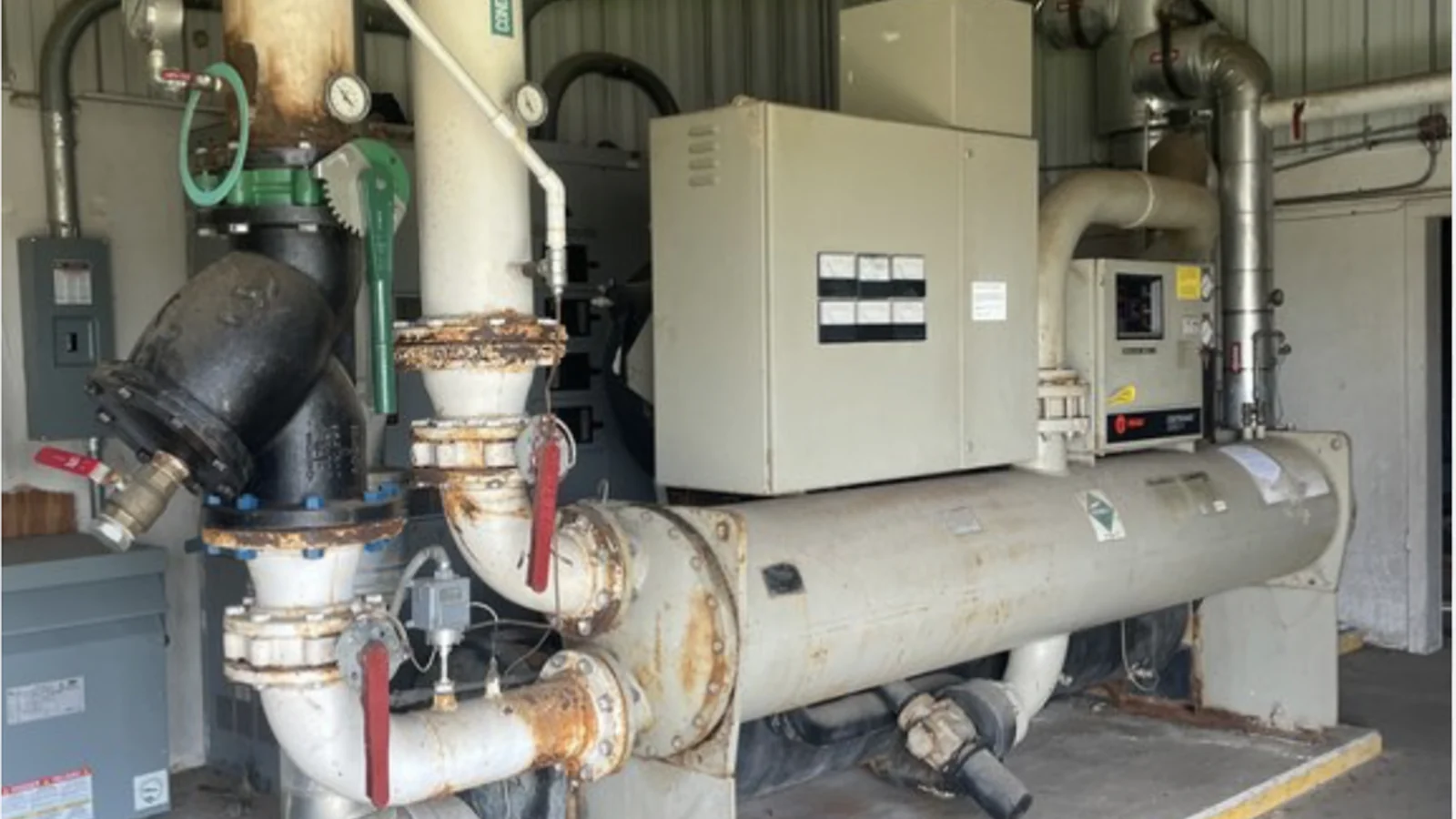
Cooling Technology equipment identification guide
Cooling Technology Chiller Buyers Start With the Custom Package Record
If your equipment is marked Cooling Technology, Inc., document the actual chiller and the rest of its process-cooling package before requesting a buyer review. Custom systems can combine a chiller with pumps, heat-transfer equipment, cooling-tower equipment, controls, and field connections. Clear evidence lets a direct prospective buyer assess the specific U.S. surplus opportunity without guessing what is included.
Custom package buyer inquiry
Send the Cooling Technology equipment record—not a generic equipment label
Start with the nameplate, package boundary map, photographs, condition, and location facts for the actual Cooling Technology-marked equipment. A submission asks a direct prospective buyer to evaluate the opportunity; it does not guarantee a purchase, offer, price, payment, inspection, pickup, removal, freight, rigging, dismantling, demolition, refrigerant handling, timing, project service, or local office. Send only information you are authorized to share.
Useful facts to have ready
- A straight-on, readable photograph of every Cooling Technology, Inc. nameplate plus any separate nameplate on the chiller, pump skid, control panel, tower equipment, or heat exchanger.
- Wide, connected photographs that show the entire package and its field connections, then close-ups that show pumps, tanks, panels, valves, controllers, damage, missing parts, and loose accessories.
- A simple package boundary map identifying what is included, excluded, shared, third-party branded, disconnected, or still unknown.
- Available submittals, as-built drawings, manuals, wiring diagrams, sequence-of-operation records, service history, and any serial-number-to-record match.
- The present condition, last known operating period, known faults, refrigerant as marked if known, modifications, leaks, repairs, and missing components—without guessing.
- The exact U.S. location, installation level, route and access constraints, release window, seller authority, and known site rules or approvals.
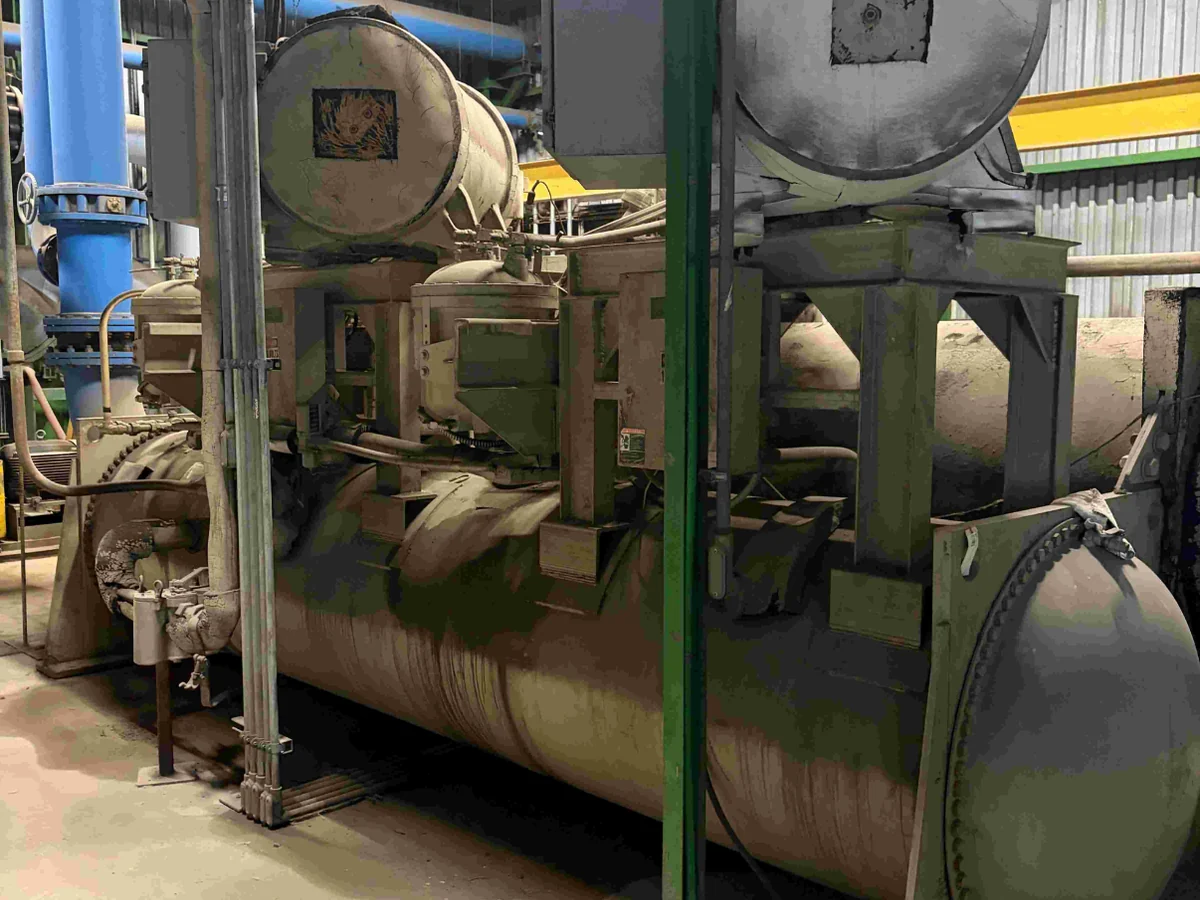
01 / Cooling Technology identity
A Cooling Technology label identifies one part of the evidence—not the whole package.
Cooling Technology, Inc. has been described by the North Carolina Manufacturing Extension Partnership as a custom industrial process-cooling equipment manufacturer whose equipment can span chillers, pumping systems, cooling-tower systems, electrical controls, temperature controllers, and specialty heat-transfer equipment. That variety makes a simple “Cooling Technology chiller” label incomplete for a surplus transaction. Start with each actual nameplate, then tie it to full-unit photographs and the equipment location.
A label on one panel does not prove that nearby pumps, a cooling tower, a heat exchanger, a remote condenser, or building controls are part of the offered asset. Identify the Cooling Technology-marked equipment exactly as found, and record separate manufacturers and model numbers where they appear. The goal is to establish what is real and available for review, not to infer a standard configuration or a current manufacturer product line.
- Photograph the Cooling Technology nameplate, then photograph the wider assembly it serves.
- Record manufacturer, model, serial number, electrical data, capacity if marked, and refrigerant designation if marked; write “not readable” or “not present” instead of filling gaps.
- Capture every separate nameplate on pumps, motors, heat exchangers, controllers, tower equipment, compressors, and remote components.
- State whether “Cooling Technology” appears on the chiller frame, a control panel, a skid, a drawing title block, or only a historic record.
- Do not use McQuay, AquaSnap, Sterling, Temptek, or another brand’s model documentation to fill in a Cooling Technology identification gap.
02 / Package map
Separate the factory equipment from field-installed systems and third-party components.
Custom process-cooling equipment may be sold or installed as a package, but a used-equipment transaction needs an explicit boundary. Create a one-page map or annotated photograph showing the chiller or skid, circulating pumps, reservoirs, heat-transfer equipment, controls, cooling-tower equipment, remote components, and the process or building connections. Then mark which components are offered and which must remain in service.
This boundary map is not an engineering drawing or a promise that every connection can be separated. It is a practical seller record that exposes shared utilities, third-party assets, and incomplete scope before an evaluation turns into an assumption. It also helps preserve accessory value and prevents a control panel, pump package, or tank from being described as included merely because it sits nearby.
03 / Evidence that travels with the unit
Make records useful by tying them to the exact machine and present condition.
For a custom Cooling Technology package, a proposal, manual, or old work order is only useful when it can be matched to the actual nameplate and configuration. Provide records with their dates and identify what they describe: the chiller itself, a pump skid, a heat exchanger, a tower system, controls, or a site modification. Separate original equipment information from later additions and from a seller’s unverified recollection.
Describe present condition in the same careful way. State whether the asset is operating, idle, disconnected, stored, non-operational, incomplete, or not recently tested; provide the last known operating period when available. Photographs of alarms, corrosion, leaks, disconnected lines, removed parts, and control screens can be more useful than a broad “working” statement. A submission does not establish condition, value, purchase interest, or an obligation to test the equipment.
04 / No brand substitution
Use the nameplate record instead of a guessed legacy, successor, or product-family story.
This page uses the Cooling Technology name only to identify equipment that carries it. It does not state that Cooling Technology, Inc. was acquired by, succeeded, rebranded as, or is affiliated with another chiller manufacturer. It also does not represent a present product catalog because the official web address could not be used to verify one during current research. When records conflict, retain the conflict in the seller file rather than choosing a more familiar brand or model family.
McQuay, AquaSnap, Sterling, and Temptek are not replacement names for a Cooling Technology record. In particular, AquaSnap is a product-line name, not a generic chiller category; it should appear only where a component or document actually carries that designation. A seller may submit equipment with mixed branding, but each nameplate should stay attached to its own component so the prospective buyer can assess the real package rather than a reconstructed identity.
05 / Transaction and site boundary
Define intact removal, disconnection, rigging, and dismantling as separate decisions.
An installed chiller package is not automatically ready for removal. For an intact-machine transaction, identify the machine/site boundary: the exact equipment included, every electrical, control, process-fluid, water, drain, and structural connection, the party that can authorize shutdown and release, and what must remain in place. OSHA’s hazardous-energy-control standard covers servicing and maintenance where unexpected energization, startup, or released stored energy could injure workers; the applicable employer must control those hazards under its program.
Do not describe dismantling or cut-up as removal. An intact transfer may require a verified current weight and dimensions, route review, confirmed lifting points, staging and lifting-clearance review, site controls, and planning by qualified parties. If on-site dismantling or disposal is considered, EPA states that chillers and other equipment typically dismantled on site must have refrigerant recovered under the Section 608 servicing requirements before disposal. Hazardous-material evaluation, permits, structural work, crane/rigging plans, refrigerant recovery, site restoration, and waste handling are conditional project matters—not automatic Surplus Chiller Buyer services.
Frequently asked questions
Before you send the chiller.
If your machine does not fit a standard category, submit the available details anyway. Clear photographs and a readable nameplate often establish whether more information is worthwhile.
Is Surplus Chiller Buyer connected to Cooling Technology, Inc.?
No. Surplus Chiller Buyer is an independent prospective buyer of used and surplus industrial chillers in the United States. It is not affiliated with, authorized by, sponsored by, or acting for Cooling Technology, Inc. The brand is used only to help identify equipment.
What should I send if the Cooling Technology package is custom and I cannot find a standard model?
Send readable nameplates, wide photographs, a package boundary map, component-level labels, and any serial-specific drawings or records. State what cannot be confirmed rather than assigning a generic model, tonnage, compressor, refrigerant, or package configuration. A direct buyer can then decide whether further evaluation is warranted.
Can I include a pump skid, cooling tower, heat exchanger, or control panel with a Cooling Technology chiller?
You can submit all of those items, but identify each one separately and mark whether it is included, excluded, shared with the facility, third-party branded, or of unknown ownership. Nearby equipment is not automatically part of the chiller transaction.
Does submitting an installed Cooling Technology chiller include disconnection, rigging, refrigerant work, or removal?
No. Submission is a request for evaluation, not a guarantee of purchase or project work. Disconnection boundaries, refrigerant recovery, weight verification, rigging, route planning, removal, freight, dismantling, demolition, permits, waste handling, and restoration must be evaluated for the particular site and expressly assigned in written terms if an opportunity proceeds.
Is Cooling Technology a legacy name for McQuay, AquaSnap, Sterling, or Temptek?
This page does not make that claim. Do not substitute those names or their documentation for a Cooling Technology asset. Keep every brand and product-line label attached to the exact component on which it appears; AquaSnap, in particular, should be treated as a product-line designation only when it is actually shown on the equipment or supported record.
Authoritative references
Source material behind this seller guide.
These external manufacturer and government sources support the equipment terminology and planning context used above. They do not establish the condition, configuration, safety, compliance, or transaction fit of a specific chiller.