
Independent Conair equipment identification guide
Conair Chiller Identification and Sale Preparation
Have a Conair heat-transfer asset to release? Start by proving whether it is a self-contained portable or central chiller, a Thermolator temperature control unit, or part of a larger process-cooling system. Send the actual equipment and site facts to a direct prospective buyer for evaluation.
Conair heat-transfer asset review
Build a Conair chiller and system-boundary file
Submit the nameplate, photographs, configuration, present condition, location, and release facts that identify the actual asset. This is a request for buyer evaluation, not a purchase promise or an agreement to provide a price, payment, pickup, removal, freight, rigging, dismantling, demolition, refrigerant handling, timing, a local office, or project service.
Useful facts to have ready
- A straight-on, readable Conair nameplate photograph for every offered unit, including model, serial number, electrical data, refrigerant marking if present, and manufacture date if shown.
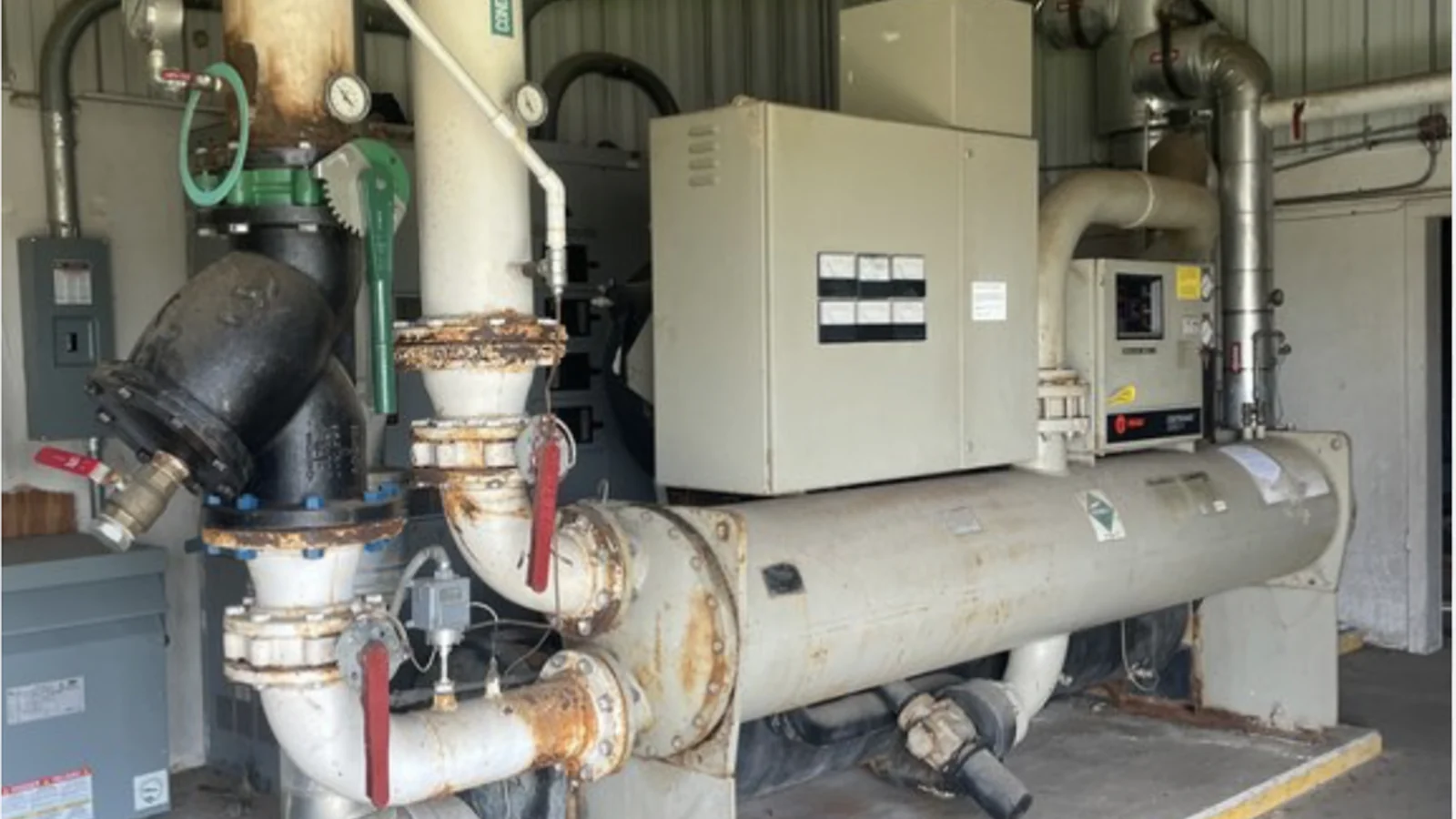
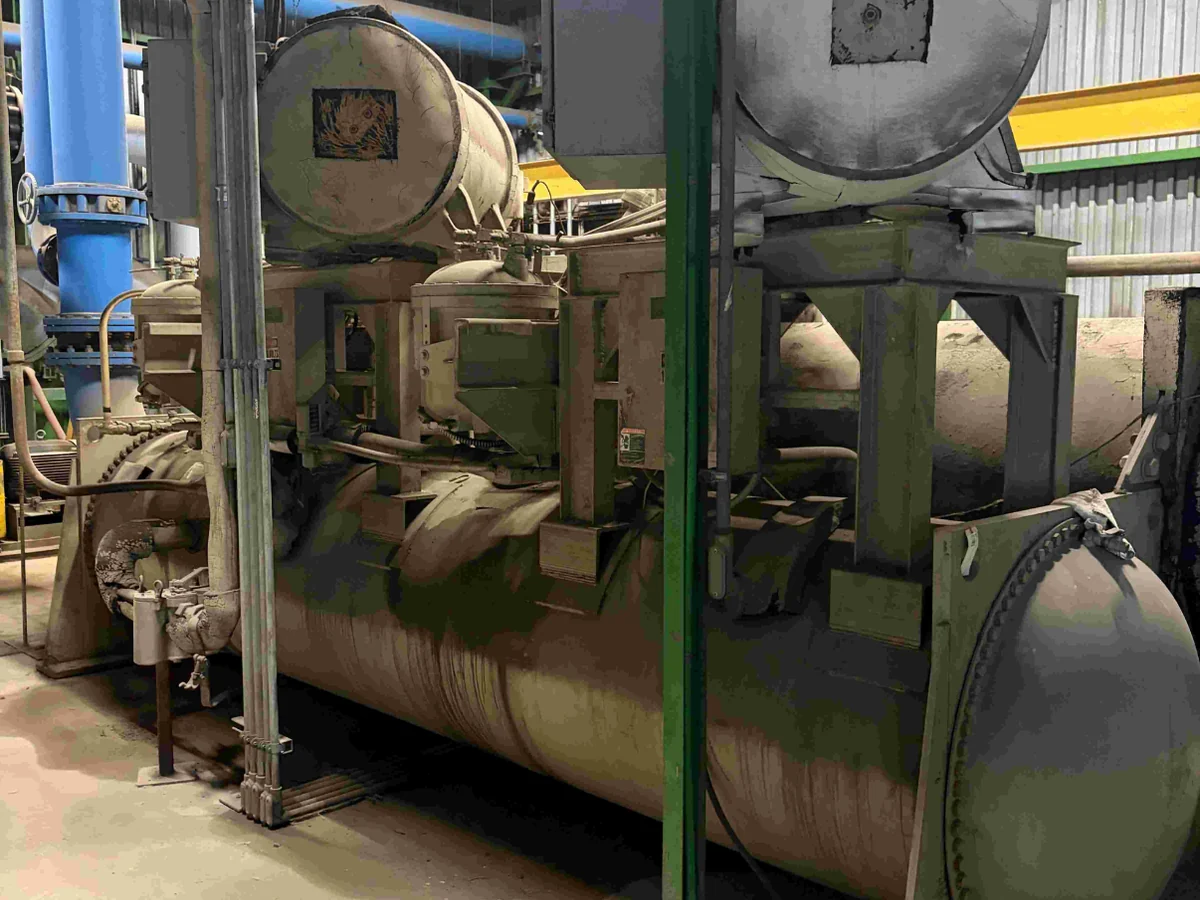
- Wide photographs showing whether the asset is an EP1/EP2-type portable chiller, a central chiller, a Thermolator TCU, a pump tank, cooling tower equipment, or another component; photograph all connected or included equipment separately.
- A cooling-source versus process-loop sketch showing evaporator/process supply and return, condenser medium or airflow, cooling-tower connections where applicable, and each pump tank, TCU, manifold, remote condenser, and control panel included or excluded.
- Complete exterior, control/HMI, compressor, heat-exchanger, pump, reservoir, condenser, piping, damage, alarm, loose-part, and disconnected-connection photographs.
- Present condition, last known operating date, fault/alarm history, refrigerant status if known, known leaks, removed parts, modifications, service records, and storage exposure—clearly separating known facts from unknowns.
- Exact U.S. location, installation level, verified dimensions and weight documentation if available, access route, release window, ownership/release authority, and all open scope responsibilities.
01 / Brand proof before value discussion
Read the nameplate first, then classify the asset.
Conair currently groups its heat-transfer products as temperature control units (Thermolator TCUs), portable chillers, central chillers, cooling tower systems, pump tanks, and heat-transfer accessories. Surplus Chiller Buyer is independent of Conair and is not affiliated with, authorized by, sponsored by, endorsed by, or acting for Conair; use Conair only to identify equipment by the nameplate or tag.
Use the product family only to guide questions; do not replace the nameplate. Record each serial-numbered item and avoid inferring compressor arrangement, refrigerant, voltage, capacity, or included components from photographs or plant descriptions alone.
- Evidence prompt: Photograph the Conair nameplate, serial tag, electrical disconnect label, controller/HMI screen, and any separately tagged pumps, tanks, remote condensers, or modules.
- Record the model exactly as marked, including prefixes or suffixes such as EP1, ECW, ESE, ECFW, ECO, or W-SK; mark uncertain characters as uncertain.
- State portable versus central, air- or water-cooled, or remote-condensing only when supported by the nameplate, manual, or visible equipment.
- List each refrigeration circuit, chiller module, pump, tank, control panel, tower connection, and accessory as included, excluded, remaining in service, or unknown.
- Do not relabel a Conair nameplate as McQuay, AquaSnap, Sterling/Sterlco, or Temptek without unit-specific evidence.
02 / The Conair-specific handoff map
A Thermolator may be process equipment, not the refrigeration asset.
Conair describes Thermolator units as temperature control units that circulate heated or cooled water or oil for process and mold control; some Thermolator models are served by separate chillers or cooling towers. A Thermolator nameplate or visible heater and pump components do not by themselves prove a self-contained refrigerant chiller is being offered.
Create a simple diagram or annotated photo set that follows the fluid path from refrigeration source to process loop. That cooling-source versus process-loop map helps a buyer separate serial-numbered chillers from system piping, pump tanks, TCUs, and other components that may remain with the facility.
03 / Condition evidence, not a generic “working” label
Capture the configuration, safeties, and material condition without guessing.
Document the refrigeration machine as it stands today: compressor nameplate(s), refrigerant labels if present, condenser face or water-box areas, evaporator/process connections, pumps, motors, controls, and any visible damage or corrosion. Describe status with clear factual terms such as operating, idle, disconnected, stored, non-operational, incomplete, or untested.
For multi-module central systems, identify and number each module and refrigeration circuit and pair those numbers with corresponding nameplates and included/excluded designations. Do not infer operational performance or safety conformance from incomplete evidence.
04 / Equipment boundary before project assumptions
Map what transfers, what stays, and what needs third-party planning.
Conair central chillers are presented as system equipment that may share controls, piping headers, pump tanks, towers, and feeders with other site systems. An accurate inclusion list is therefore critical: a chiller package can share control panels, piping, or other site services that are not part of the proposed transfer.
Define the proposed release boundary both at the machine level (serial-numbered chiller and listed accessories) and at the site level (the last physical connection points, electrical feeders, water services, and control interfaces). Clear boundary descriptions help a prospective buyer assess the opportunity without implying any service or commitment from Surplus Chiller Buyer.
05 / Conditional transaction planning
Site facts and refrigerant status should be visible before any handoff is discussed.
Provide site and route facts: equipment address, elevation, verified manufacturer or engineering weight and dimensions if available, route to a loading point, door and corridor measurements, staging area, overhead conflicts, and truck approach. If verified lifting facts are needed, have those confirmed by qualified rigging professionals; this page does not perform or promise that work.
State known refrigerant status and retain any available recovery documentation. EPA guidance identifies chillers dismantled on site as requiring refrigerant recovery under servicing requirements before disposal; state only what is documented and leave recovery, permits, hazardous-material assessments, and any dismantling or restoration to appropriate qualified parties and written agreement.
Frequently asked questions
Before you send the chiller.
If your machine does not fit a standard category, submit the available details anyway. Clear photographs and a readable nameplate often establish whether more information is worthwhile.
Is a Conair Thermolator the same thing as a Conair chiller?
Not necessarily. Conair describes Thermolator units as temperature control units that circulate heated or cooled water or oil for process and mold control. A Thermolator may be supplied by a separate chiller or cooling tower. Submit the model and serial number for every item, plus a map of the refrigeration source and process loop, rather than labeling the whole package a chiller.
What Conair equipment should I include in a buyer evaluation?
Include the actual serial-numbered equipment you propose to sell: the chiller module(s), controls, pumps, tanks, remote condenser, and accessories if applicable. Conair’s heat-transfer range also includes TCUs, cooling towers, pump tanks, and accessories. Mark each as included, excluded, retained, or unknown. A buyer evaluation does not determine that all connected equipment transfers.
Can I submit a Conair EP1, EP2, or central chiller if it is not running?
Yes. State whether it is operating, idle, disconnected, stored, non-operational, incomplete, or untested. Include nameplate and condition photographs, the last known operating date, known faults, removed parts, and available records. Submission starts an evaluation only; it does not guarantee an inspection, offer, price, purchase, payment, or timing.
Do you remove Conair chillers, disconnect the loop, or provide rigging and freight?
No service is included automatically. Tell us what is installed and the known site constraints, but do not assume pickup, removal, disconnection, freight, rigging, dismantling, demolition, refrigerant handling, or site restoration. Any responsibility, if considered for a particular opportunity, must be clearly evaluated and confirmed in written terms.
What should I do if the Conair chiller may contain refrigerant?
State what the nameplate, labels, and authorized records show, and identify the unit as charged, recovered, unknown, or otherwise documented only when supported. EPA identifies chillers as equipment typically dismantled on site and says refrigerant must be recovered under servicing requirements before disposal. This is planning information, not an instruction to perform refrigerant work or a promise that Surplus Chiller Buyer will perform it.
Authoritative references
Source material behind this seller guide.
These external manufacturer and government sources support the equipment terminology and planning context used above. They do not establish the condition, configuration, safety, compliance, or transaction fit of a specific chiller.