
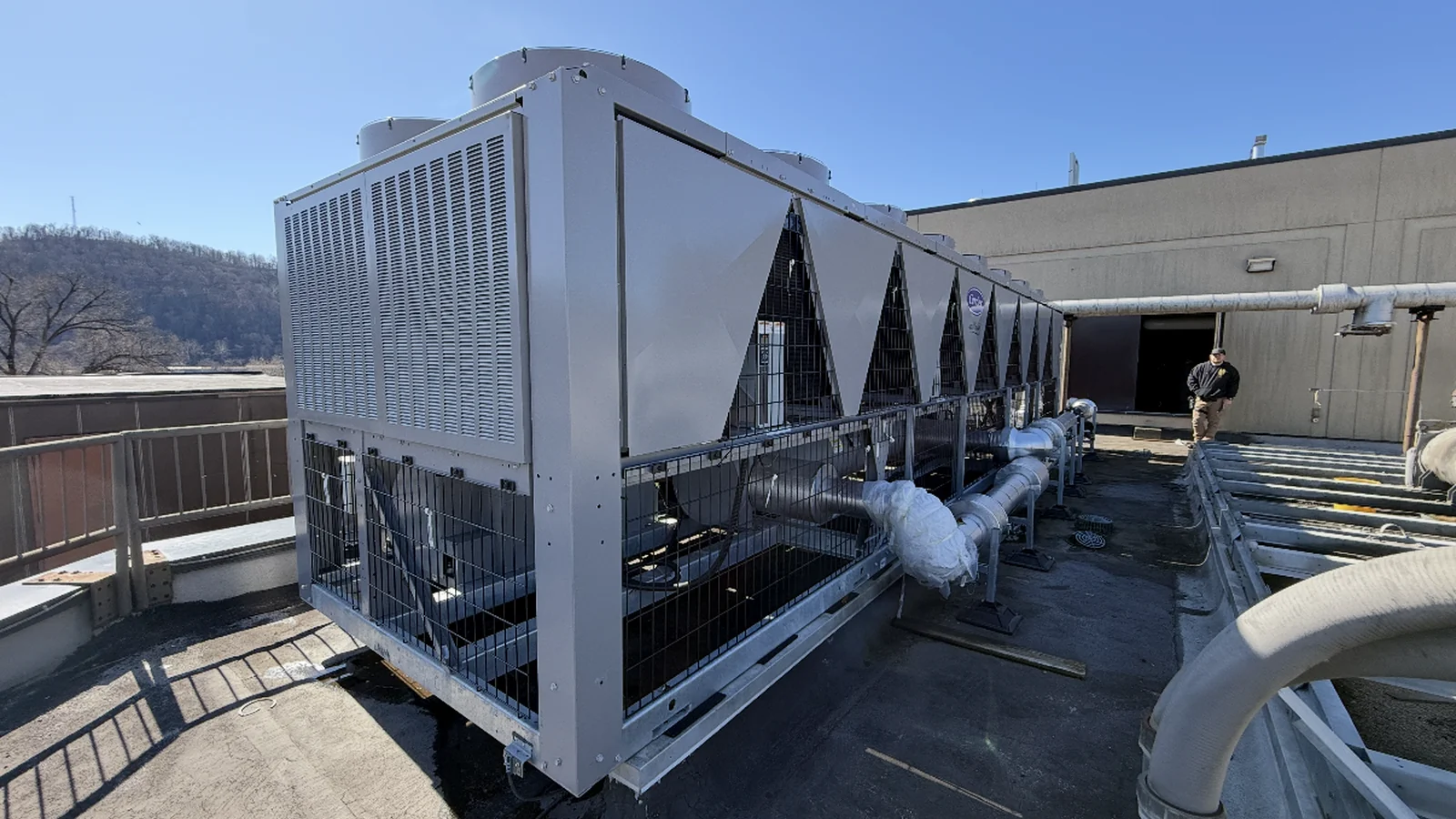
Independent ClimaCool equipment guide
ClimaCool Chiller Buyers: Map the Modular Bank Before You Submit
A ClimaCool opportunity may be one module or a coordinated modular bank. Build a module-by-module record, show the shared controls and water-side boundary, and send the present condition and site facts for independent buyer evaluation. Surplus Chiller Buyer is not affiliated with ClimaCool.
Module-bank identity record
Start with every ClimaCool module and the equipment shared between them
Submit the actual module-by-module identity, shared bank components, present condition, and site facts for direct prospective-buyer evaluation. Use nameplates and photographs rather than a guessed total capacity or a generic “ClimaCool system” label. Submission is not an offer or a commitment to buy, price, pay, inspect, pick up, remove, rig, dismantle, demolish, transport, handle refrigerant, meet a deadline, or provide a local office or project service.
Useful facts to have ready
- A readable nameplate photograph and typed model and serial number for each ClimaCool module, not just the lead module or bank controller.
- An annotated bank map or numbered wide photographs showing module positions, shared headers, piping, controller, panels, sensors, bypass hardware, pumps, and loose or field-installed items.
- The supported arrangement: air-source or water-source; cooling, heat-pump, heat-recovery, simultaneous-heating-and-cooling, free-cooling, or remote-air-cooled configuration if known.
- Refrigerant shown on each available nameplate; identify R-410A legacy documentation separately from any newer low-GWP-series records, without inferring refrigerant from the product family alone.
- Present status of every module and shared asset, including last known operation, alarms, leaks, damage, removed items, inactive modules, controls status, and available records.
- Exact U.S. location, installed or disconnected status, sale boundary, access limits, release authority, earliest release date, and any facility approvals still open.
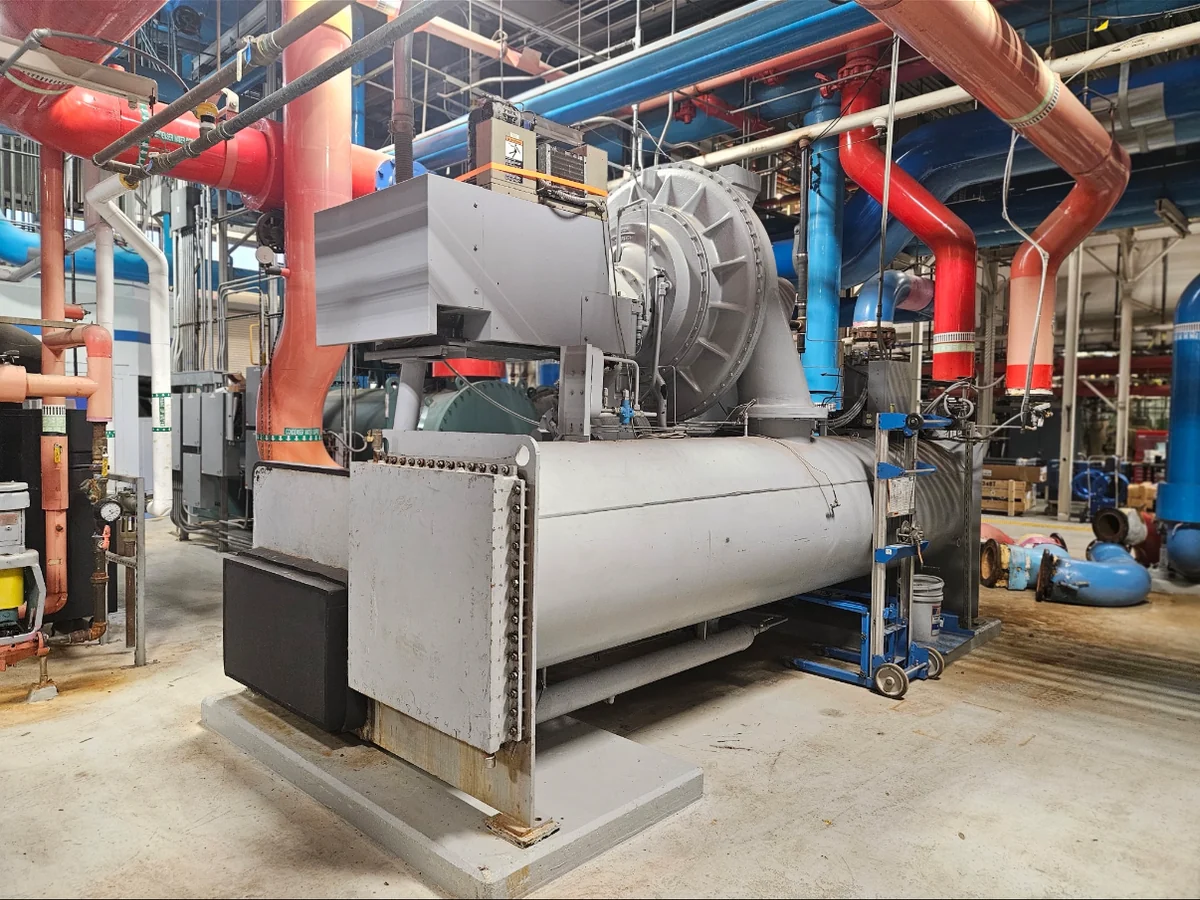
Module-level identification
A ClimaCool bank is not identified by one model number alone.
ClimaCool’s current air-source documentation describes UAC, UAT, UAU, and UAF modular models that can be arranged in banks, while its current website also presents water-source modular product categories. For a used-equipment submission, do not turn that product information into a guess about the asset. Photograph and transcribe the plate on every module, then identify where that module sits in the bank and whether it is included, retained, inactive, missing, or unknown.
Use the bank map to distinguish an actual physical module from the system around it. A building schedule, controller label, or a single capacity figure may describe the plant but may not identify every module offered. If serial numbers, module count, or arrangement conflict across records, show the conflict and keep the unknown open for buyer review.
- Photograph every module nameplate straight on, including model suffixes and serial characters.
- Number each module in a wide front-and-rear bank photograph and repeat the same number on the related close-ups.
- Record whether the module appears to be air-source or water-source from the accessible physical configuration; do not label it from memory.
- Upload any ClimaCool IOM, submittal, sequence, or schedule only when it can be tied to the submitted module or bank.
- State whether the submission represents one module, a full bank, a matched group, or an incomplete group.
Controller, header, and accessory boundary
Show what coordinates the modules and what stays with the facility.
Modular equipment can have bank-level parts that are separate from the individual modules. The ClimaCool air-source IOM identifies a CoolLogic Touch control system, differential-pressure flow sensor, temperature sensors and wells, and bypass header kit as bank-package items that may be installed and wired in the field. Record what is physically present, where it is located, whether it operates, and whether it is included in the proposed sale.
Do not assume that pipes, headers, pumps, controls, distribution panels, sensors, bypass components, cooling-tower connections, or heat-recovery connections travel with a module. Put a plain-language line around the offering: module only, listed modules plus listed shared assets, or another specifically described boundary. This gives a prospective buyer a usable equipment record without assigning responsibility for disconnection, controls work, or plant modification.
Product-line and refrigerant evidence
Confirm the era and refrigerant at the plate; do not infer either from the badge.
ClimaCool’s official legacy page classifies its R-410A modular systems as legacy and lists air-source UCA, UCF, and UCR as well as water-source UCW, UCH, and UHC families. Its February 2025 air-source IOM identifies UAC, UAT, UAU, and UAF models, 20–60 tons at 60 Hz, using R-454B. Those manufacturer references help frame document requests, but a used module’s nameplate, model key, and contemporaneous records must control its identification.
Ask for original or date-stamped documents, then match each document to a unit or bank serial number. A legacy brochure may be relevant to installed equipment, and newer low-GWP materials may be relevant to another unit, but neither proves the refrigerant charge, configuration, capacity, maintenance condition, or completeness of the offered machine. State “unknown” where the evidence does not establish a fact.
Site facts and conditional compliance planning
Describe the handoff path without turning it into an assumed removal project.
A module bank may be installed outdoors, on a roof, in a mechanical yard, or within a larger water and controls system. State the exact equipment location, module dimensions and verified weights when available, elevation, access path, openings, staging area, truck approach, operating restrictions, and facility controls. A buyer can use those facts to understand the opportunity, but the submission does not promise an inspection, removal method, lifting plan, pickup, rigging, freight, or schedule.
Keep intact transfer separate from dismantling or cut-up. If the seller is considering on-site dismantling or disposal, EPA identifies chillers as equipment typically dismantled on site that must have refrigerant recovered under the servicing requirements before disposal. Preserve any recovery documentation with the equipment file. The seller should plan any isolation, electrical disconnection, refrigerant work, lifting, permits, hazardous-material assessment, site protection, or restoration with appropriately qualified and authorized parties; whether any party accepts any work is conditional on written terms.
Direct buyer evaluation
Give the buyer one coherent ClimaCool record, then keep every commitment in writing.
Combine the module map, supporting photographs, sale-boundary list, condition note, records, site facts, and release authority in one file. The strongest submission makes clear what is physically being offered and what is merely adjacent or still connected. It should also identify changes that occur after the photographs, such as a module being removed, a controller being retained, a system being restarted, or access conditions changing.
Surplus Chiller Buyer is a direct prospective buyer of used and surplus industrial chillers in the United States. A submission begins evaluation only. It does not guarantee that the opportunity fits current purchasing needs or that Surplus Chiller Buyer will purchase, make an offer, set a price, pay, inspect, provide a local office, pick up, remove, rig, freight, dismantle, demolish, handle refrigerant, or meet any timing request. If discussion proceeds, the equipment, amount if any, payment conditions, title, risk, release timing, and every project responsibility must be confirmed in writing.
Frequently asked questions
Before you send the chiller.
If your machine does not fit a standard category, submit the available details anyway. Clear photographs and a readable nameplate often establish whether more information is worthwhile.
Is a ClimaCool modular bank one chiller or several machines?
Treat each physical module as a separately identified asset unless the actual records and written transaction terms say otherwise. Submit a module-by-module nameplate record plus a bank map that shows the shared controller, headers, sensors, and other shared equipment. The map avoids an unsupported assumption about what is included.
How do I tell whether a ClimaCool module is a legacy R-410A unit or a newer low-GWP-series unit?
Use the module nameplate, model code, and a matching dated manufacturer document. ClimaCool calls its R-410A systems legacy products and its current air-source IOM identifies certain UA models with R-454B, but a web page or external appearance does not prove the refrigerant or configuration of a particular used module.
Can I submit only part of a ClimaCool bank?
Yes. State exactly which numbered modules are proposed, which are retained, and whether any shared controller, header, sensors, pumps, or accessories are included. A partial-bank submission can be evaluated, but it does not guarantee buyer interest, a purchase, an offer, a price, or any scope for work around the equipment.
What ClimaCool controls and accessories should I photograph?
Show the accessible bank controller or CoolLogic equipment, control and power panel labels, communication hardware, sensors, bypass components, headers, pumps, starters, loose components, and any parts removed from the bank. List them separately from the modules and mark each as included, excluded, shared, missing, or unknown.
Does submitting an installed ClimaCool bank include refrigerant recovery, rigging, removal, freight, dismantling, or demolition?
No. Those services are not included automatically. Describe the current installation and the work you believe may be needed so it can be evaluated as a project fact. If a chiller is to be dismantled on site before disposal, EPA Section 608 guidance requires refrigerant recovery under the servicing requirements; related compliance and site work should be planned with qualified, authorized parties. Any accepted responsibility requires written terms.
Authoritative references
Source material behind this seller guide.
These external manufacturer and government sources support the equipment terminology and planning context used above. They do not establish the condition, configuration, safety, compliance, or transaction fit of a specific chiller.