
Independent absorption-chiller seller guide
BROAD Chiller Buyers: Map the Thermal Source Before You Submit the Unit
If you want to sell a used BROAD chiller, document more than a model number. Connect the nameplate to the thermal driver, the absorber, its connected water or auxiliary systems, its present condition, and its site-release facts. Surplus Chiller Buyer is an independent prospective buyer and is not affiliated with BROAD, BROAD U.S.A., or BROAD Group; “BROAD” is used only to identify equipment submitted for evaluation.
Start with the thermal-source evidence map
Show the actual BROAD chiller and the energy system connected to it
A useful BROAD submission shows the exact machine and the heat source it was designed to use, without assuming that connected plant equipment is included. Send the readable nameplate, model and serial number, full-unit photographs, verified thermal-input and water-side facts, condition evidence, actual site location, access, sale authority, and proposed release timing. BROAD’s published absorption range includes direct-fired, steam-driven, exhaust-driven, hot-water-driven, multi-energy, and packaged systems; the exact machine must be established from the nameplate and records, not a brand assumption. This form requests buyer evaluation only. It does not create a purchase agreement or promise any purchase, price, payment, pickup, removal, freight, rigging, disconnection, dismantling, demolition, refrigerant work, schedule, local presence, or site service.
Useful facts to have ready
- A sharp nameplate photograph, plus the manufacturer name, complete model, serial number, and nominal capacity typed exactly as shown.
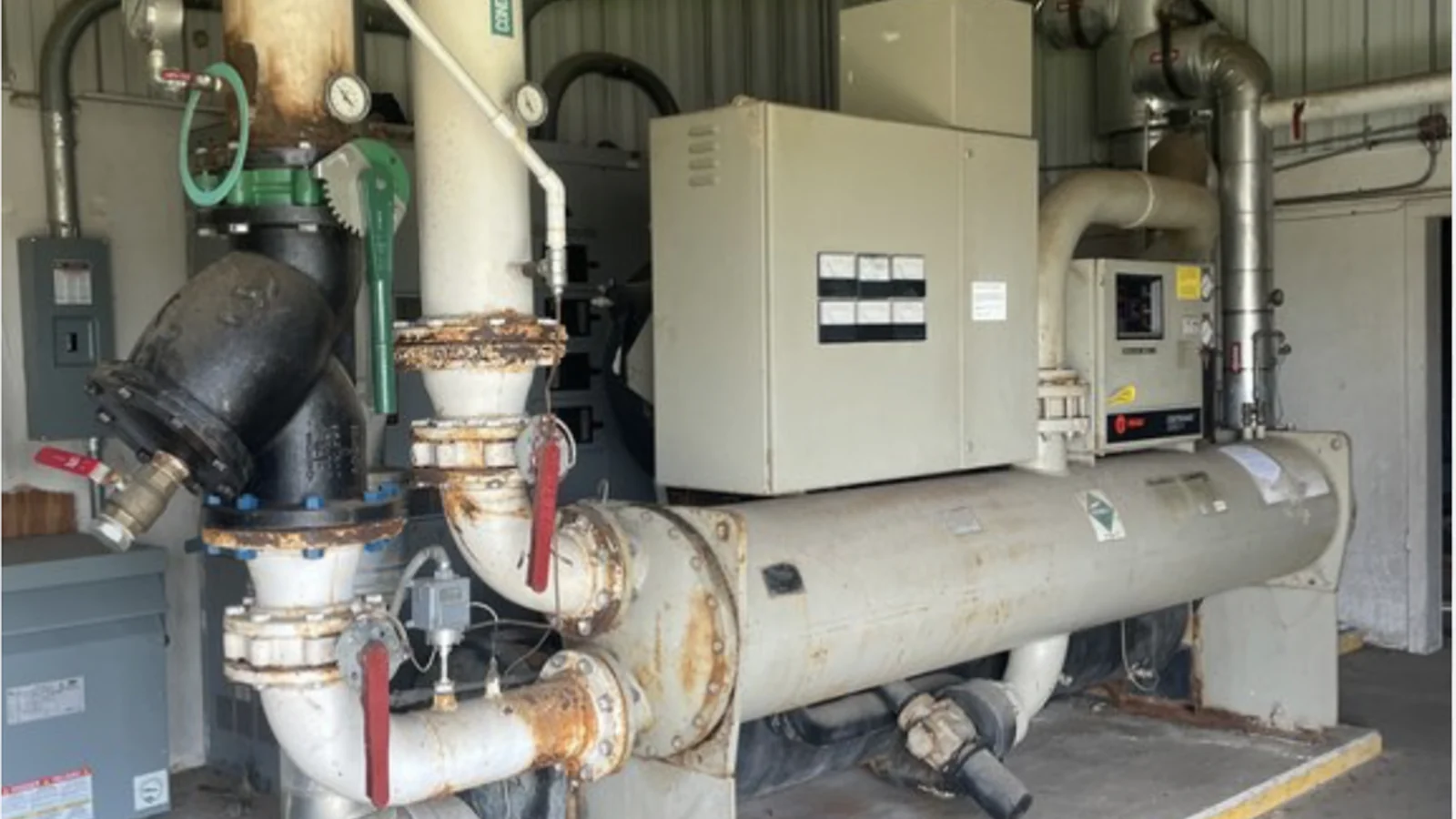
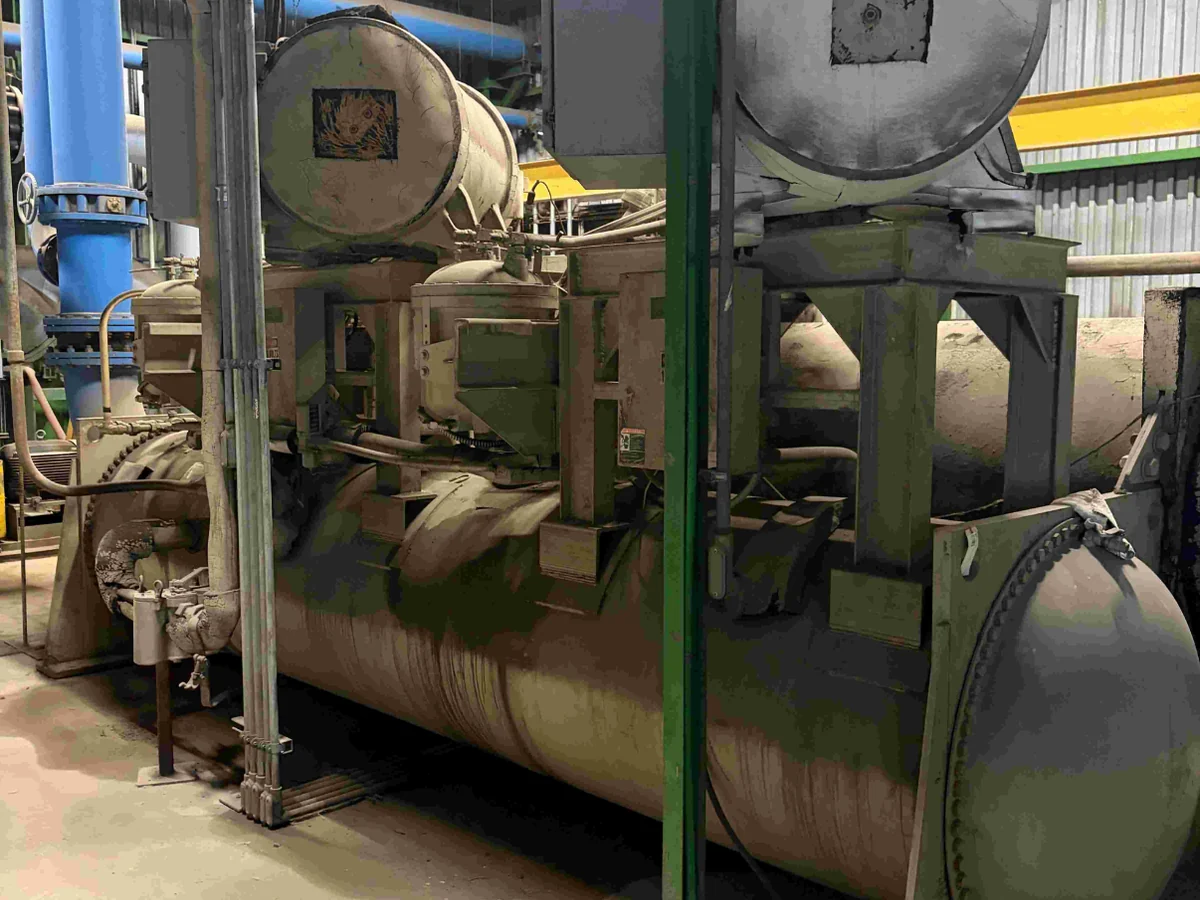
- Wide photographs of the full machine, controls, heat-source connection area, water connections, visible exhaust or flue components where present, and every loose, missing, or separated component.
- The verified thermal driver or heat source: for example, direct fuel firing, steam, hot water, exhaust, or a combined source; mark it unknown if the nameplate or records do not support it.
- A boundary list separating the absorber from connected pumps, cooling tower, water-distribution components, piping, burner or fuel train, exhaust path, controls, and building systems that stay in place.
- Present condition, last known operating period if known, known alarms, leaks, corrosion, solution or vacuum-related service notes, repairs, missing parts, and available manuals or factory documents.
- Exact U.S. location, installed/disconnected/stored status, visible access constraints, release authority, proposed release date, and any safety, shutdown, or approval limits.
The heat source identifies the review question
Record how this BROAD unit is driven before calling it a chiller opportunity.
BROAD’s current U.S. absorption page groups equipment as two-stage, single-stage, multi-energy, package, solar-driven, and other configurations. Its listed examples include direct gas-fired, steam-driven, exhaust-driven, and hot-water-driven equipment. That means the useful first seller question is not simply “Is it a BROAD?” It is “What exact chiller and thermal driver does the nameplate and the visible installation support?”
Type the model and serial exactly as shown, then describe only the heat-source arrangement that the unit or matching records support. Do not turn a nearby boiler, gas turbine, burner, steam header, hot-water loop, or exhaust duct into an included asset by implication. If the unit’s driver, stage, or heat-source interface is unclear, mark it unknown and provide photographs or documents for follow-up.
- Photograph the complete nameplate and any separate burner, control, or heat-source identification tag that is safely accessible.
- State whether the evidence supports direct-fired, steam-driven, hot-water-driven, exhaust-driven, multi-energy, or an unknown arrangement.
- Identify the operating heat source at the time the unit last ran, if known, without representing it as currently available.
- Separate the chiller’s nameplate capacity from the capacity or rating of a connected boiler, turbine, engine, or plant.
- Flag a change in fuel, driver, controls, or connected thermal source since the last known operation.
The absorber is not automatically the entire plant
Distinguish the BROAD chiller from the systems around it.
An absorption chiller opportunity can include a thermally driven machine while remaining connected to cooling-water, chilled-water, heating-water, fuel, steam, hot-water, exhaust, control, or water-distribution systems. BROAD’s catalog diagrams distinguish these circuits and principal absorption components. A buyer review is clearer when the seller labels the physical machine and separately identifies every connected component that is included, excluded, shared, removed, or still in service.
A product description for a packaged chiller is not proof that a specific installed system includes every package component. BROAD describes a packaged system as potentially including an enclosure, pump system, and cooling tower. The seller should photograph and list the actual pump skids, tower, controls, valves, starter panels, piping sections, flue work, and loose parts, then state whether each item remains with the chiller or stays with the facility.
Identify the vessel, controls, interfaces, and condition
Show the physical evidence that connects the thermal map to the actual chiller.
A credible BROAD evidence packet pairs the nameplate with wide views of the main shell, control cabinet, accessible heat-source connections, water-side connections, and visible ancillary equipment. The catalog uses absorption-system terminology such as the high-temperature generator, low-temperature generator, condenser, absorber, evaporator, heat exchangers, chilled water, cooling water, and heating water. Use these terms only where a matching document or clear equipment label supports them; a photograph is more useful than a guessed component name.
BROAD’s published U.S. material says its absorption equipment uses lithium bromide solution and water as the refrigerant medium and describes a vacuum-based system. That is a reason to preserve records and report observed condition carefully, not a reason for the seller or a prospective buyer to open, vent, sample, charge, drain, or otherwise alter the machine. Record known service history, solution-related notes, vacuum-related notes, controls status, and visible condition as facts with dates and sources.
Site planning affects the transaction without creating a service promise
Treat connected energy, regulated materials, and cut-up as conditional project facts.
The seller should state whether the unit remains connected to electrical power, fuel, steam, hot water, exhaust, chilled water, cooling water, controls, or building systems. OSHA explains that hazardous energy can be electrical, mechanical, hydraulic, pneumatic, chemical, thermal, or another source, and that the employer’s energy-control program addresses servicing and maintenance. This page does not prescribe a shutdown or disconnection method. It tells the seller to make the machine and site boundaries visible so a potential transaction is not priced or planned on an unsafe assumption.
BROAD’s published LiBr/water absorption terminology does not establish the actual contents or regulatory status of every individual unit and connected system. If a chiller or related equipment containing regulated refrigerant is to be dismantled on site before disposal, EPA states that refrigerant must be recovered under applicable Section 608 servicing requirements before disposal. Any determination of actual fluids, recovery, isolation, permits, hazardous materials, dismantling, cut-up, rigging, removal, site restoration, or qualified-party roles is conditional on the specific project and is not automatically provided by Surplus Chiller Buyer.
The evidence map starts review; it does not make a deal
Let the buyer evaluate the chiller and the handoff as separate questions.
Send one file that connects the exact BROAD nameplate, thermal driver, included components, condition evidence, location, site access, authority, and realistic release window. This helps a prospective buyer decide whether more information is warranted. It does not establish that the chiller is complete, functional, saleable, available for removal, or a fit for current purchasing needs.
A follow-up question, a request for photographs, or discussion of access is not an offer or an acceptance of site work. If a transaction moves forward, written terms must identify the exact equipment, included and excluded components, amount if any, payment conditions, title and risk, timing, and every accepted logistics or work responsibility. Do not rely on a form submission, generic chiller terminology, or a verbal assumption that someone else will disconnect, recover, lift, remove, transport, dismantle, demolish, or restore anything.
Frequently asked questions
Before you send the chiller.
If your machine does not fit a standard category, submit the available details anyway. Clear photographs and a readable nameplate often establish whether more information is worthwhile.
What types of BROAD chiller might this page help me document?
BROAD’s current U.S. absorption page lists two-stage, single-stage, multi-energy, packaged, and solar-driven configurations, with examples driven by direct fuel firing, steam, exhaust, and hot water. Use that as a prompt to document the exact machine. Do not classify a unit from the brand name alone; submit the readable nameplate, matching records, and photographs.
Is every item identified as BROAD a non-electric absorption chiller?
No brand-only conclusion should be made. BROAD’s current global air-conditioning catalog lists direct-fired chillers, waste-heat chillers, absorption heat pumps, packaged/distribution concepts, combined heat-and-power-related systems, and power-efficient chillers. The model, nameplate, connected systems, and serial-specific records determine what equipment is being offered.
Can I submit a direct-fired, steam-driven, hot-water-driven, exhaust-driven, or multi-energy BROAD unit that is still installed?
Yes. Describe the verified thermal driver, current connection status, last known operating condition, site access, release authority, and the equipment boundary. Submission begins a buyer evaluation only. It does not guarantee a purchase, inspection, shutdown, disconnection, refrigerant handling, rigging, removal, freight, timing, or other project service.
Does the LiBr and water absorption description mean there is no recovery or disposal planning to consider?
No. BROAD’s materials identify LiBr solution and water in its absorption technology, but the actual equipment, connected systems, fluids, and condition need project-specific confirmation. For equipment containing regulated refrigerant that is dismantled on site before disposal, EPA’s current guidance requires recovery in accordance with Section 608 servicing requirements. Use qualified parties to determine the actual requirements; this site does not perform or promise that work.
Is Surplus Chiller Buyer affiliated with BROAD or a BROAD dealer, and does a buyer evaluation include removal?
No. Surplus Chiller Buyer is independent and is not affiliated with BROAD, BROAD U.S.A., BROAD Group, or a BROAD dealer. “BROAD” identifies the manufacturer of equipment submitted for evaluation. Buyer evaluation does not automatically include or guarantee an offer, purchase, price, payment, inspection, removal, freight, rigging, disconnection, dismantling, demolition, refrigerant work, timing, local office, or any project service. Any responsibility must be confirmed in writing.
Authoritative references
Source material behind this seller guide.
These external manufacturer and government sources support the equipment terminology and planning context used above. They do not establish the condition, configuration, safety, compliance, or transaction fit of a specific chiller.