
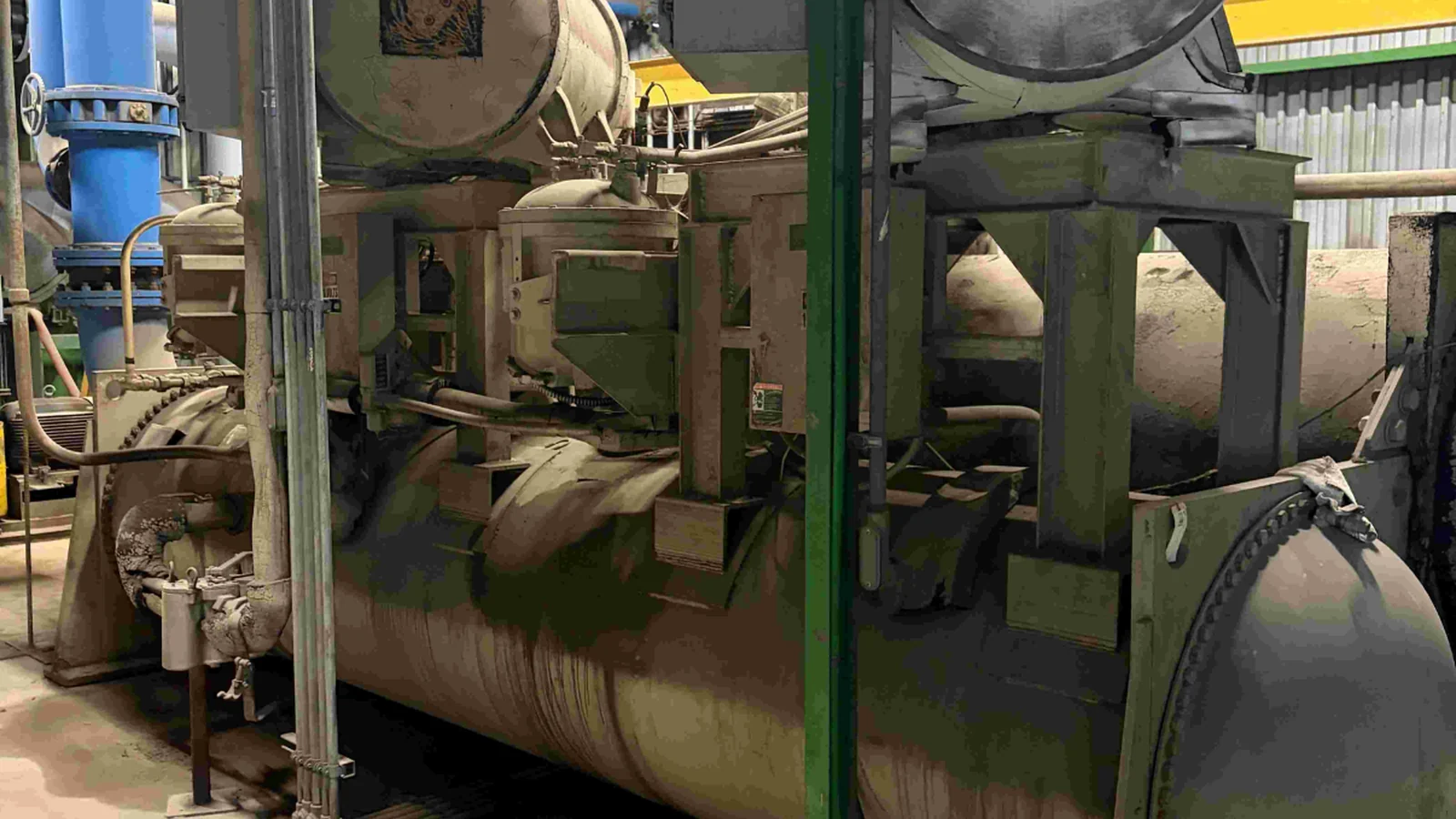
Direct industrial chiller buyer review
Industrial Chiller Buyers Start With the Facts Behind the Machine
If you have a used or surplus chiller, send the equipment and site details a specialized direct buyer needs to decide whether further review is warranted. A clear record protects your intent and avoids assumptions about the machine or project.
Start with an accurate record
Send the facts a specialized buyer uses to evaluate a chiller
Use this form to begin an equipment evaluation, not to accept a sale or service scope. Include what you know and identify what remains unknown. Purchase interest and every equipment or project responsibility require separate written confirmation.
Useful facts to have ready
- Readable nameplate and complete manufacturer, model, and serial information
- Full-unit photographs showing condition and included components
- Actual location, equipment elevation, installation status, and access limits
- Last known operation, faults, missing parts, repairs, and available records
- Included equipment, sale authority, release date, and known approvals
01 / Establish machine identity
A buyer cannot evaluate a generic chiller.
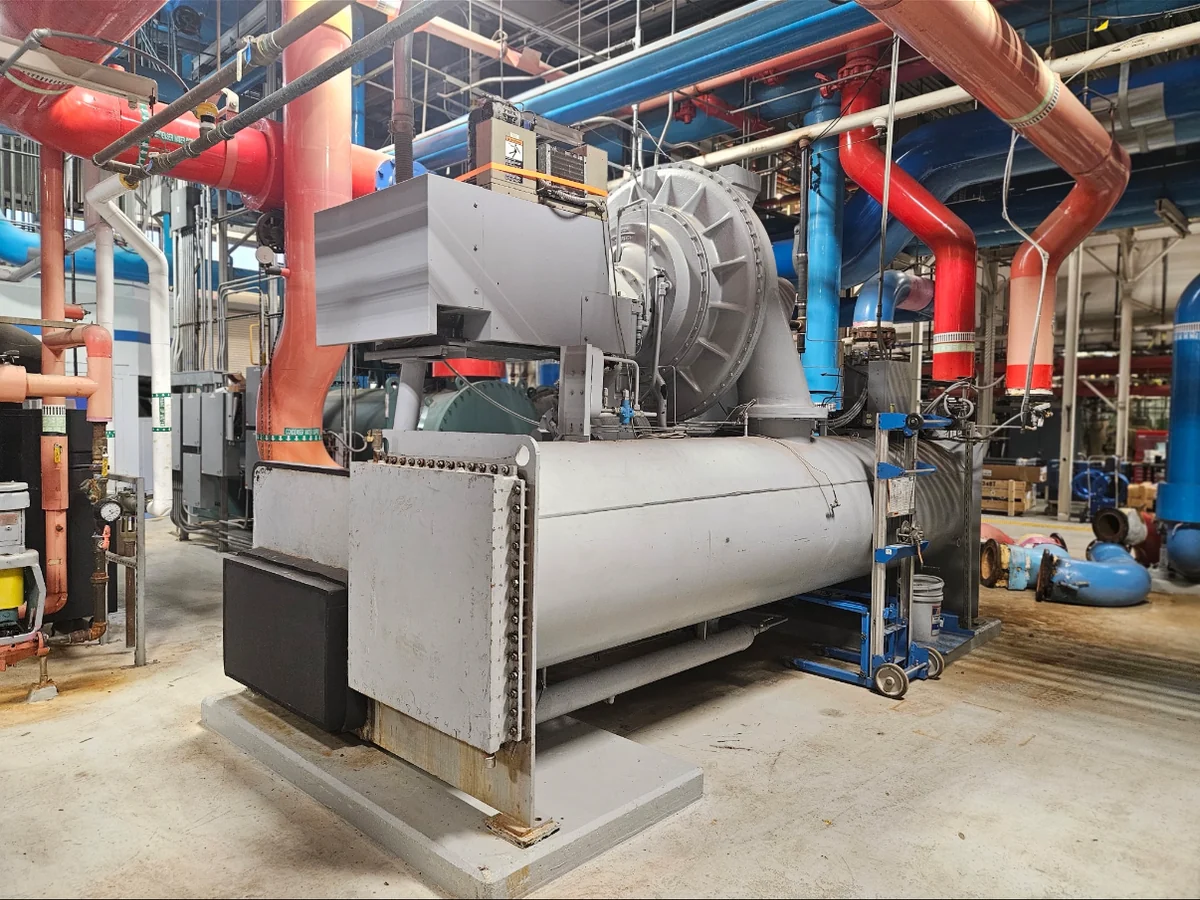
A specialized direct buyer separates the actual machine from a short description such as “old chiller” or “surplus unit.” The nameplate, model family, serial number, capacity, electrical data, refrigerant, controls, and physical configuration establish what is being reviewed. Identify every unit separately when several machines share a plant.
This step does not decide whether the equipment will be purchased. It creates a record that lets industrial chiller buyers ask useful questions instead of guessing at type, completeness, or configuration. It also preserves what the seller means to include and exclude.
- Record capacity, voltage, refrigerant, and controller data from the nameplate.
- Identify the chiller category and compressor or thermal configuration when supported.
- Separate standalone equipment from a larger plant or package.
- List pumps, starters, panels, tanks, skids, and accessories individually.
02 / Test the evidence
Condition evidence matters more than working or not working.
Condition labels can hide the facts a buyer needs. “Operating” may mean running now, running before shutdown, or not recently tested. “Non-operational” may mean a known failure, an incomplete machine, disconnected status, or an unknown condition. State what is known, when it was known, and what cannot be confirmed.
Chiller equipment buyers review the evidence behind the label: photographs, service history when available, fault information, observed completeness, and last known operating context. Commercial chiller buyers need the same distinction between an observed fact and a seller assumption.
03 / Protect the sale scope
The chiller and the proposed transaction are not the same thing.
A chiller may be connected to equipment that the seller does not intend to include. Panels, pumps, piping, controls, starters, tanks, and cooling-tower connections may have a different owner or release condition. State what is included, what remains in place, and who can authorize release.
Defining scope early avoids treating disconnection, removal, demolition, refrigerant work, freight, or another project task as automatic. A buyer may need to understand those open points, but no work scope is accepted merely because it appears in a submission.
04 / Assess access and release
A viable equipment review is also a site-access review.
A chiller in a warehouse yard is different from one in a live mechanical room, on a roof, above production, or stored off site. The buyer needs the real address, installation status, elevation, access route, staging limits, and release timing to understand the opportunity as it exists.
This does not mean surplus chiller buyers provide pickup, rigging, dismantling, demolition, refrigerant handling, freight, or a particular schedule. Those matters cannot be responsibly assumed and must be evaluated for the actual project.
05 / Keep evaluation separate
An equipment evaluation is not a transaction.
A submission gives a prospective direct buyer a reason to review the facts. It does not create a purchase agreement, offer, price, payment commitment, or logistics duty. Follow-up questions, site discussions, or a possible inspection remain evaluation activities unless the parties agree otherwise in writing.
If the opportunity fits current purchasing needs, written terms should connect the exact equipment record to the proposed transaction. They should identify the equipment, amount if any, payment conditions, title and risk, timing, and responsibility for every operational task.
Frequently asked questions
Before you send the chiller.
If your machine does not fit a standard category, submit the available details anyway. Clear photographs and a readable nameplate often establish whether more information is worthwhile.
What happens after I submit my chiller information?
The submission begins evaluation of the equipment and project facts. It does not guarantee purchase, an offer, price, payment, pickup, removal, freight, rigging, dismantling, demolition, refrigerant handling, timing, or a local office.
What makes a submission evaluation-ready?
A readable nameplate, full-unit photographs, condition details, included components, exact location, access facts, release timing, and authorized seller information let a buyer determine which questions remain open.
Why does a direct buyer need site details?
The site affects whether the machine can be observed, released, and transferred under defined terms. Providing site facts does not assign a logistics duty; it prevents the parties from assuming different scopes.
Can a shut down, stored, incomplete, or non-operational chiller be submitted?
Yes. Identify its current status, last known operation, known faults, missing components, and photographs showing the unit as it is. Interest depends on the specific asset and project.
Are refrigerant work, rigging, removal, or freight included by default?
No. If those matters affect the proposed transaction, describe the known requirements and open responsibilities. Any accepted work scope must be confirmed in writing.